
In partnership with Morning Brew and Ekimetrics
The top takeaways from Make Creators Count:
- 93% of marketers say creator campaigns work best when creators use their own voice, yet only 7% actually give them full creative freedom
- Aligned creators deliver roughly 3x better results
- 42% of marketers cite measurement as their biggest challenge to scaling creator marketing
Download the full report or get started using our free tool The Brief Chef
Creator marketing may be on the rise, along with bigger budgets and investment in brand collabs, but one thing remains the same: measuring the ROI of creator campaigns is still the biggest roadblock for brand teams.
What are marketing leaders doing to close that gap, drive better ROI from creator partnerships, and build the kind of brand equity that holds up in the boardroom?
That's exactly what we set out to understand in our new report, Make Creators Count. Tracksuit partnered with Morning Brew and Ekimetrics to survey more than 250 marketing leaders to get their insights, combined with Ekimetrics' full-funnel measurement data and Tracksuit's brand tracking across 13,000+ brands.
The result? The definitive playbook for how brands can stop over-managing creators and start actually winning with them.
Download the full Make Creators Count report here., opens in new tab
Creator marketing has gone mainstream, but the playbook hasn't.
66% of marketers are already working with creators, with another 10% planning to start in 2026. As budgets keep growing, 50% expect creators to be a core or secondary channel next year, up 14% year on year.
For marketers, that means changing the way you approach your campaigns; creators aren't an experiment anymore, they’re the playbook.
But scaling those kinds of campaigns adds its own kind of pressure. Marketers aren't just asked to tap into the creator economy anymore; you have to be able to prove the business impact behind it, especially when your CFO wants more than just screenshots of engagement. That's where things get complicated, because the way most brands work with creators today looks pretty different from how it used to—too much oversight, long approval chains, and lengthy brand guidelines handed to people hired specifically because they don't sound like a brand.
What you end up with is branded content that feels like a corporate ad wearing a hoodie. High spend, low trust, and a CFO who still isn't convinced that brand deserves more budget.
The uncomfortable truth about creator campaigns
82% of marketers use creators for brand awareness, the biggest use case they have for these partnerships. But Ekimetrics data paints a different picture: influencer marketing consistently ranked among the top tactics driving sales for brands like Estée Lauder Companies, showing that creators can have an impact on your entire funnel.
But most brands are only asking creators to move the top of it, creating a pretty significant gap:
- Brand awareness and direct sales are both cited as top marketing goals (54%).
- Yet, only 29% of marketers use creators for direct sales.
At the same time, teams aren’t able to truly measure the impact of their campaigns. 42% of marketers, for example, cite measurement as their single biggest challenge, ahead of cost, finding the right creators, and low engagement. And the consequences of that measurement gap are striking: only 12% of marketers cite strong ROI as a benefit of working with creators. Not because creators don't drive ROI (Ekimetrics' data shows they do) but because most brands don't have the tools to report on it.
"The disconnect is clear. Marketers want authentic partnerships. They just haven't built the systems for letting creators be authentic." — Make Creators Count
Trust over reach: what the best creator campaigns have in common
Across nearly every category, we noticed the same campaign success signals showed up: trust and relatability are the most powerful drivers of conversion, not follower count, production value, or how “on-trend” the creator is.
It’s why marketing leaders are focusing on creator-brand fit more than scale (68% of marketers say it's their number one vetting criterion). When a creator authentically aligns with a brand's values, conversion goes beyond likes or views to move the needle on awareness and sales. The brands proving this aren't the ones with the biggest creator budgets—they're the ones briefing smarter.
OLIPOP
OLIPOP built trust and credibility not by landing one big influencer deal, but by showing up consistently across communities by partnering with several smaller creators. Their campaigns drove stronger awareness, consideration, and long-term growth more than any single spike in impressions could. For marketers, that shows that fit over fame, and trust over reach, matters most.
Monzo
Monzo, operating in one of the most heavily regulated industries you can think of, partnered with a creator who often jokes about impulse shopping. It sounds like a brand risk, right? But it was actually a brand signal that Monzo understood their customers better than their competitors did. Consideration grew from 22% to 25% in twelve months, showing that their mindset of leveraging humour and relatable creators pays off.
The brands winning with creators aren't the ones sending the strictest briefs or keeping a firm hold on control. Brands like Monzo and OLIPOP win because they give creators the right ingredients, then get out of the kitchen.
Creator and brand strategist Eugene Healey, one of Tracksuit's early partners, calls this "niche at scale", where the path to mass relevance runs through clusters of hyperspecific communities. "Your brand is being built in the aggregate," he says. "When you buy my perspective, you're likely buying the perspective of a bunch of other creators alongside mine. You're creating a mosaic of different associations, a content universe." That mosaic is worth more than any one megaphone.
"Brands don't need bigger creators. They need the right creators. The ones who sit inside the culture pockets their audience actually cares about today. Influence is getting more distributed, more personal, and more powerful." — Make Creators Count
Give creators the ingredients, not the recipe
A lot of creator briefs are built around control: tell the creator what to say, how to say it, and which claims to make. That grasp on how and what creators create makes brands feel safe.
However, as we found through our research with Morning Brew and Ekimetrics, the new way of briefing creators is built around context. Tell the creator what you're trying to achieve, who you're trying to reach, where you're losing to competitors, and what actually drives purchase in your category. Then, let them do what they do best—create in their voice, style, and creative approach.
It’s what marketers at brands like OLIPOP are doing that many aren’t. The shift from scripts to strategic context is what drives real results for the brand and not just “more content.”
To make that shift easier, we built The Brief Chef, opens in new tab, a free tool that helps marketers write better briefs that give creators the deep context they need, without the over-direction that kills the work.
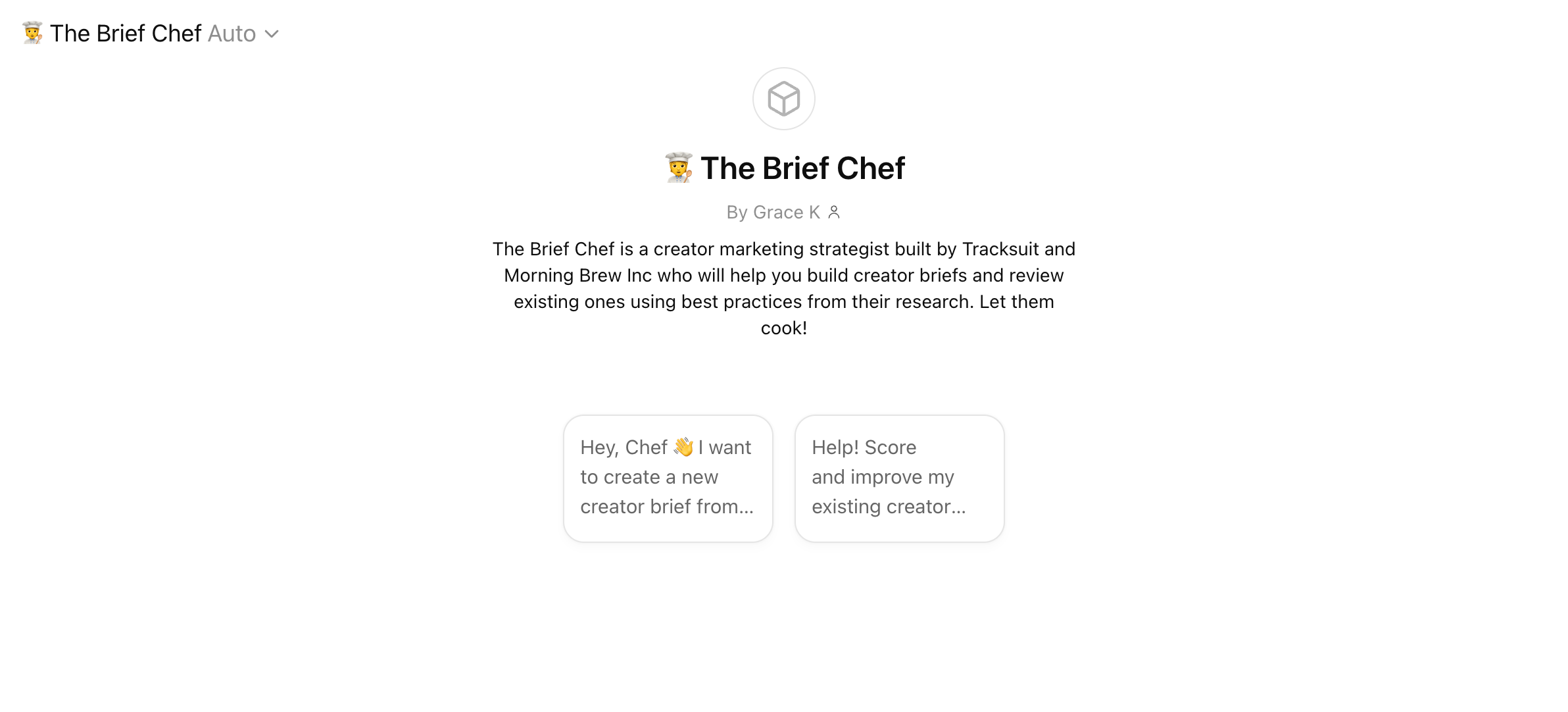
Access The Brief Chef tool., opens in new tab
What this means for your creator strategy
Wherever you are in your creator journey, Make Creators Count helps break down how brands can drive real ROI from creator campaigns that get marketing more budget (and more seats at the boardroom table). The research covers why creator marketing has gone mainstream and what that means for budgets and boards, the forces shaping the brand-creator relationship and how the best brands are navigating them, what trust and relatability actually look like in practice, and how to measure creator impact beyond engagement in a way that’ll have your CFO championing brand.
Here’s how you can use Tracksuit to make better creator briefs
The full report is hosted by Morning Brew in partnership with Tracksuit and Ekimetrics.
Download Make Creators Count here., opens in new tab
About Tracksuit
Tracksuit is the always-on brand tracking platform trusted by over 1,000 consumer brands worldwide. We survey thousands of people each week to deliver insights on key brand metrics—awareness, consideration, usage, preference, and perception—across markets, demographics, and competitors.
With Tracksuit, you can track and show whether creator activity is building lasting brand equity, not just impressions. The proof that moves budgets, helps you build a case for brand, and makes it easy to showcase marketing’s impact on growth.
If you're investing in creators (or about to) we'd love to show you what that looks like for your brand.