5 Latana alternatives for brand tracking in 2026
Written by

Quick summary
The best Latana alternatives depend on what's driving the switch. Tracksuit offers accessible, always-on brand tracking at a lower price point. YouGov BrandIndex delivers daily updates and 18+ years of historical data. Quantilope pairs tracking with 15+ automated research methods. Attest gives you flexible DIY survey research. Kantar provides the deepest brand equity measurement for enterprise budgets.
Looking for a better fit for your brand tracking?
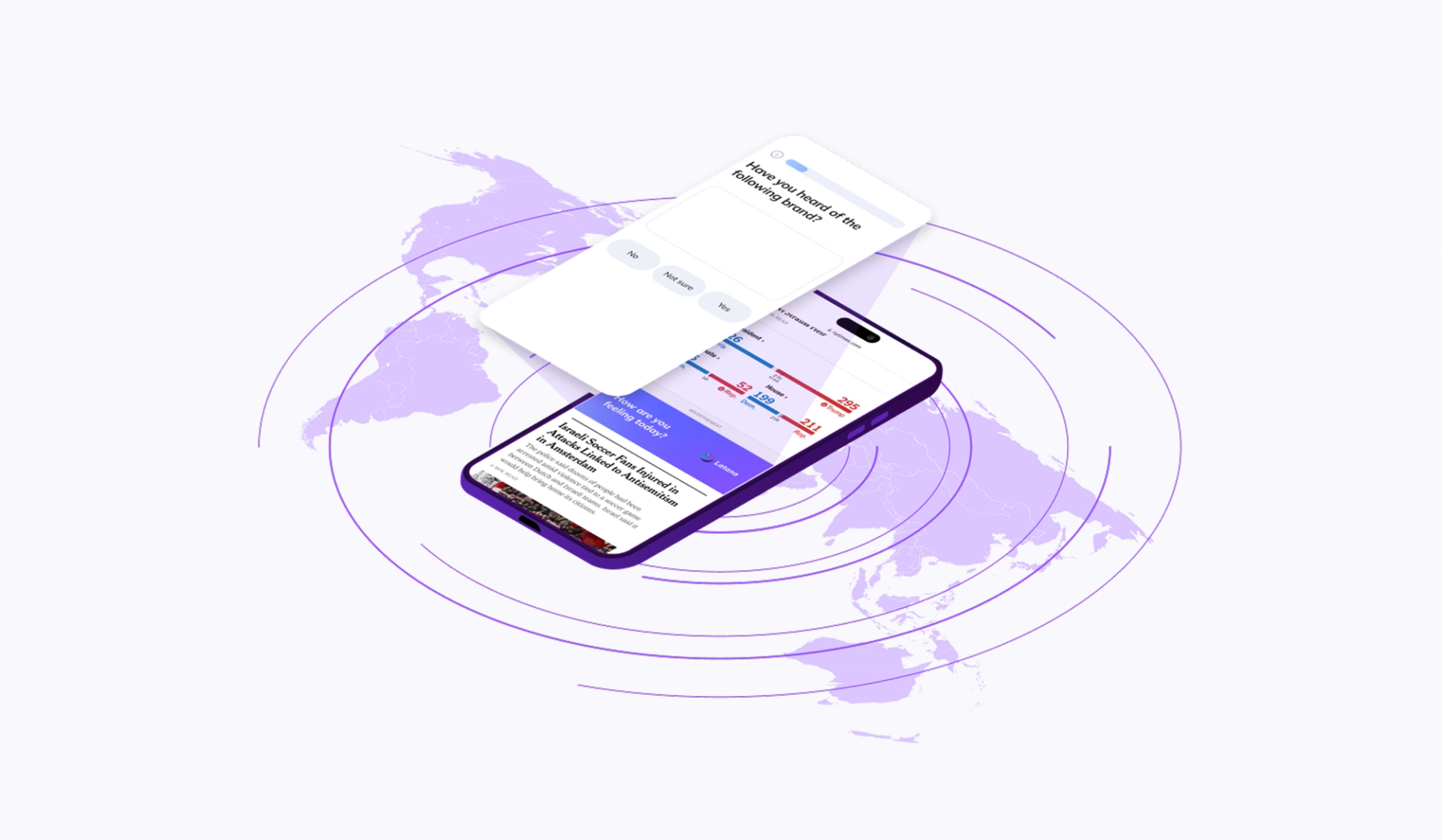
Latana is a well-known brand tracking platform, and for good reason. Its MRP methodology and mobile-first micro-surveys give it genuine strengths for brands that need granular audience segmentation across global markets.
But brand tracking isn't one-size-fits-all. Whether it's pricing, dashboard usability, methodology preference, or needing research capabilities beyond core tracking metrics, there are real reasons teams look elsewhere. This guide compares 5 Latana alternatives across the factors that matter most, so you can find the platform that fits how your team actually works.
Why listen to us?
Tracksuit works with over 1,000 brands, including Athletic Brewing Company, Turo, Steve Madden, and The RealReal. We help marketing teams benchmark brand health against competitors and connect perception data to commercial outcomes. That experience gives us a clear view of how different brand tracking platforms compare and where each one fits best.
Why look for a Latana alternative?
Latana is a solid brand tracking platform. But no single tool fits every team perfectly. Here are the most common reasons brands start evaluating alternatives:
- Cost per market: Latana's pricing scales by market. The Essential plan starts at roughly $8,500 per market per year, and Pro plans run closer to $20,000 per market per year. For brands tracking across multiple countries, costs add up quickly.
- Dashboard experience: Some teams find Latana's reporting less intuitive than newer platforms, particularly when the goal is sharing brand data directly with leadership or cross-functional stakeholders who aren't research specialists.
- Methodology fit: Latana's mobile-ad-delivered surveys reach consumers outside traditional panels, which is a genuine differentiator. But some teams prefer panel-based or census-weighted approaches, depending on their category and audience.
- Scope beyond tracking: Latana focuses on brand health metrics. Teams that want to combine tracking with broader consumer research, like concept testing or messaging studies, may need a platform with wider capabilities.
5 best Latana alternatives compared
1. Tracksuit
Tracksuit is an always-on brand tracking platform built for marketing teams who need consumer perception data without complex traditional research. It surveys real category buyers continuously using census-weighted methodology, then delivers monthly updates on awareness, consideration, investigation, usage, and preference through a dashboard designed to be shared directly with leadership.
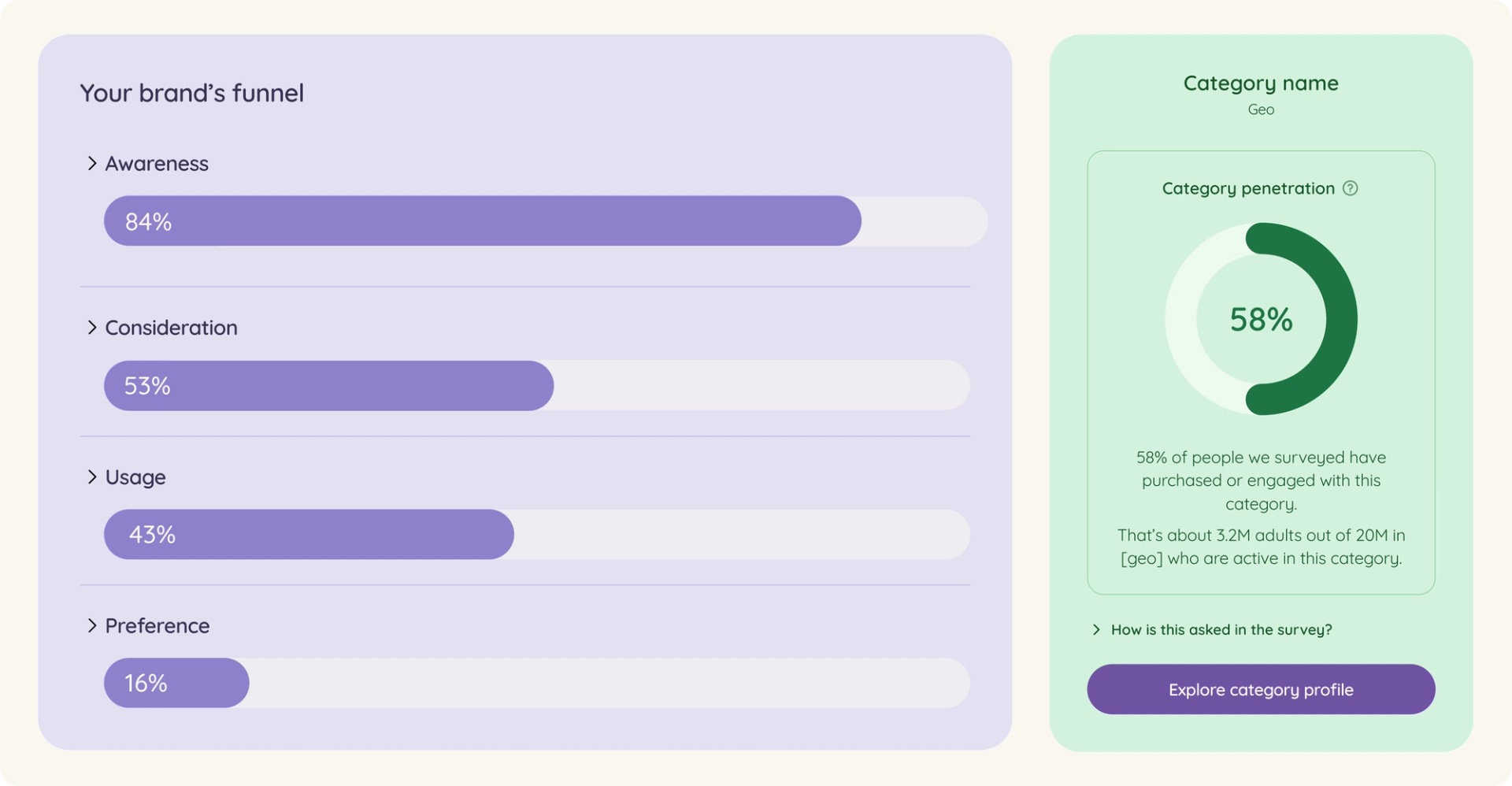
Latana's strength is statistical precision for niche audience segments. Tracksuit takes a different approach, optimizing for ease of use, stakeholder communication, and affordability. The flat annual pricing (one brand category, 5 competitors included) avoids the per-market cost escalation that makes Latana expensive for multi-country tracking.
Key Features
- Consumer funnel tracking: Tracks awareness, consideration, investigation, usage, and preference with monthly updates from census-weighted consumer surveys
- Brand perception measurement: Measures what consumers associate with your brand through Imagery (spontaneous associations) and Statements (attribute ratings), and how those associations shift over time
- Competitive benchmarking: Shows where you're gaining or losing ground in consumers' minds relative to competitors in your category
- AI-generated Coach's Notes: Surfaces the most significant competitive changes automatically, so you spend less time digging through dashboards to find the story
- Conversion Drivers analysis: Identifies which brand perceptions most strongly predict consumers choosing one brand over another, so you know which associations are worth investing in
Pricing
Plans start at $19,500/year for one brand category, your brand plus 5 competitors, with over 4,000 consumers surveyed. Add-ons available for unaided awareness, extra competitors, markets, and brand perception statements. Affordable compared to traditional brand tracking, which often costs $100K+ annually.
Pros
- Segments by demographics, geography, and target audience for granular insights
- Unlimited seats, so marketing, agencies, and leadership all work from the same data
- Launches in roughly 30 days with minimal setup effort
- Dashboard is intuitive enough for marketers to use without research training
- Flat annual pricing avoids the per-market cost escalation that makes multi-market tracking expensive on other platforms
Cons
- Designed for consumer brands, making it less applicable for B2B companies.
- Global market coverage is still expanding, so brands tracking across many international markets should check current availability
2. YouGov BrandIndex
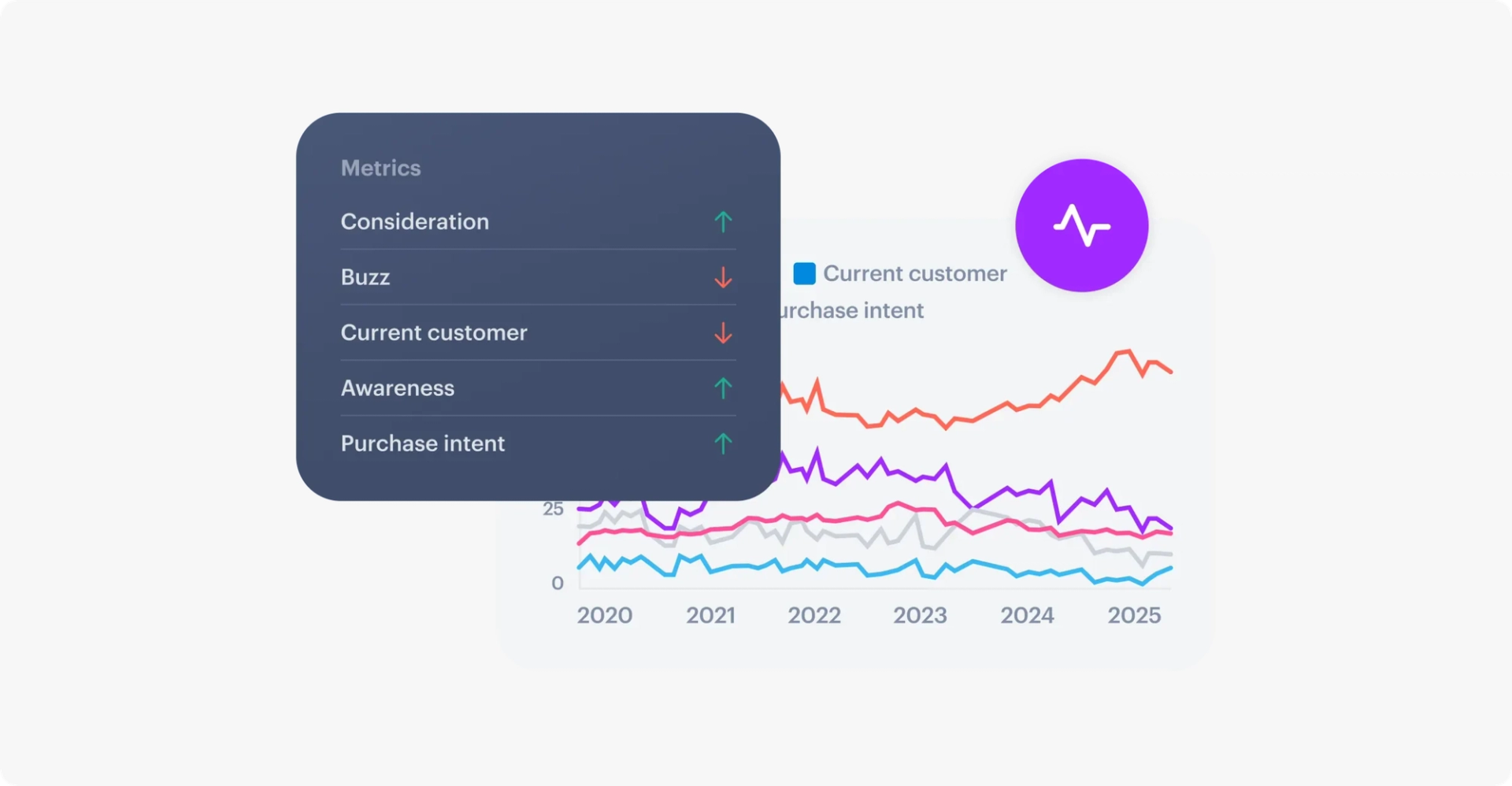
YouGov BrandIndex is one of the longest-running brand tracking platforms available. It offers daily data updates across 16 brand health metrics for 27,000+ brands globally, backed by YouGov's panel of 29 million+ members across 56 markets.
The main advantage over Latana is data frequency and historical depth—daily refreshes compared to Latana’s monthly updates. With 18+ years of historical data, it offers context for long-term brand trends that newer platforms struggle to match.
Key Features
- Daily data updates: Refreshes from an established global panel give more frequent visibility into brand health shifts than monthly platforms like Latana
- Historical data library: 18+ years of historical data on 27,000+ brands for long-term trend analysis and benchmarking
- AI analytics (QualAI): Analyzes open-ended feedback to explain why metrics are moving, adding qualitative context to quantitative tracking
Pricing
BrandIndex Lite offers a free snapshot using the Buzz metric. The full platform is custom-quoted and positioned at enterprise pricing levels.
Pros
- 16 brand health metrics give comprehensive visibility beyond standard awareness and consideration tracking
- Coverage across 56 markets with established local panels
- Unmatched historical depth for long-term trend analysis
Cons
- Dashboard and data visualization feel dated compared to newer tools
- Enterprise pricing isn't publicly available and can be prohibitive for mid-market brands
- Limited API and integration options for teams who want to connect brand data to their own BI tools
3. Quantilope
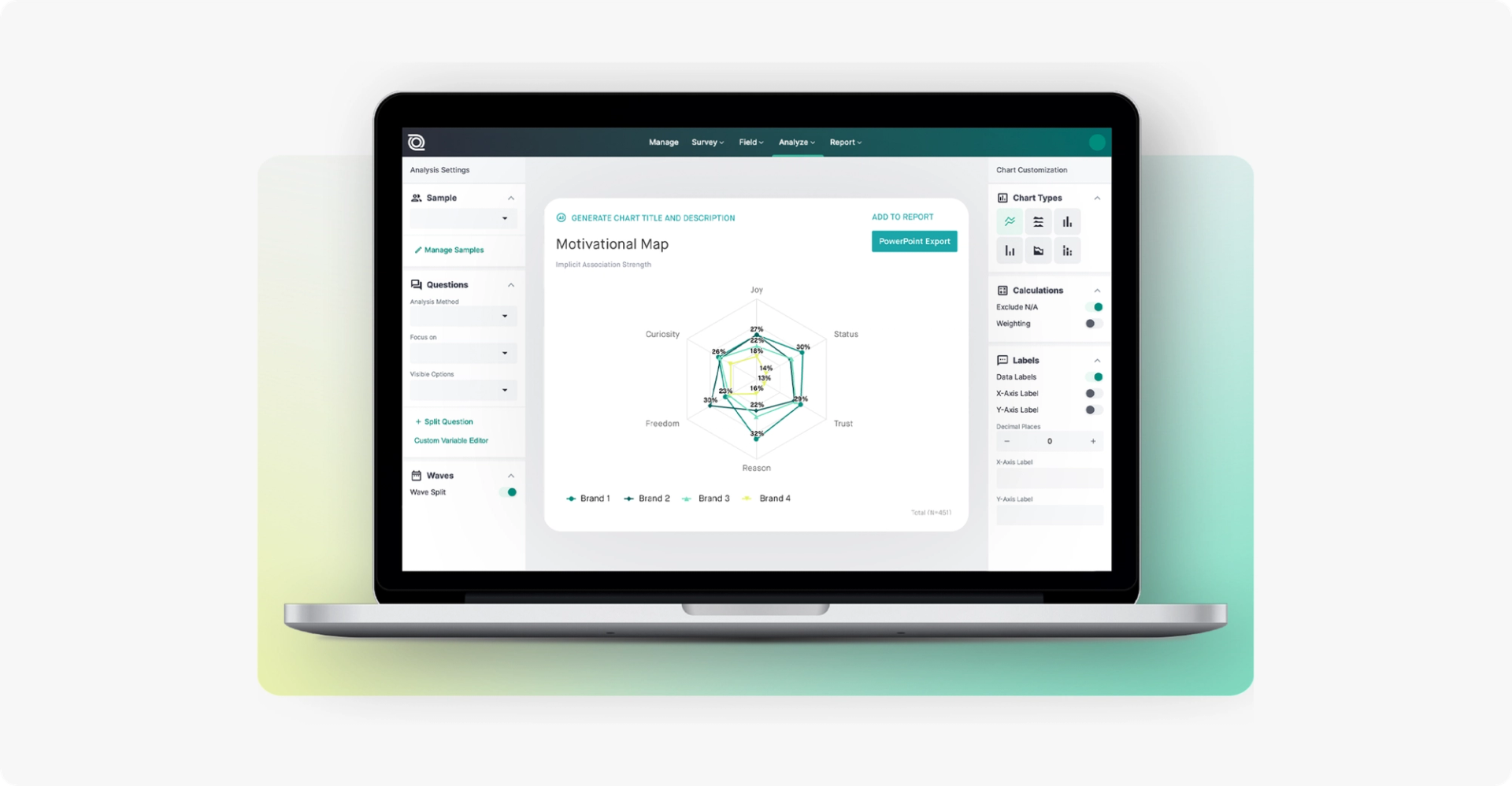
Quantilope is a consumer intelligence platform that pairs automated brand tracking with 15+ advanced research methodologies. Its Better Brand Health Tracking (BBHT) approach incorporates Category Entry Points and Mental Availability analysis, grounded in Ehrenberg-Bass thinking.
The key differentiator over Latana is research breadth. Latana focuses on brand health metrics. Quantilope gives you the tools to investigate why metrics are moving through methodologies like MaxDiff, conjoint analysis, and implicit association testing, all within a single platform.
Key Features
- Automated brand tracking: Dashboards update as survey responses come in, giving near-real-time visibility into brand health metrics
- 15+ automated research methods: MaxDiff, conjoint, implicit association, and more, condensing weeks of traditional research into days
- AI co-pilot (quinn): Identifies patterns, generates chart headlines, and summarizes dashboards for stakeholders
Pricing
Custom quote. Contact Quantilope for a demo.
Pros
- Competitive benchmarking across key brand health metrics alongside deeper research capabilities
- Interactive, shareable dashboards for distributing findings across teams
- Multi-language study support for international research
Cons
- Steeper learning curve for teams without a research background
- Platform subscription means you may pay for capabilities you don't use if tracking is your only need
- Full methodology access requires enterprise pricing that isn't publicly available
4. Attest
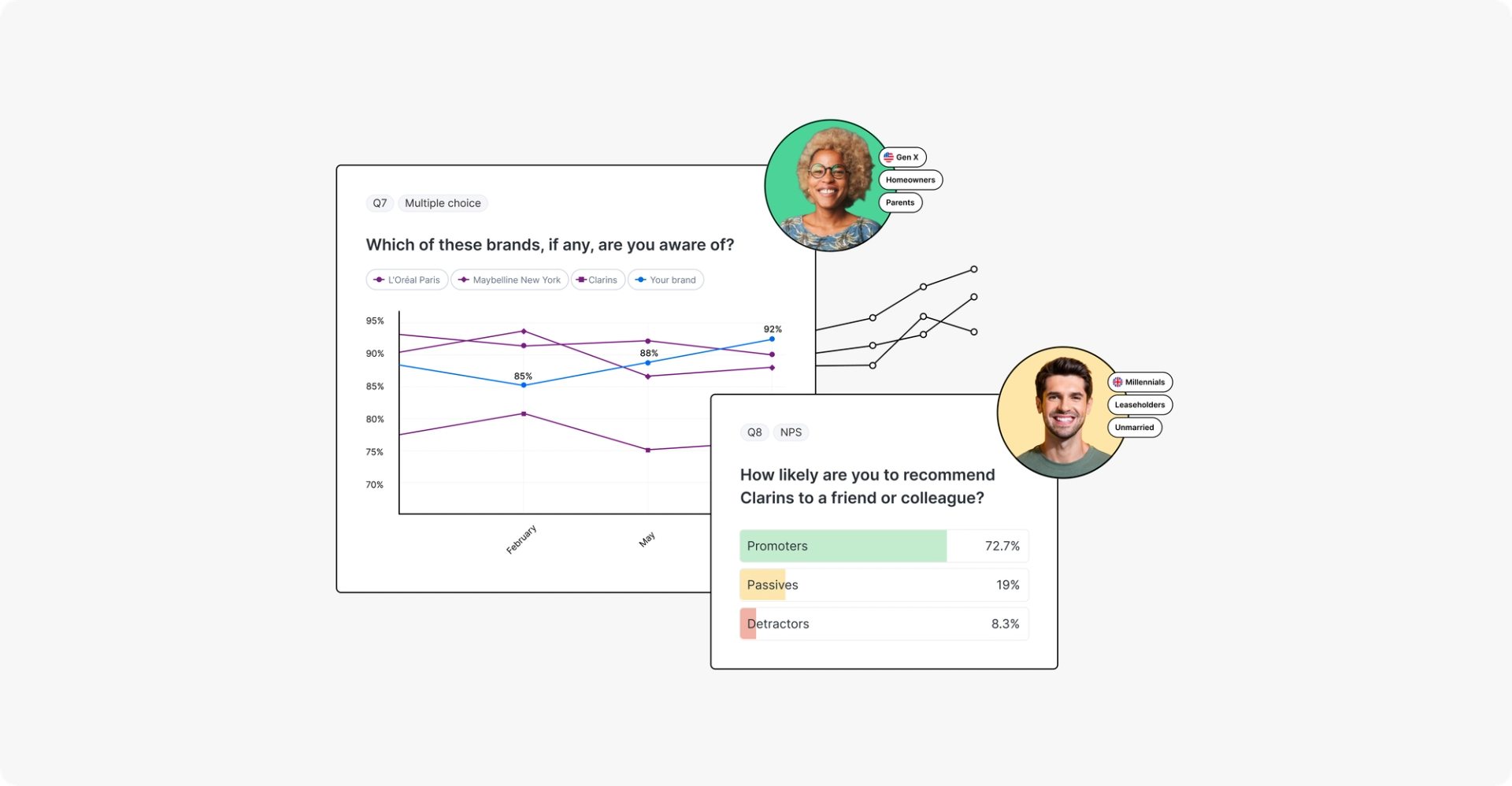
Attest is a consumer research platform that approaches brand tracking through customizable surveys rather than a fixed tracking dashboard. It lets you build and run your own brand tracking studies, combining quantitative metrics with qualitative follow-up questions for richer context behind the numbers.
The differentiator over Latana is flexibility. Where Latana runs a fixed set of brand health metrics on a fixed schedule, Attest lets you design studies that go beyond standard tracking. You can add custom questions, explore qualitative themes, and adapt your study design over time. For teams who view brand tracking as one piece of a broader consumer research program, Attest offers that adaptability.
Key Features
- Hybrid research: Combines quantitative brand metrics with qualitative open-ended feedback in a single study
- Large consumer panel: Access to over 150 million consumers across 59 countries and 70+ languages
- Custom survey templates: Fully customizable study design with the flexibility to adapt questions and methodology over time
Pricing
Credit-based subscription plans scaling from Basic to Custom tiers. All tiers include expert support, global panel access, unlimited seats, and full feature access.
Pros
- Dedicated customer research manager who helps design studies and interpret results
- Side-by-side segment comparison for analyzing different audience groups simultaneously
- Flexibility to combine brand tracking with ad testing, concept validation, and other research needs
Cons
- More hands-on than always-on platforms, requiring you to design and manage your own tracking cadence
- Less sophisticated brand-specific analytics (funnel visualization, trend detection) compared to purpose-built trackers
- Periodic study waves create gaps between data collection, unlike continuous tracking platforms
5. Kantar
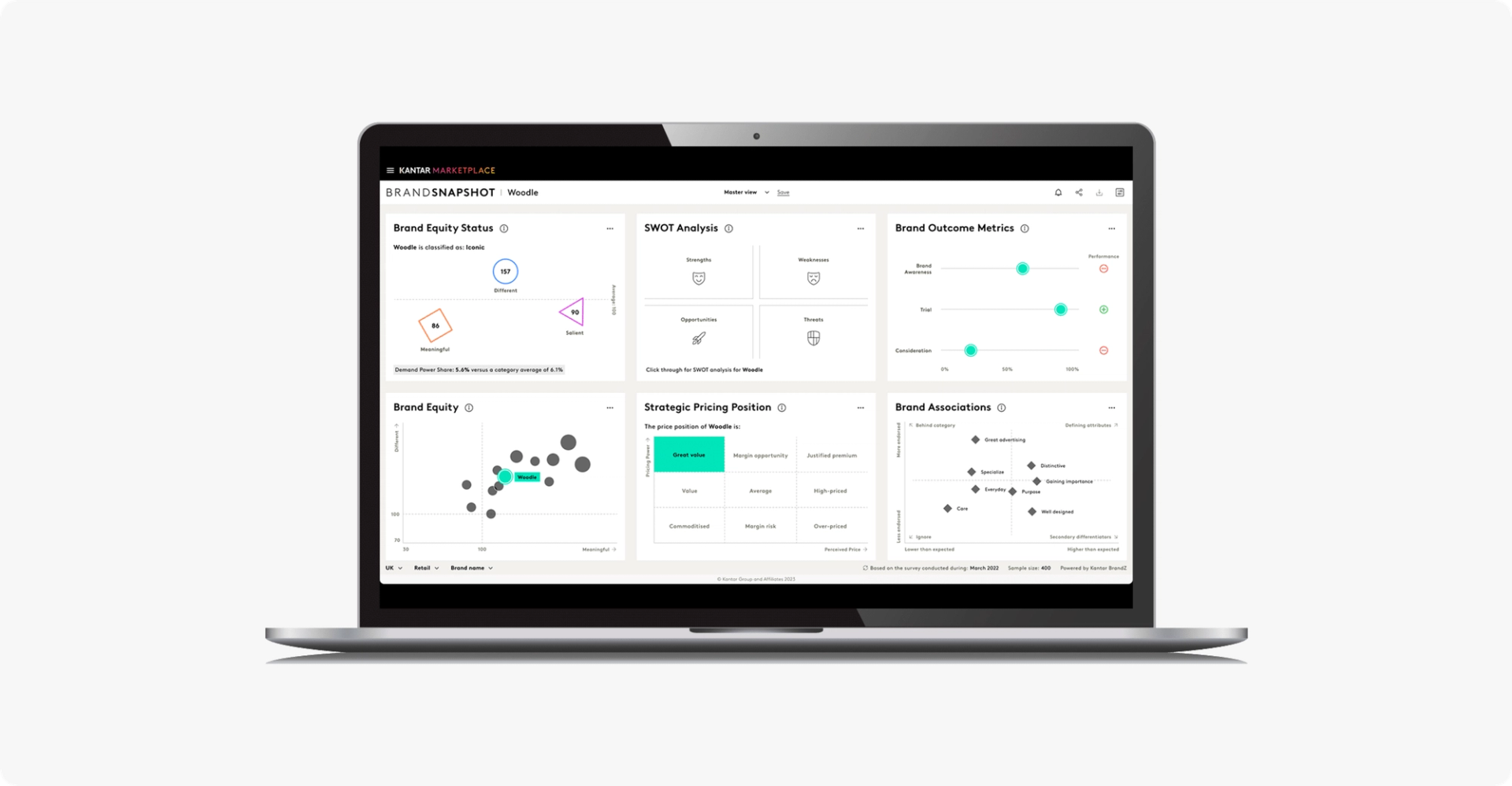
Kantar is the traditional heavyweight of brand tracking. Its BrandZ and brand tracking solutions are used by many of the world's largest advertisers, backed by proprietary frameworks like Meaningful, Different, and Salient (MDS) that have been refined over decades of brand research.
The differentiator over Latana is depth and customization. Kantar's brand tracking is a full-service research engagement, not a self-serve platform. You get fully tailored surveys, advanced brand equity modeling, campaign effectiveness measurement, and dedicated research teams managing the entire program.
Key Features
- Proprietary brand equity frameworks: Deep equity measurement using Meaningful Different Salient (MDS), built on decades of validation data
- Fully customizable research design: Surveys, methodologies, and metrics tailored to your specific brand and category
- Global coverage: Research capabilities in virtually any market with established local teams
Pricing
Custom-quoted as managed research projects. Engagements typically start in the six figures annually.
Pros
- Most established and methodologically rigorous brand tracking offering in the industry
- Dedicated research teams who design, manage, and interpret your entire tracking program
- Advanced analytics, including brand equity modeling and campaign effectiveness measurement
Cons
- Pricing puts it out of reach for most mid-market brands
- Results often arrive quarterly, and projects can take weeks to scope and launch
- Less day-to-day control over your tracking program compared to self-serve platforms
How to choose the right Latana alternative?
The right platform depends on what's driving your evaluation. Here’s how to think about it:
Accessibility and budget
If you need brand tracking that's affordable without enterprise-level investment, Tracksuit offers always-on tracking starting at $19,500/year with a dashboard designed for stakeholder communication. That's a fraction of what multi-market tracking costs on most other platforms.
Historical depth and daily frequency
If your team needs to track fast-moving brand perception shifts or benchmark against years of historical data, YouGov BrandIndex's daily updates and 18+ years of brand data across 56 markets give you context that newer platforms can't match.
Tracking combined with consumer research
If you want to pair brand tracking with deeper research methodologies, Quantilope automates 15+ methods alongside tracking in one platform. Attest offers a more flexible, DIY approach where you design custom studies that blend tracking with qualitative exploration.
Maximum methodological depth
If the priority is the most rigorous brand growth measurement with full customization, Kantar's managed research engagements deliver decades of validated frameworks at a price point that reflects that level of service.
Granular niche segmentation
If precise segmentation of small audience groups is your primary requirement, Latana's MRP methodology is genuinely strong for this use case. Staying with Latana may be the right call, and that's a perfectly reasonable conclusion.
What makes Tracksuit the best Latana alternative?
Tracksuit and Latana both help marketing teams understand how consumers perceive their brand relative to competitors. However, the difference is in their approach.
Latana is built for statistical precision. Its MRP methodology and mobile-ad surveys deliver tight confidence intervals for niche audience segments, which matters for brands that need granular segmentation across many international markets.
Tracksuit is built for accessibility. Its census-weighted surveys, intuitive dashboard, and flat annual pricing make brand health tracking practical for teams that previously found it too expensive or too complex. The dashboard is designed for marketers to use directly and share with leadership, not for research specialists to interpret on their behalf.
For consumer brands where the priority is getting reliable awareness, consideration, and preference data in front of decision-makers on a regular basis, without the per-market cost escalation or research-heavy workflow, Tracksuit is the stronger fit.
Find the brand tracking platform that fits your team
No single brand tracking platform is the right fit for every team. The most useful question isn't "Which platform is best?" but "Which platform best fits how your team will actually use the data?"
If you want brand tracking that's built for marketing teams, affordable enough to justify without a six-figure budget, and designed to put brand data in front of leadership on a regular basis, Tracksuit is worth a look.
Request a demo and see how your brand compares.