7 Best Competitor Analysis Tools for Smarter Strategy
Written by


Quick Summary
The best competitor analysis tools depend on what you need to measure. Tracksuit tracks brand perception through consumer surveys. Semrush and Ahrefs cover SEO and search intelligence. BuzzSumo and Brand24 handle content and social monitoring. SimilarWeb estimates competitor traffic, and Crayon tracks strategic competitive signals.
Want Competitor Insights Beyond SEO Data?
Tracking your own marketing performance only tells half the story. Without competitor analysis tools, you have no way of knowing whether you're gaining ground or falling behind.
The challenge is that "competitor analysis" means different things depending on which tool you use. An SEO platform showing backlink profiles and a brand tracking tool measuring consumer perception both count as "competitive analysis." However, they answer completely different questions.
This guide breaks down 7 of the best competitor analysis tools by what they actually do, so you can pick the right one for the insight you need.
Why Listen to Us?
Tracksuit works with over 1,000 brands, including Athletic Brewing Company, Turo, Steve Madden, and The RealReal. We help marketing teams benchmark brand health against competitors and connect perception data to commercial outcomes. That experience gives us a clear view of where different competitor analysis tools fit and where they fall short.
What Are Competitor Analysis Tools?
Competitor analysis tools collect data across search rankings, website traffic, social media activity, content performance, brand perception, and market positioning. They help you understand what competitors are doing, how they're performing, and where you can gain an edge.
Competitive intelligence comes in three layers:
Perception-level intelligence shows how consumers see your brand versus competitors. Who are they aware of? Who would they consider buying? This layer connects most directly to revenue, because consumer perception drives purchase decisions.
Digital performance intelligence covers how competitors perform across search, paid ads, traffic, and content. It's the tactical layer of what they're doing online.
Market and signal intelligence tracks what competitors are doing strategically. Product launches, hiring patterns, pricing changes, and PR moves all signal where they're heading.
Most teams need insight across more than one layer. Relying on digital performance tools alone gives you one dimension of a multi-dimensional picture.
7 Best Competitor Analysis Tools By Category
1. Tracksuit
Category: Brand perception benchmarking
Tracksuit is an always-on brand tracking platform that benchmarks your brand against competitors on the metrics consumers care about most: awareness, consideration, usage, and preference. It measures growth through continuous, census-weighted surveys of real category buyers.
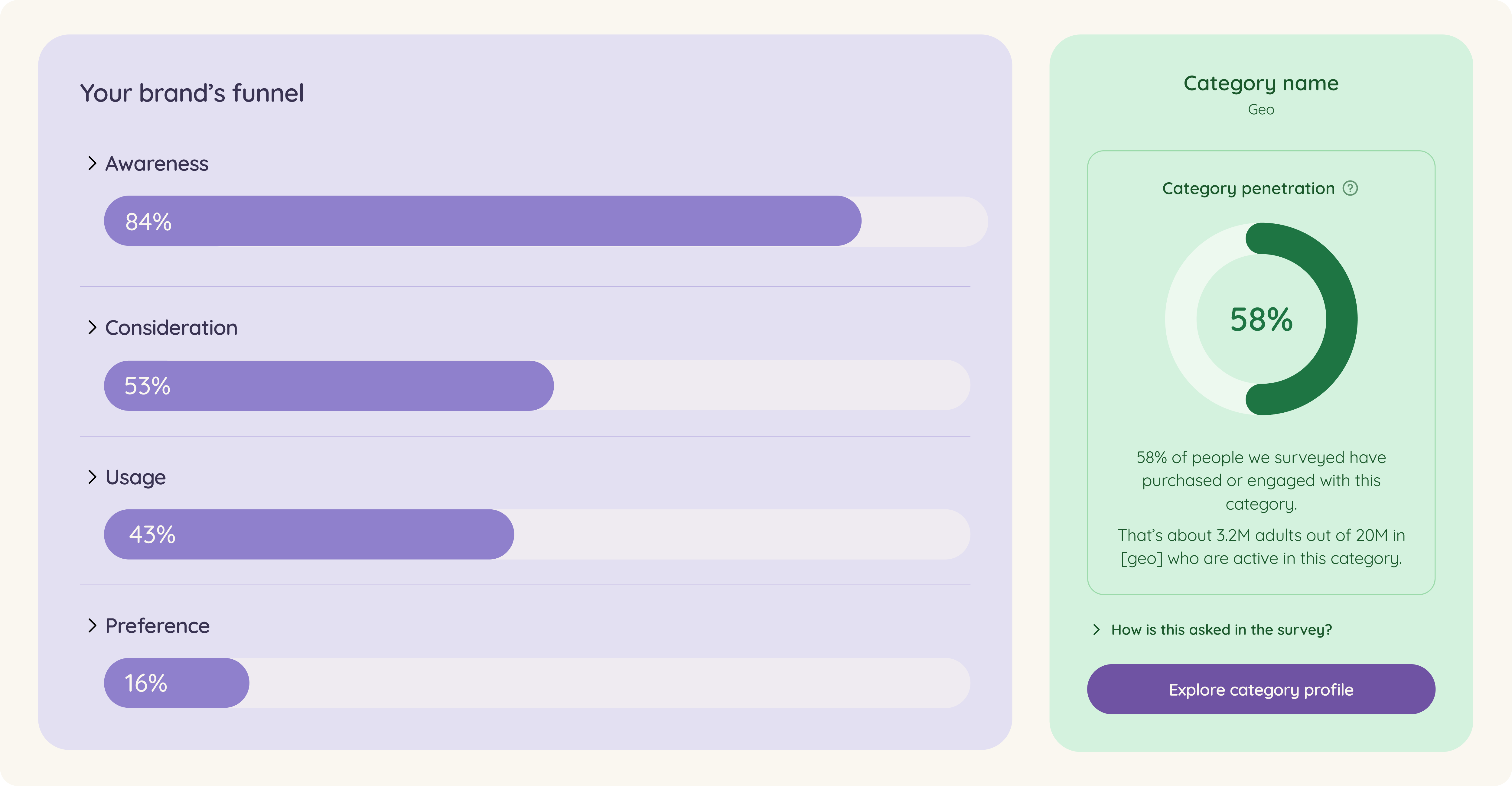
Most competitor analysis tools show what rivals are doing (their SEO, their ad spend, and their content). Tracksuit shows whether any of it is working, i.e., whether competitors are actually gaining ground in consumers' minds, or whether your brand is pulling ahead. That's a fundamentally different kind of competitive insight, and it's the one that connects most directly to commercial outcomes.
Key Features
- 5-stage brand funnel: Tracks awareness, consideration, investigation, usage, and preference against competitors with monthly updates from census-weighted consumer surveys
- Brand perception tracking: Measures what consumers associate with your brand versus competitors through Imagery and Statements, and how those associations shift over time
- Milestone tagging: Mark your campaigns and competitor moves directly on the timeline, connecting perception shifts to specific events
- AI-generated Coach's Notes: Surfaces the most significant competitive changes automatically, so you don't need to dig through dashboards to find the story
- Conversion Drivers analysis: Identifies which brand attributes most strongly predict consumers choosing one brand over another, so you know which perceptions are worth investing in
Pricing
Plans start at $19,500/year for one brand category, your brand plus 5 competitors, with over 4,000 consumers surveyed. Add-ons are available for extra competitors, markets, and brand perception statements.
Pros
- Segments competitive benchmarks by demographics, geography, and target audience
- Unlimited seats, so marketing, agencies, and leadership all work from the same data
- Launches in roughly 30 days with minimal setup effort
- Affordable compared to traditional brand tracking, which often costs $100K+ annually
- Dashboard is intuitive enough for marketers to use without research training
Cons
- Designed for consumer brands, so less applicable for B2B companies
- Global market coverage is still expanding
2. Semrush
Category: SEO and search intelligence
Semrush is one of the most comprehensive digital marketing intelligence platforms available. It covers SEO, paid search, content marketing, and social media competitive analysis. For teams that want a single platform to understand competitor activity across digital channels, Semrush is the broadest option on this list.
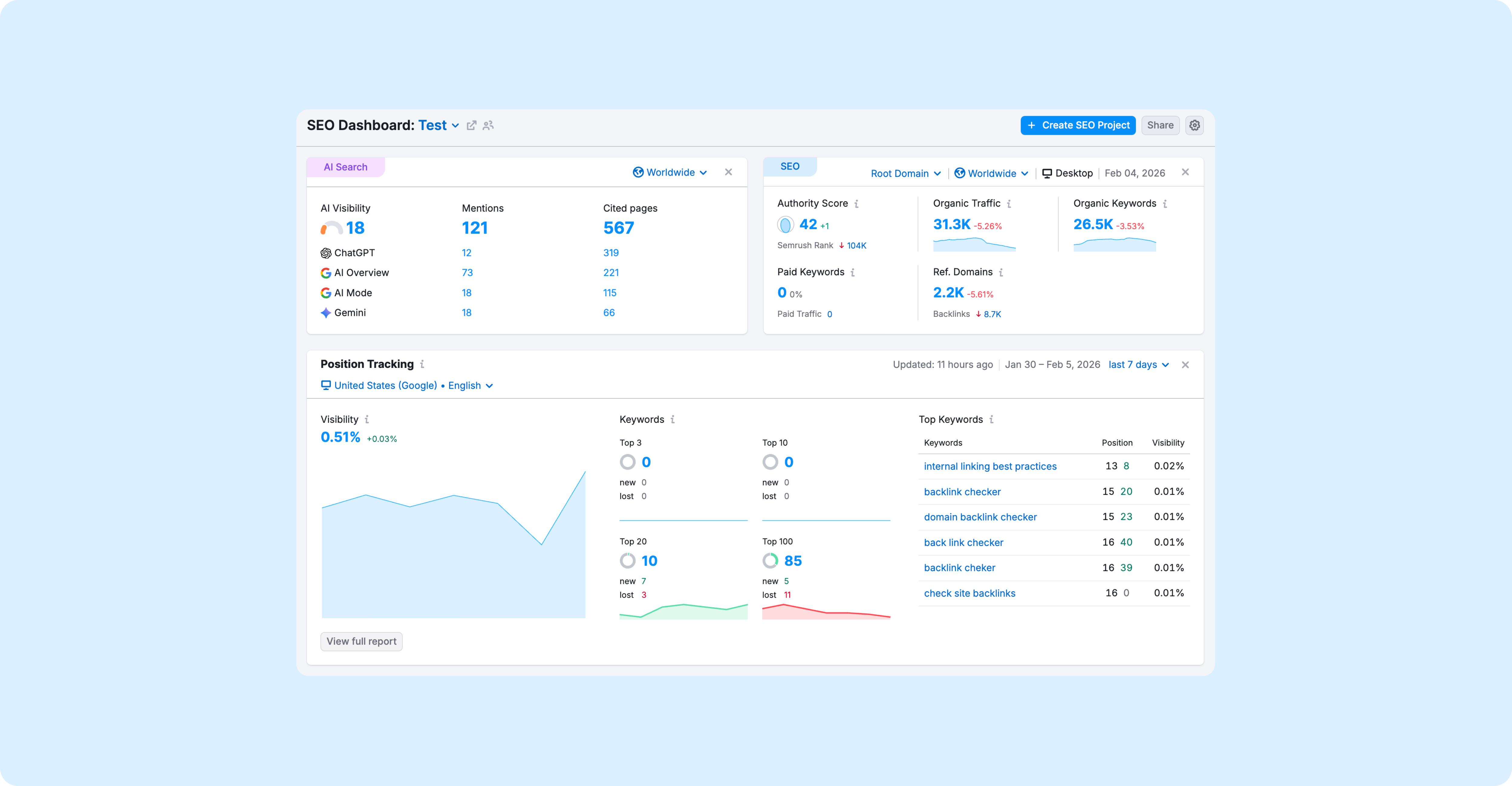
That breadth is both its strength and its limitation. It does a lot of things well, but it won't tell you how consumers actually perceive your brand relative to competitors. For that perception layer, you'd pair it with a tool like Tracksuit.
Key Features
- Keyword gap analysis: Compares your keyword profile against competitors to reveal organic opportunities you're missing
- Traffic analytics: Estimates competitor website traffic by source, geography, and device
- Paid ad intelligence: Shows competitor ad copy, keywords, and estimated spend across Google Ads
Pricing
SEO Toolkit plans start at $139.95/month (Pro). Guru is $249.95/month with historical data and content tools. Business is $499.95/month. Semrush One bundles SEO and AI Visibility toolkits starting at $199/month. 14-day free trial available on select plans.
Pros
- Covers SEO, PPC, content, and social competitive intelligence in one platform
- Market Explorer module sizes your market and profiles audience demographics
- Large keyword and backlink database with regular updates
Cons
- Modular pricing adds up quickly if you need traffic analytics, social, and advertising toolkits separately
- Data is estimated, not directly measured, so accuracy varies for smaller sites
- Doesn't measure consumer brand perception, only digital performance
3. Ahrefs
Category: SEO and search intelligence
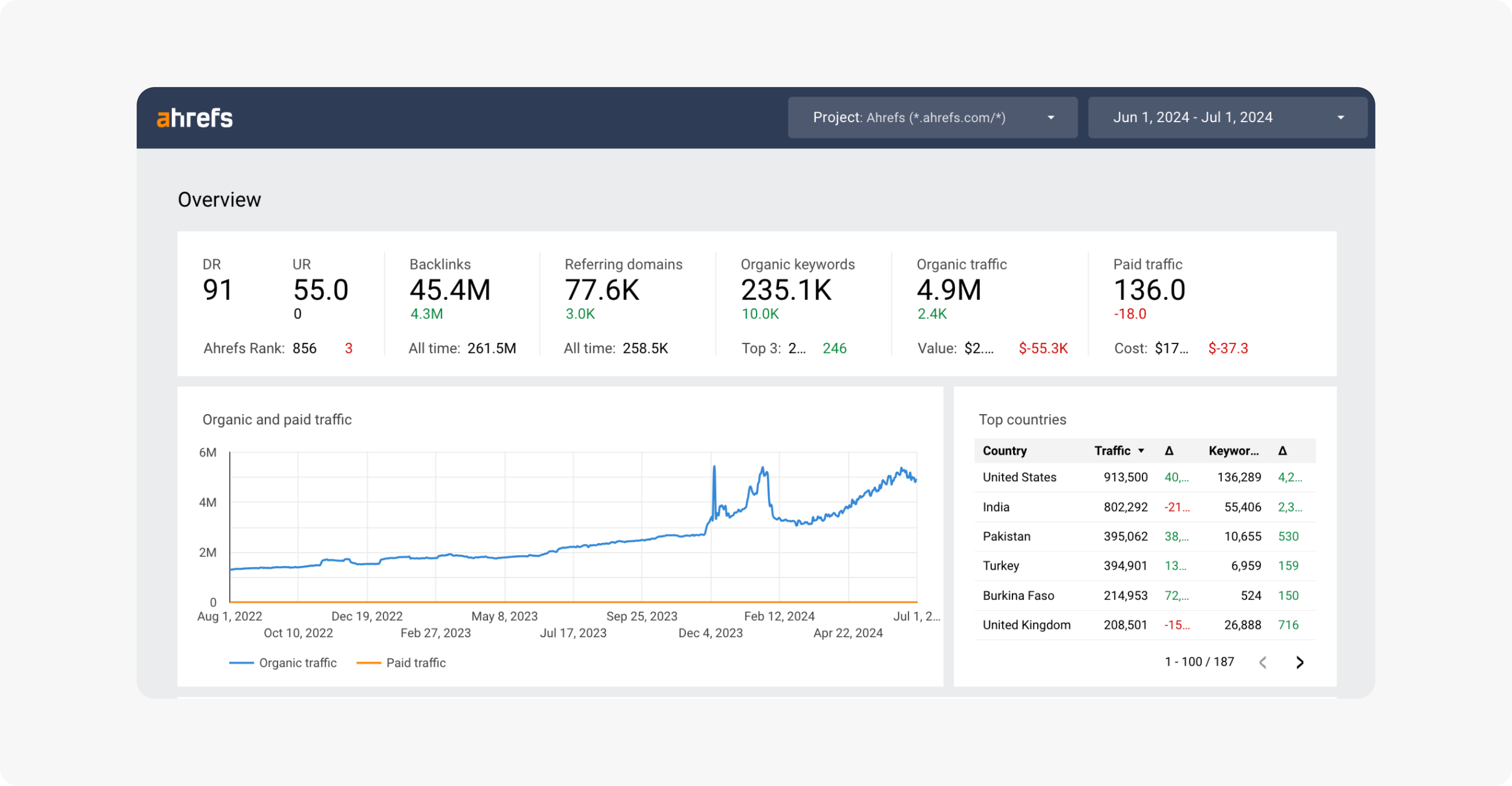
Ahrefs is widely considered the benchmark for SEO-focused competitor analysis, particularly backlink intelligence and organic search benchmarking. If you need to understand why a competitor outranks you and what it would take to close the gap, Ahrefs is where most SEO teams start.
It goes deeper on organic search than Semrush in several areas, especially backlinks. But it's narrower in scope. It's specifically for understanding the organic search competitive landscape, not brand perception, social strategy, or broader market intelligence.
Key Features
- Site Explorer: Provides a detailed view into any domain's organic traffic, top-ranking pages, keyword positions, and backlink profile
- Content gap analysis: Identifies keywords your competitors rank for that you don't, revealing the clearest organic opportunities
- Backlink analysis: Examines competitor link profiles in detail (referring domains, anchor text, link quality) to inform your link-building strategy
Pricing
Starter plan at $29/month for basic keyword research. Lite plan at $129/month for 5 projects. Standard at $249/month for 20 projects. Advanced at $449/month. Enterprise at $1,499/month. Free webmaster tools available with limited access. No free trial on paid plans.
Pros
- One of the largest backlink indexes in the industry with frequent crawl updates
- Keyword research tools are fast, detailed, and layered with real traffic estimates
- Organic competitors report shows keyword overlap and traffic estimates across rival sites
Cons
- Credit-based usage limits on lower-tier plans restrict how much research you can do per month
- Pricing increased significantly in 2024, making it less accessible for smaller teams
- Narrower scope than Semrush, so you'll need additional tools for paid ads, social, or brand tracking
4. BuzzSumo
Category: Content and social competitive intelligence
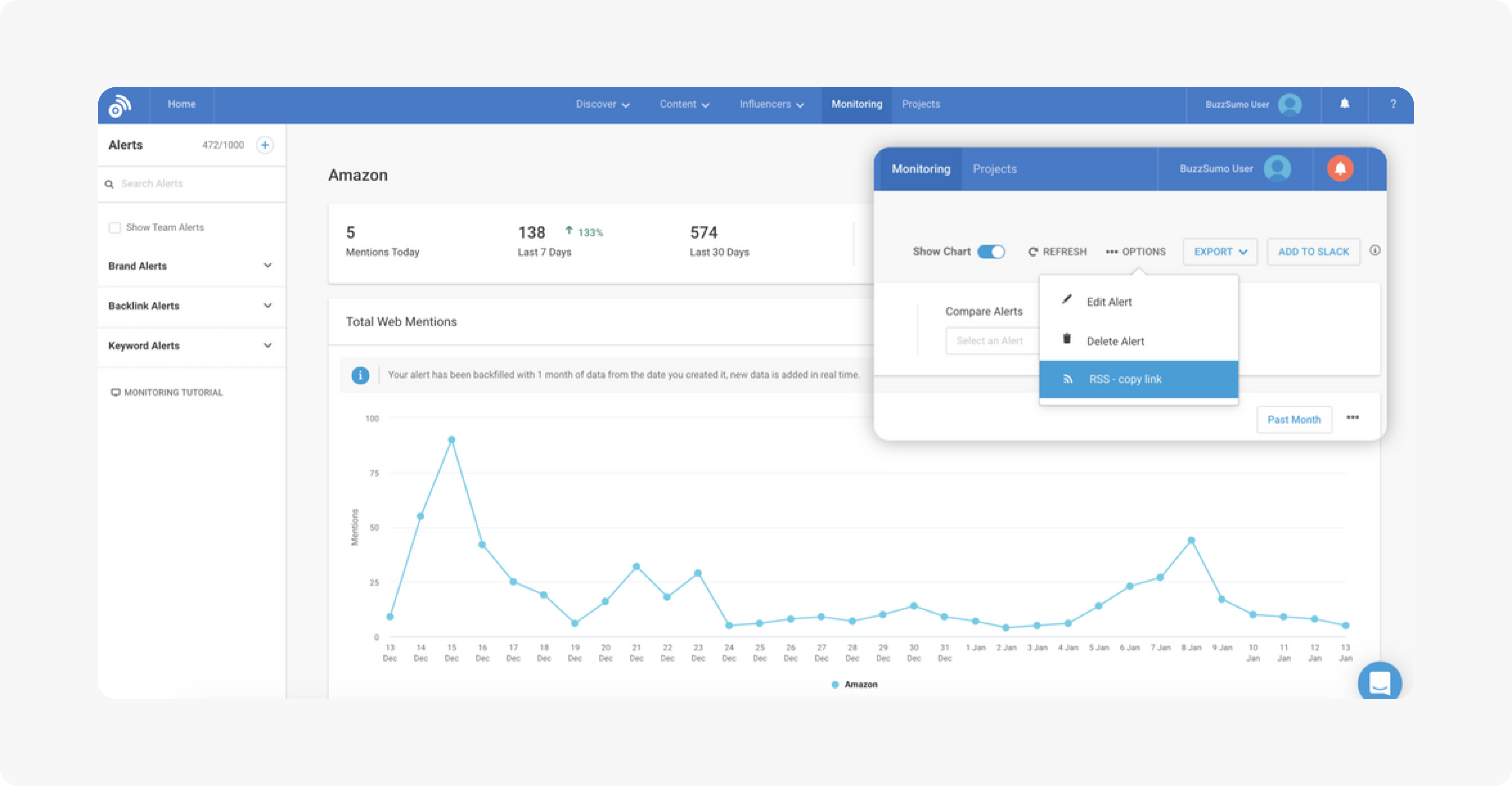
BuzzSumo is a content and social media competitor analysis tool that shows you what's performing in your category. It identifies which topics get shared, which formats drive engagement, and what competitors are publishing that actually resonates with audiences. For content teams that need to benchmark performance and spot opportunities, BuzzSumo is the go-to.
It focuses specifically on content and social performance. It won't tell you about search rankings or how consumers perceive your brand, but answers the "What content is working for our competitors?" question well.
Key Features
- Content performance analysis: Tracks shares, engagement, and reach for any topic, domain, or competitor across social platforms
- Trending topic identification: Spots what's gaining traction in your category before competitors capitalize on it
- Influencer discovery: Shows who's sharing and amplifying competitor content, and how much reach they have
Pricing
Content Creation plan at $199/month for 1 user. PR & Comms at $299/month for 5 users. Suite at $499/month for 10 users. Enterprise at $999/month for 30 users. 30-day free trial available.
Pros
- Strong content gap analysis for finding topics and angles competitors haven't covered
- Real-time monitoring and alerts for competitor content and brand mentions
- Useful for both content strategy and digital PR research
Cons
- Pricing is restrictive for teams, since each tier limits the number of users
- Best features like full historical data and advanced filters are locked to higher plans
- Focused on content performance only, so it doesn't cover SEO rankings or brand perception
5. Brand24
Category: Content and social competitive intelligence
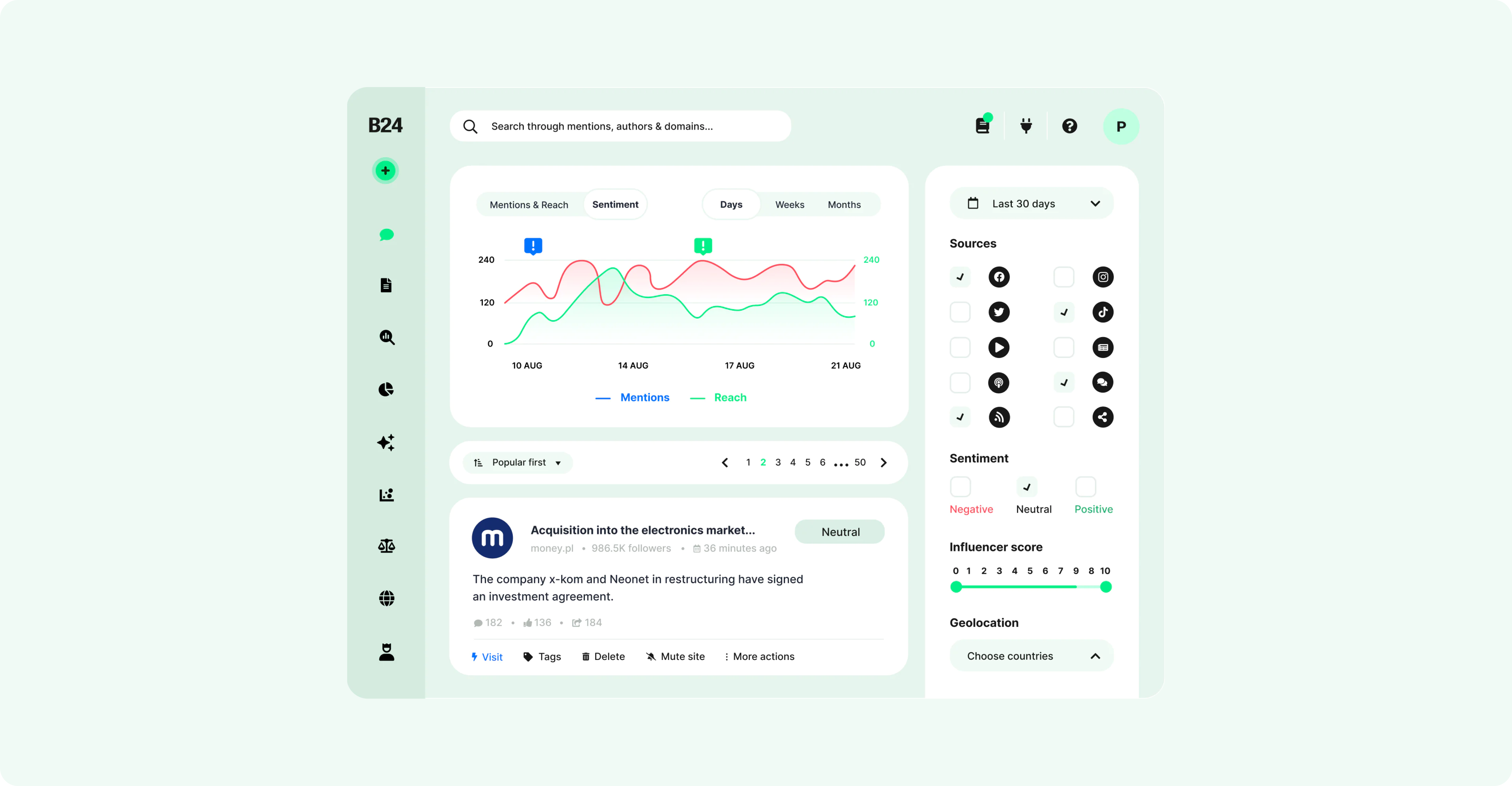
Brand24 is a social listening and media monitoring platform that tracks what people are saying about your brand and competitors across social media, news, blogs, forums, podcasts, and review sites. It captures the public conversation layer of competitive intelligence in real time.
This is different from brand tracking. Social mentions capture the vocal minority, while survey-based tools like Tracksuit measure what a representative sample of consumers actually think. Both are valuable, but they answer different questions. Brand24 is best for real-time awareness of competitor PR, reputation shifts, and emerging conversations.
Key Features
- Real-time monitoring: Tracks brand and competitor mentions across social media, news, blogs, forums, and review sites
- Sentiment analysis: Categorizes mentions as positive, negative, or neutral and tracks how competitor sentiment shifts over time
- Share of voice comparison: Shows how much of the category conversation you own versus competitors
Pricing
Individual plan at $199/month (billed annually). Team at $299/month. Pro at $399/month (billed annually). Enterprise at 1499/month (billed annually). 14-day free trial available.
Pros
- Clean, intuitive dashboard with minimal learning curve
- AI-powered insights that summarize trends and generate reports from monitoring data
- Covers a wide range of sources, including podcasts and review sites on higher plans
Cons
- Only captures publicly expressed opinions, not broader consumer perception
- Real-time data updates are limited on lower-tier plans
- No publishing, scheduling, or social management features, so you'll need it alongside other tools
6. Similarweb
Category: Digital traffic intelligence
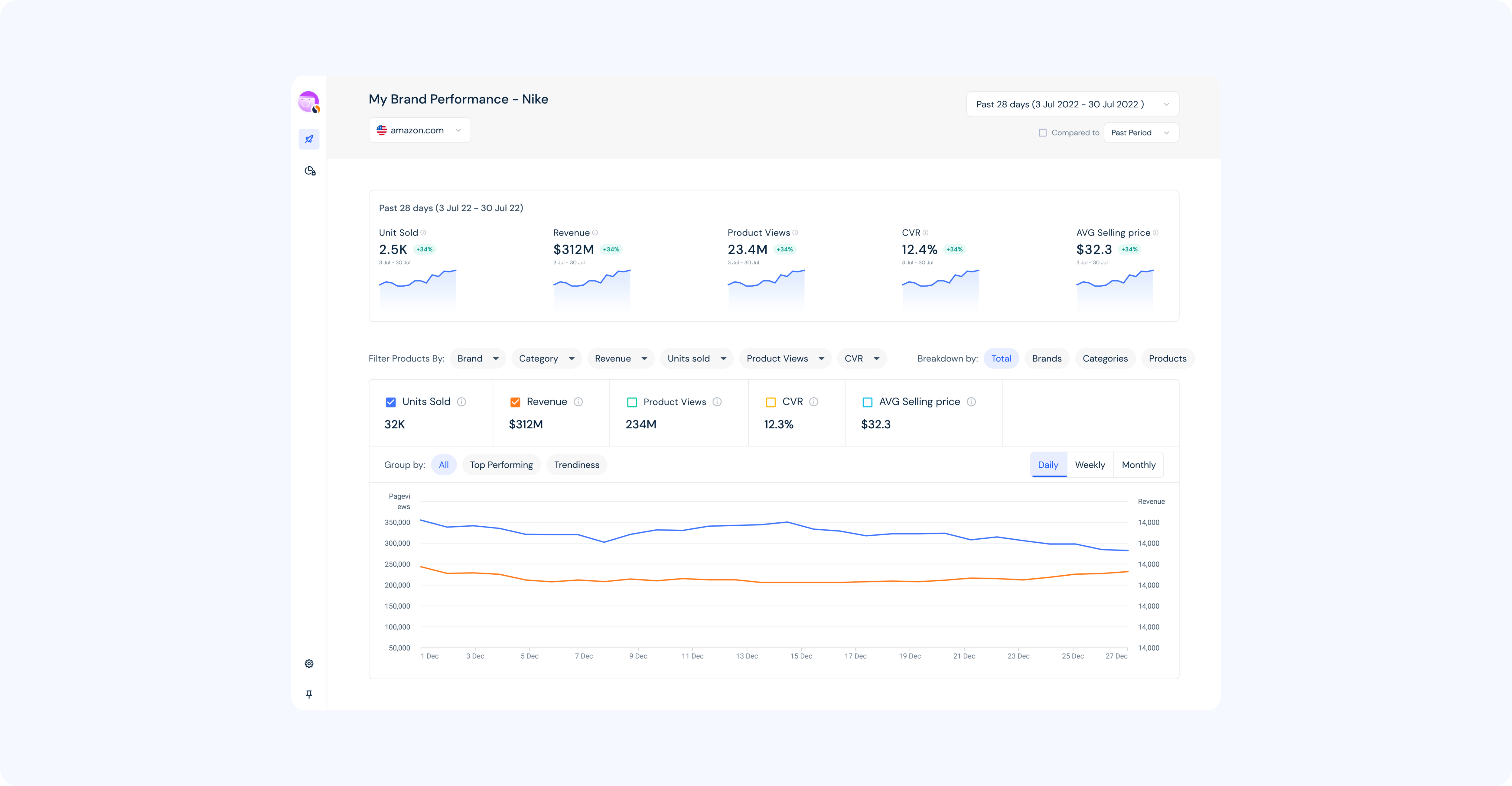
Similarweb is a digital intelligence platform that estimates competitor website traffic, marketing channel mix, audience behavior, and market share across industries. It gives you the big-picture view of how competitors drive traffic and where their digital audiences come from.
The data is estimated from third-party clickstream partnerships and web crawlers, not directly measured. Accuracy tends to be stronger for high-traffic sites and less reliable for smaller ones. Like other digital tools, it shows online behavior but not how consumers actually perceive the brands behind the traffic.
Key Features
- Traffic estimation and benchmarking: Competitive traffic analysis across industries, with breakdowns by source (organic, paid, social, referral, direct)
- Audience overlap analysis: Shows shared visitors between your site and competitors
- Market share insights: Industry benchmarks that show your position within your competitive set
Pricing
Web Intelligence Starter plan at $199/month or $1,500/year. Professional at $399/month or $4,000/year. Businesses and Enterprises use custom pricing. 7-day free trial available (credit card required).
Pros
- Broad traffic intelligence covering web, mobile apps, and marketing channels
- Useful for identifying which channels competitors invest in most
- AI-powered SEO strategy tools and keyword research capabilities on higher plans
Cons
- Accuracy drops significantly for low-traffic websites
- Country-level filters and advanced features require expensive Team or Business plans
- Doesn't measure consumer brand perception or sentiment
7. Crayon
Category: Strategic competitive intelligence
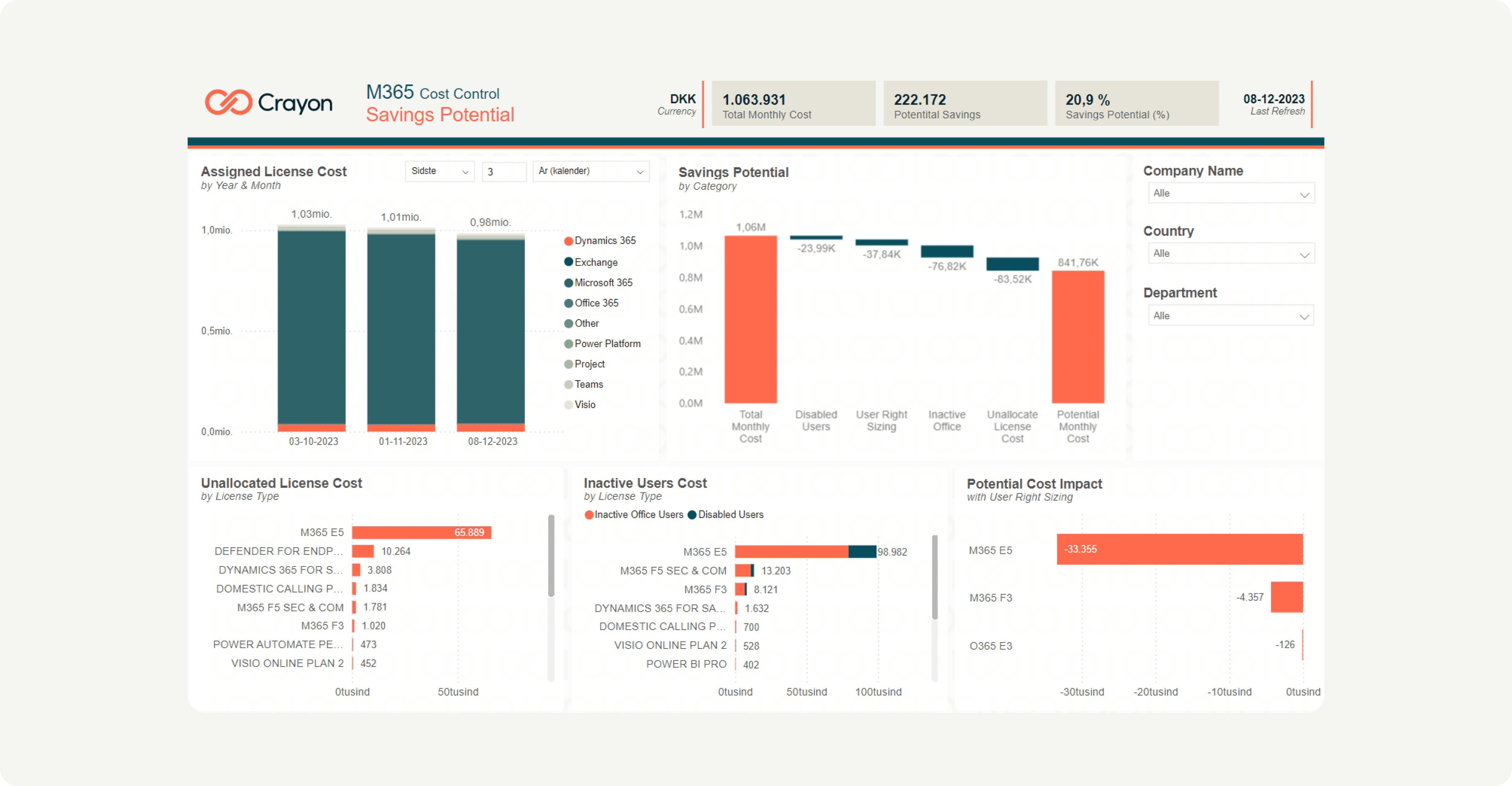
Crayon is a dedicated competitive intelligence platform that automates the collection of public competitive signals. It monitors website changes, product updates, pricing shifts, job postings, news coverage, and regulatory filings, then turns them into structured intelligence for go-to-market teams.
Where SEO tools show search performance and brand trackers show consumer perception, Crayon shows what competitors are doing strategically. It's the signal layer that helps you anticipate competitor moves rather than just react to them.
Key Features
- Automated signal monitoring: Tracks competitor websites, product pages, pricing, job listings, news, and social activity automatically
- Battlecard creation: Gives sales and marketing teams ready-to-use competitive positioning for specific rivals
- Win/loss analysis: Connects competitive intelligence to deal outcomes
Pricing
Custom enterprise pricing based on tracked competitors, data sources, and seats. Contact Crayon for a demo and quote.
Pros
- Reduces hours of manual competitive research with automated monitoring
- AI-assisted signal prioritization surfaces the most important changes from the noise
- Collaboration features let marketing, sales, and product teams share intelligence in one place
Cons
- Enterprise pricing makes it inaccessible for smaller teams or early-stage companies
- Focused on public signals, so it can't tell you about internal competitor strategy or consumer perception
- Requires ongoing curation to stay useful, since automated signals need human context
How to Choose the Right Competitor Analysis Tools
Different tools answer different competitive questions. Match the tool to the insight you need.
Understanding Brand Perception
If you want to know whether your brand is winning in consumers' minds, not just on search results pages, then you need survey-based tracking. Tracksuit measures brand awareness through always-on consumer surveys that benchmark awareness, consideration, and preference directly against competitors.
Analyzing Search and Paid Performance
If you need to understand how competitors perform across organic search, paid ads, and content, Semrush gives you the broadest cross-channel view. Ahrefs goes deeper on backlink intelligence and organic search specifically.
Finding What Content Resonates
For teams trying to figure out what competitors are publishing that actually gets traction, BuzzSumo tracks content engagement across social platforms. Brand24 picks up the real-time conversation layer: mentions, sentiment shifts, and emerging discussions across social media and the web.
Estimating Competitor Traffic
When you need a big-picture view of how competitors drive visitors and which channels they lean on most, SimilarWeb estimates traffic, channel mix, and audience behavior across the web.
Anticipating Strategic Moves
If the question is "What are competitors planning?" rather than "What are they doing online?", Crayon automates the collection of public signals, such as pricing changes, product updates, job postings, and press coverage, so your team can stay ahead of rivals.
The most complete competitive view comes from combining tools across layers. A brand marketing team might pair Tracksuit (perception) with Semrush (digital performance) and Brand24 (social conversation). A product marketing team might pair Crayon (strategic signals) with SimilarWeb (traffic) and Tracksuit (brand health).
Start Tracking What Consumers Actually Think
Search rankings and traffic estimates show you what competitors are doing. Brand perception data shows you whether any of it is working.
If you want to understand how your brand truly stacks up against competitors in consumers' minds, that requires a different kind of intelligence. Tracksuit gives marketing teams always-on access to awareness, consideration, and preference data, benchmarked against competitors and updated monthly.
Request a demo and see how your brand compares where it matters most.


