Best market research tools: Why you need them, how to choose one, and top 10 picks
Written by

Quick summary
Market research software gives you a clear picture of what your audience thinks about your product. This article compares the 10 best market research tools for understanding your customers in 2026, featuring Tracksuit as the leading tool, followed by SurveyMonkey and Qualtrics. It explains why research tools are important and what to consider before committing to any platform.
Platform- Tracksuit, Best For- Always-on audience data
Platform- SurveyMonkey, Best For- Direct customer feedback collection
Platform- Qualtrics, Best For- Managing multiple types of market research
Want to know what customers really think about your business?
Most marketing teams have more data than they know what to do with in the form of clicks, conversions, page views, and email opens. What they don't have is a clear picture of what their customers actually think. Do people in your category know your brand exists? Would they consider buying from you? What do they associate with your brand versus competitors?
That's the gap market survey tools fill. They move you beyond behavioral data (what people do) to perception data (what people think, feel, and believe), the kind of insight that shapes brand strategy, product positioning, and messaging decisions.
This Tracksuit guide reviews and ranks 10 of the best market research software by what they actually do, so you can match the right tool to the research question you're trying to answer.
But first…
Why listen to us?
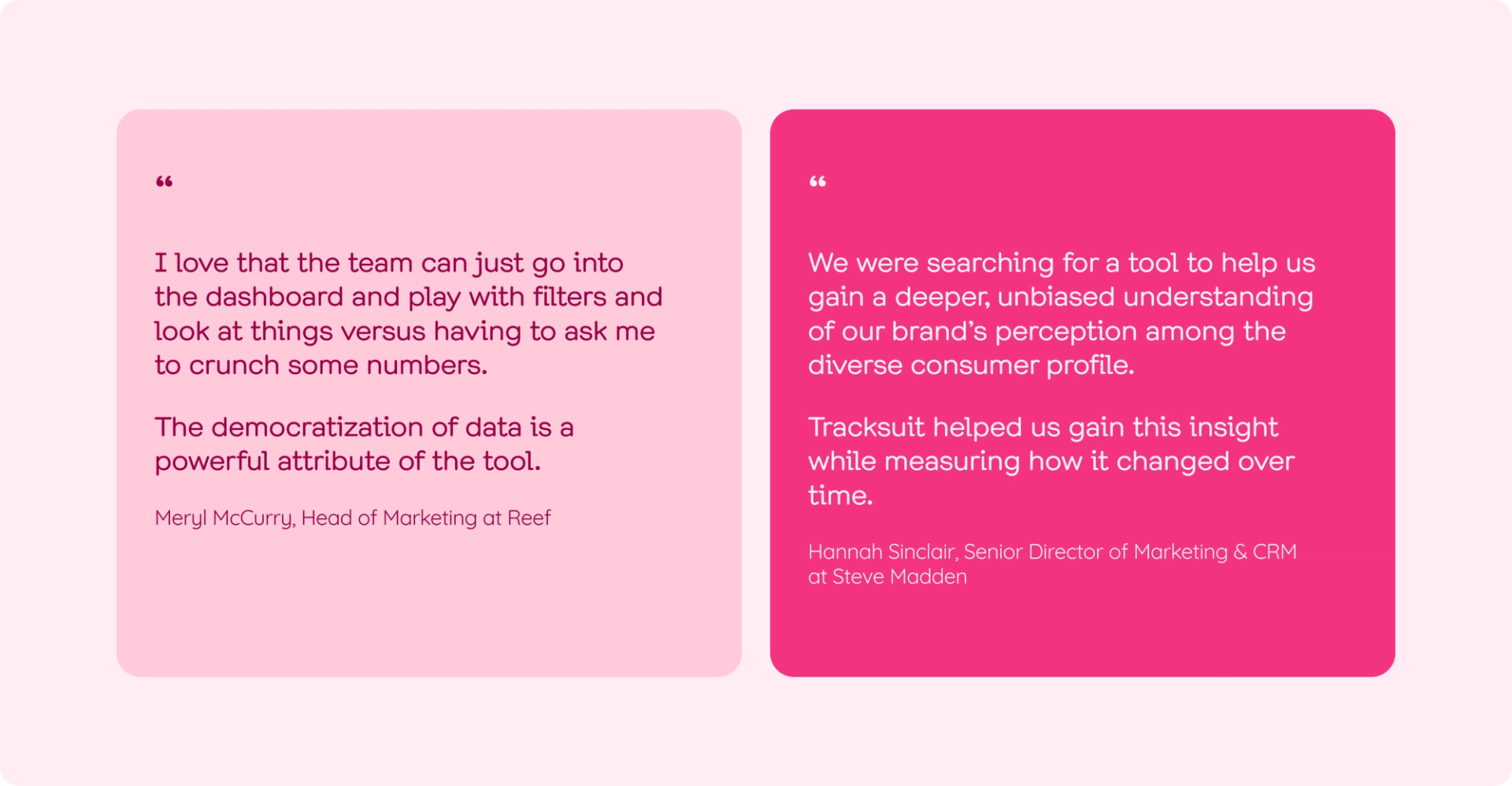
At Tracksuit, we’ve had the pleasure of working closely with top marketing teams at companies like MyFitnessPal and Reef, helping them gain valuable insights into how their customers view their services. We’ve used all our years of industry experience to compile this review of tools that offer the insights and data businesses need to understand and capitalize on what customers truly want to see.
What are market research tools?
Market research tools are platforms that help you understand your customers, your market, and your competitive landscape through structured data collection and analysis. Instead of relying on gut feel, anecdotes, or one-off agency reports, these tools give you ongoing access to the insights that drive smarter decisions.
The category spans several distinct types:
1. Survey and research platforms
They let you design, distribute, and analyze your own surveys, from quick customer feedback polls to large-scale brand tracking studies. They give you direct access to what consumers think, on your terms.
2. Consumer intelligence platforms
With these tools, you can aggregate and analyze data about audiences at scale, including demographics, interests, behaviors, and media consumption. This helps you build a detailed picture of who your customers are and how to reach them.
3. Brand tracking tools
This type of software specifically measures how consumers perceive your brand over time based on awareness, consideration, preference, and brand associations. Data is collected through continuous surveys of people in your category.
4. Social listening and audience research software
These tools monitor online conversations and analyze audience characteristics, giving you insight into what people are saying about your brand and category, and who's engaging with your content.
5. Trend and market data platforms
They provide statistics, search trends, and industry reports that help you understand broader market dynamics, spot emerging opportunities, and support your research with credible external data.
Why use market research tools?
For today's marketing teams, using research software makes everything more certain by replacing guesswork with real data. This helps ensure that campaigns, messaging, and strategic choices match what customers are looking for. Let’s take a look at the main reasons:
1. Understand what customers think
Behavioral data tells you what people did. Market research tools tell you why, and what they think about your brand, your competitors, and your category. That's the layer that informs strategy, not just tactics.
2. Validate decisions before committing
Whether you're launching a new product, entering a new market, or repositioning your brand, market research platforms let you test assumptions with real consumer data before making expensive bets.
3. Track perception over time
A single study gives you a snapshot. Ongoing market research, especially brand tracking, shows you whether your marketing is actually shifting how people think and feel about your brand, and how you compare to competitors quarter over quarter.
4. Build a case for investment
Leadership wants evidence. Survey tools give you the data to justify brand investment, prove marketing impact, and connect perception metrics to business outcomes.
5. Segment and target with precision
Understanding that 25-34-year-old women in the Midwest are significantly more likely to consider your brand than the national average is the kind of insight that shapes media planning, creative strategy, and budget allocation.
10 best market research tools compared
1. Tracksuit
Tracksuit is an always-on brand tracking platform that measures how consumers in your category perceive your brand through continuous, census-weighted surveys. It tracks a 5-stage brand funnel, awareness, consideration, investigation, usage, and preference, and delivers monthly updates through a dashboard built for marketing teams.
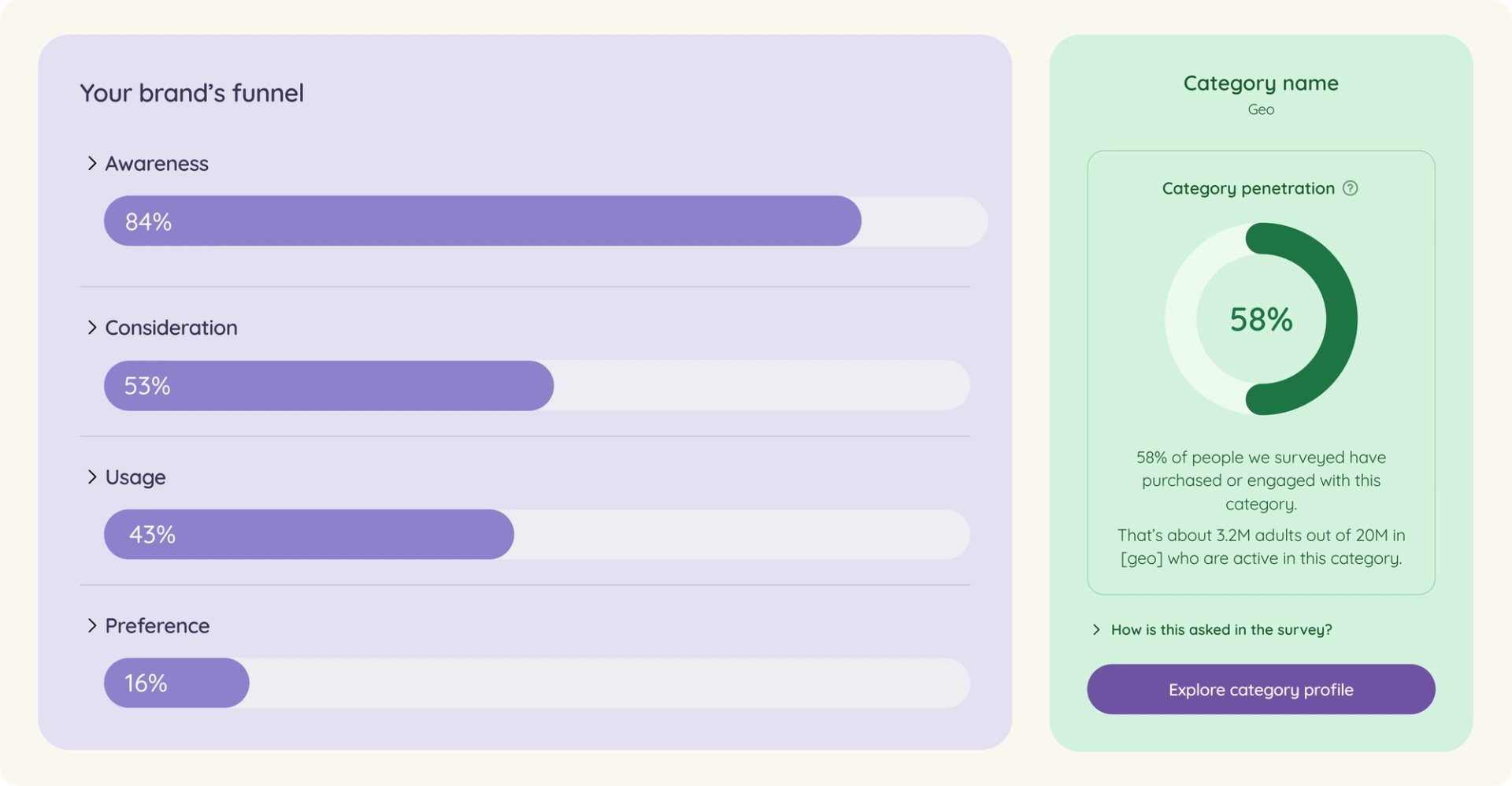
While most market research tools on this list help you run studies or analyze data, Tracksuit answers a specific and important question that general research platforms don't: how is your brand perceived by your broader market, including people who've never interacted with you? That ongoing, always-on view of brand perception is what makes brand tracking distinct from ad-hoc market research.
Key features
- Consumer tracking: Tracks awareness, consideration, investigation, usage, and preference with monthly updates from census-weighted consumer surveys.
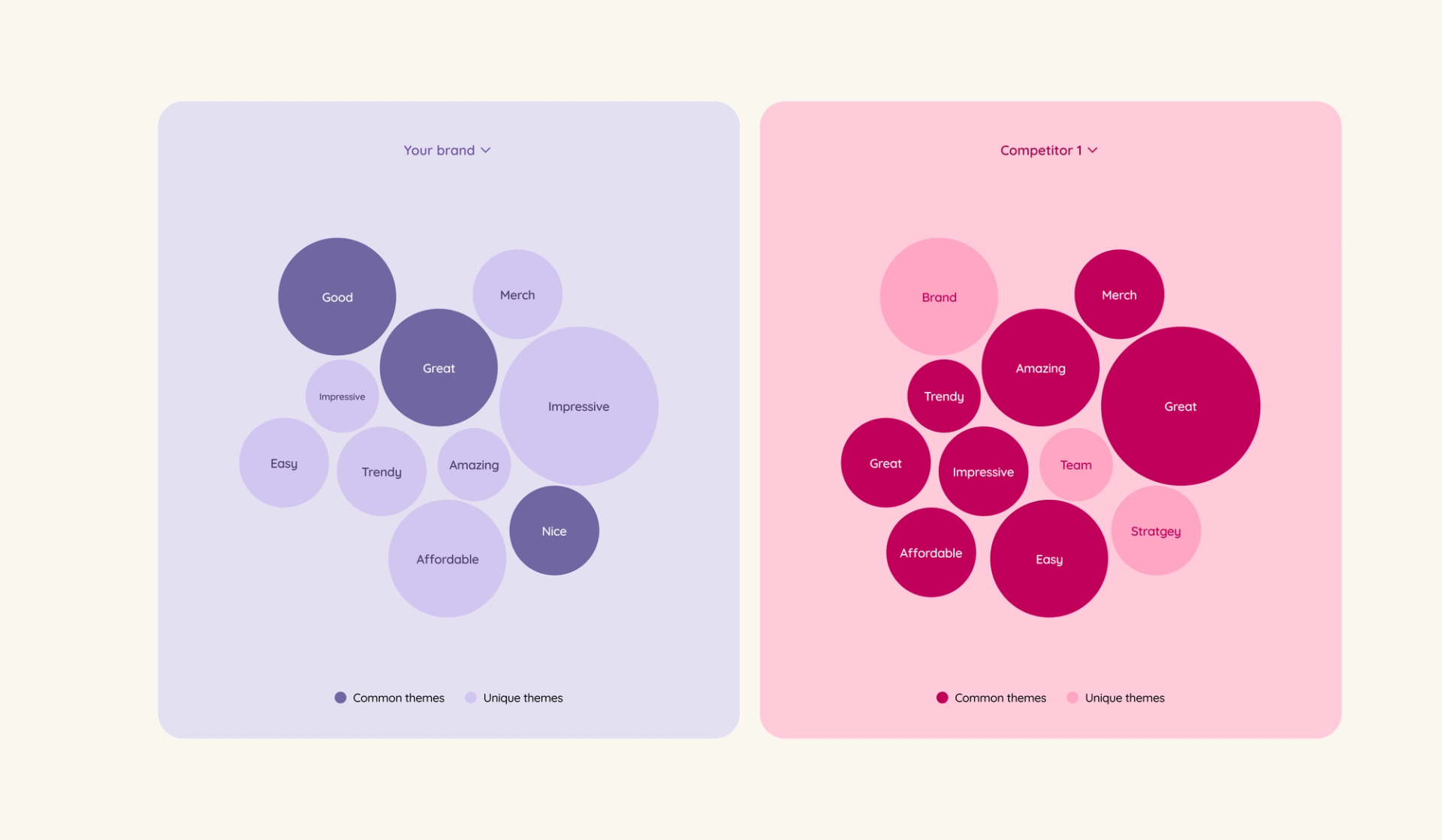
- Market tracking: Measures brand perceptions through Imagery (spontaneous associations) and Statements (attribute ratings).
- Competitor benchmarks: Benchmarks against competitors within your category, showing where you're gaining or losing ground.
- AI-generated notes: AI-generated Coach's Notes surface the most significant changes in your data.
- Conversion drivers: Conversion Drivers analysis reveals which brand perceptions most strongly predict funnel movement.
Pricing
Plans start at $19,500/year for one brand category, your brand plus 5 competitors, with 4,000+ consumers surveyed. Add-ons available for unaided awareness, extra competitors, markets, and brand perception statements.
Pros
- Segments by demographics, geography, and target audience
- Unlimited seats, so marketing, agencies, and leadership all work from the same dashboard
- Launches in roughly 30 days with minimal setup
- Monthly dashboard updates
- Automates design, management, and repeat studies
Cons
- Focused on brand health metrics
2. SurveyMonkey
SurveyMonkey is one of the most widely recognized survey platforms, making it easy for anyone to create surveys, collect responses, and analyze results. For teams that want to ask customers questions directly without a specialized research budget, it's a familiar and accessible starting point for market research.
Key features
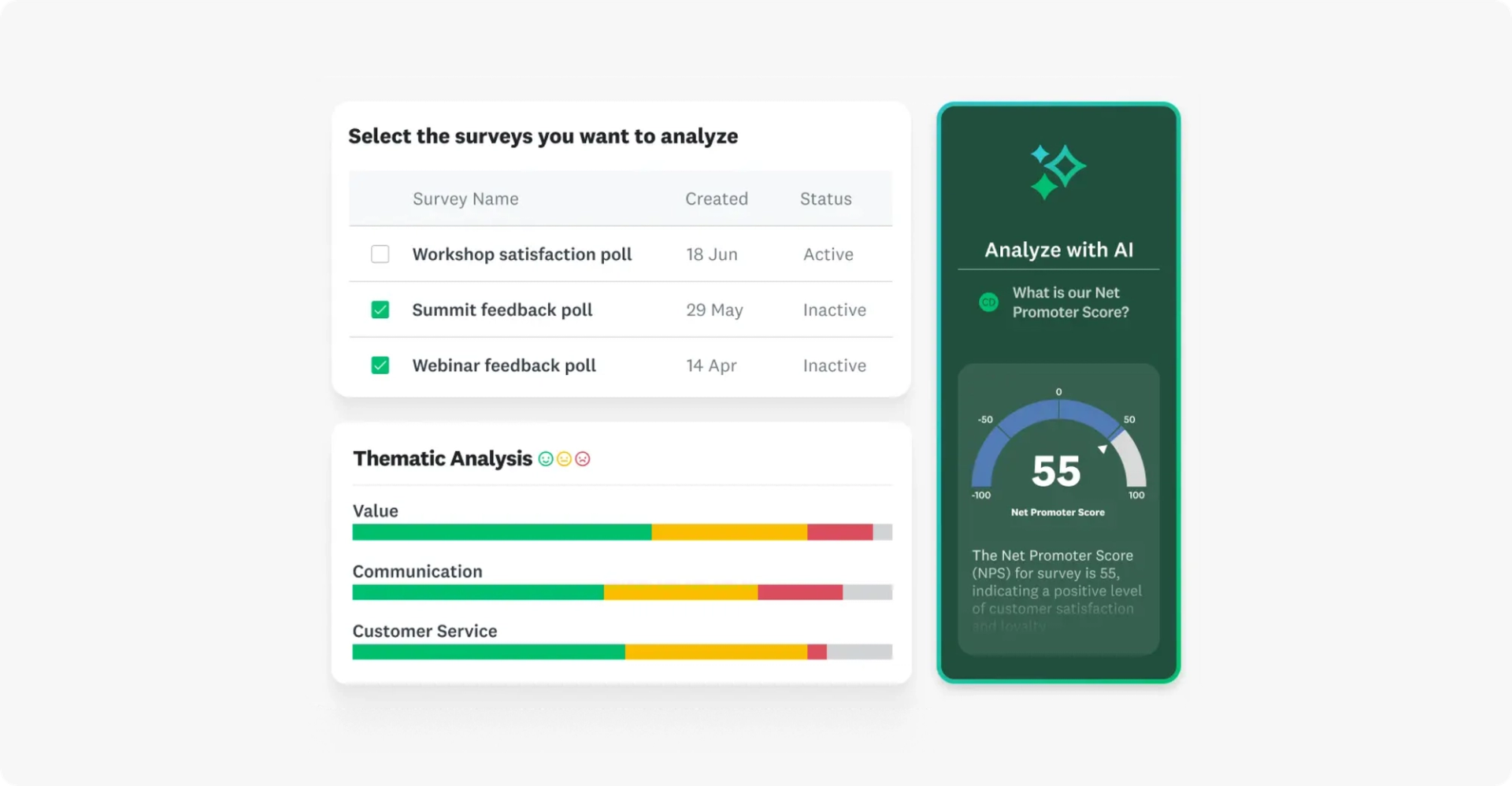
- Intuitive survey builder: Get access to templates, question logic, branching, and a wide range of question types.
- SurveyMonkey Audience: Built-in audience panel for reaching respondents outside your own customer base.
- CRM Integrations: Connects directly with marketing and CRM tools like HubSpot, Salesforce, and Mailchimp.
Pricing
Free tier with limited features. Team Advantage at $25/user/month and Team Premier at $75/user/month (billed annually). Enterprise pricing available.
Pros
- Basic analysis, filtering, and cross-tabulation of results
- Simple set-up process
- Good for ad-hoc market research
Cons
- Lacks ongoing, structured tracking
- Many features are locked behind higher-tier plans
- Limited customization options
3. Qualtrics
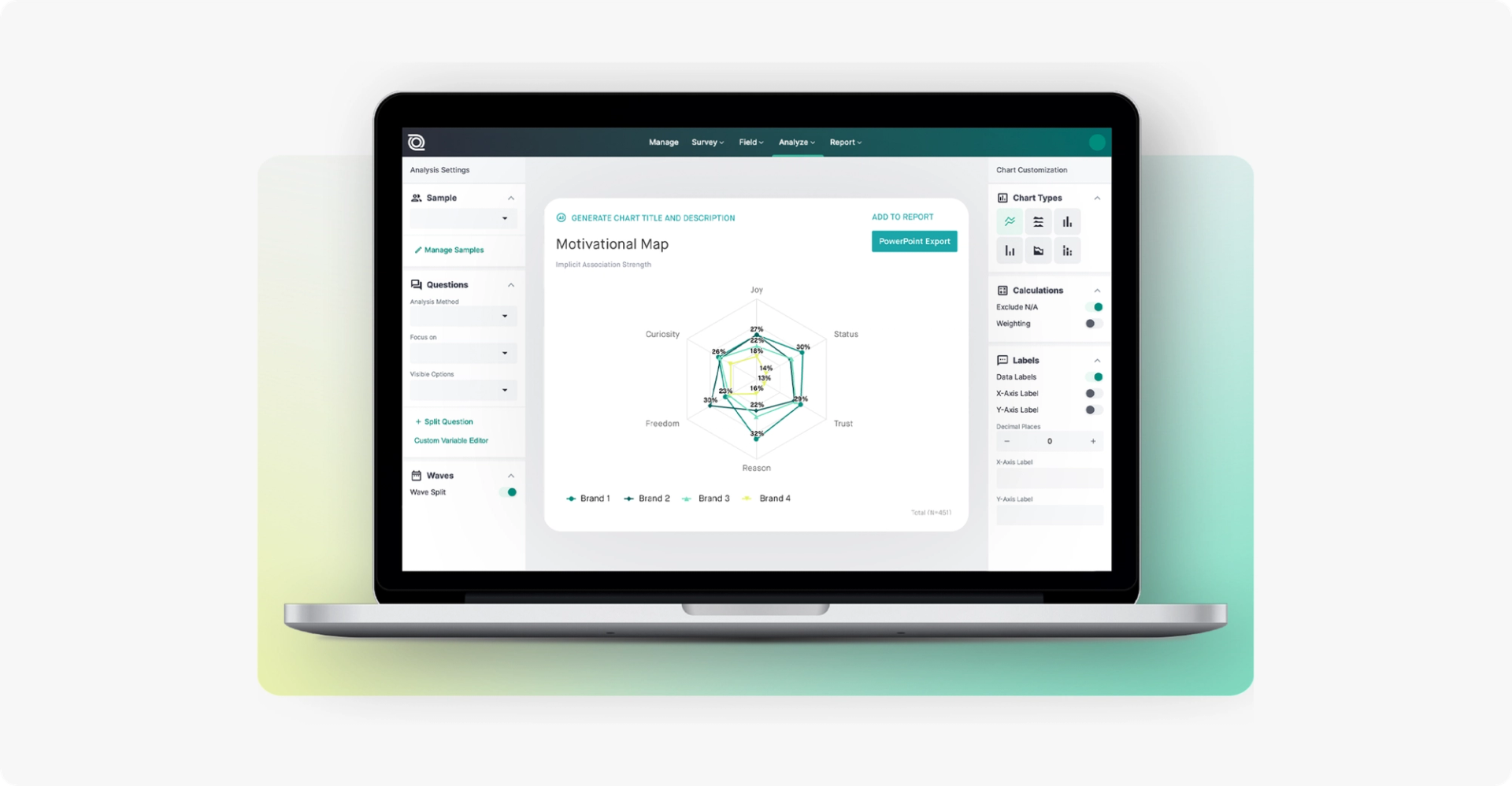
Qualtrics is an enterprise experience management platform with powerful survey and research capabilities. It offers advanced logic, AI-powered analytics, and modules for customer experience, brand tracking, product research, and employee experience. It’s a good option for research teams who need a flexible, comprehensive platform for managing multiple types of market research.
Key features
- Advanced survey design: The platform offers complex logic, randomization, and custom question types for sophisticated research.
- AI-powered analytics: Qualtrics uses AI analytics that process structured and unstructured data, identify patterns, and predict trends.
- Unified experience management: You can seamlessly combine customer, brand, product, and employee research.
Pricing
Enterprise pricing, custom-quoted. Significant investment for full platform access.
Pros
- Enterprise-grade security and compliance (GDPR, HIPAA)
- Customizable dashboards
- AI-powered analytics
Cons
- Requires significant investment and expertise
- Difficult set-up process
- Lack of collaborative survey capabilities
4. Attest
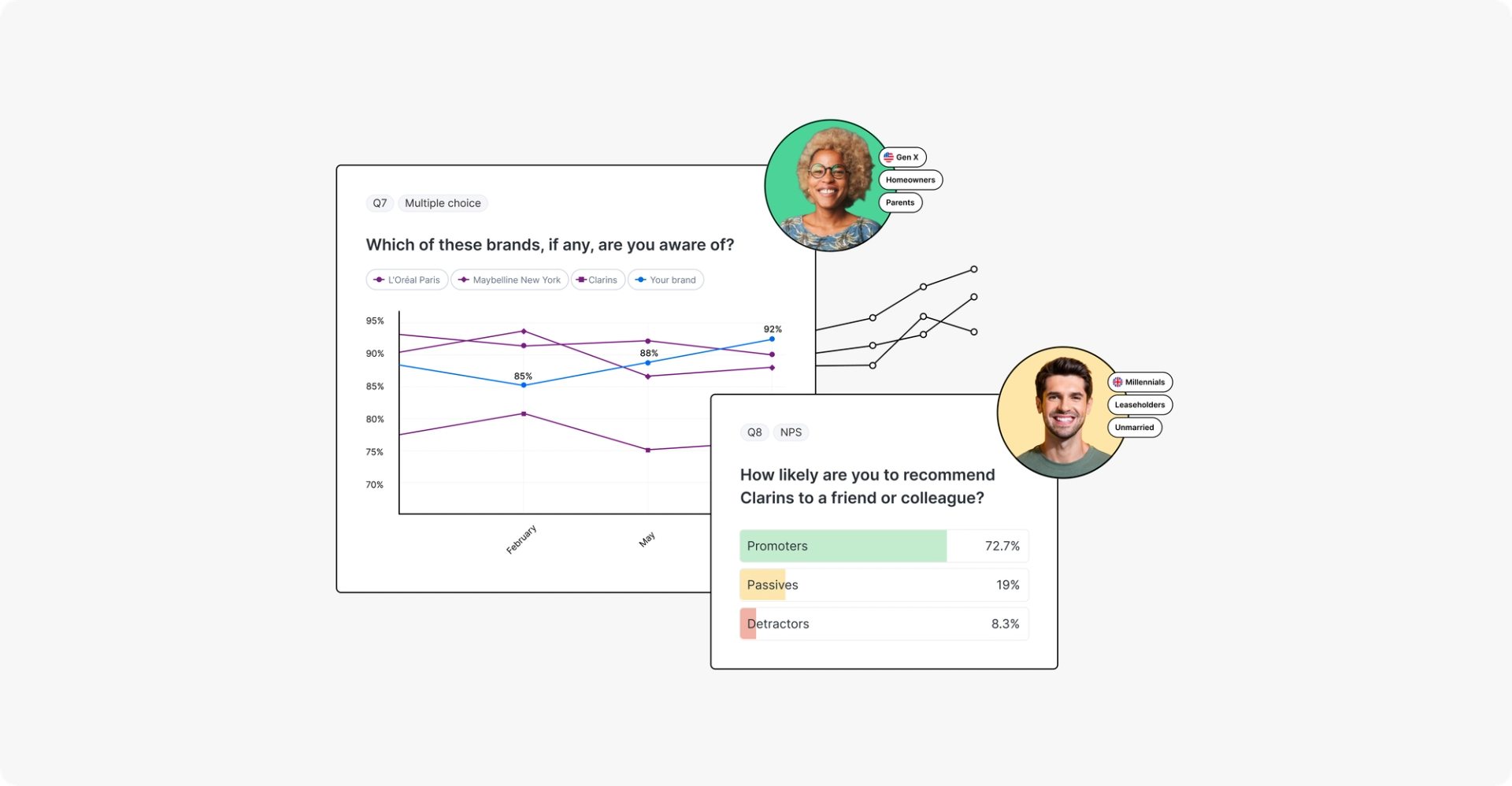
Attest is a consumer research platform that combines survey capabilities with a built-in global panel, making it easy to run studies across multiple markets without sourcing your own respondents. It's good for teams who want the flexibility to research brand tracking, concept testing, and audience profiling from a single platform.
Key features
- Global coverage: Access to 150+ million consumers across 59 countries and 70+ languages.
- Hybrid quantitative and qualitative research: Gather both numerical data and open-ended feedback.
- Customizable survey templates: Get bespoke survey templates with expert support from a dedicated research manager.
Pricing
Credit-based subscription plans scale from Basic to Custom tiers.
Pros
- Multi-market research from a centralized dashboard
- Side-by-side segment comparisons
- Good research flexibility
Cons
- Lack of always-on automated tracking
- Inconsistent survey quality
- Inconsistent pricing for smaller surveys
5. GWI
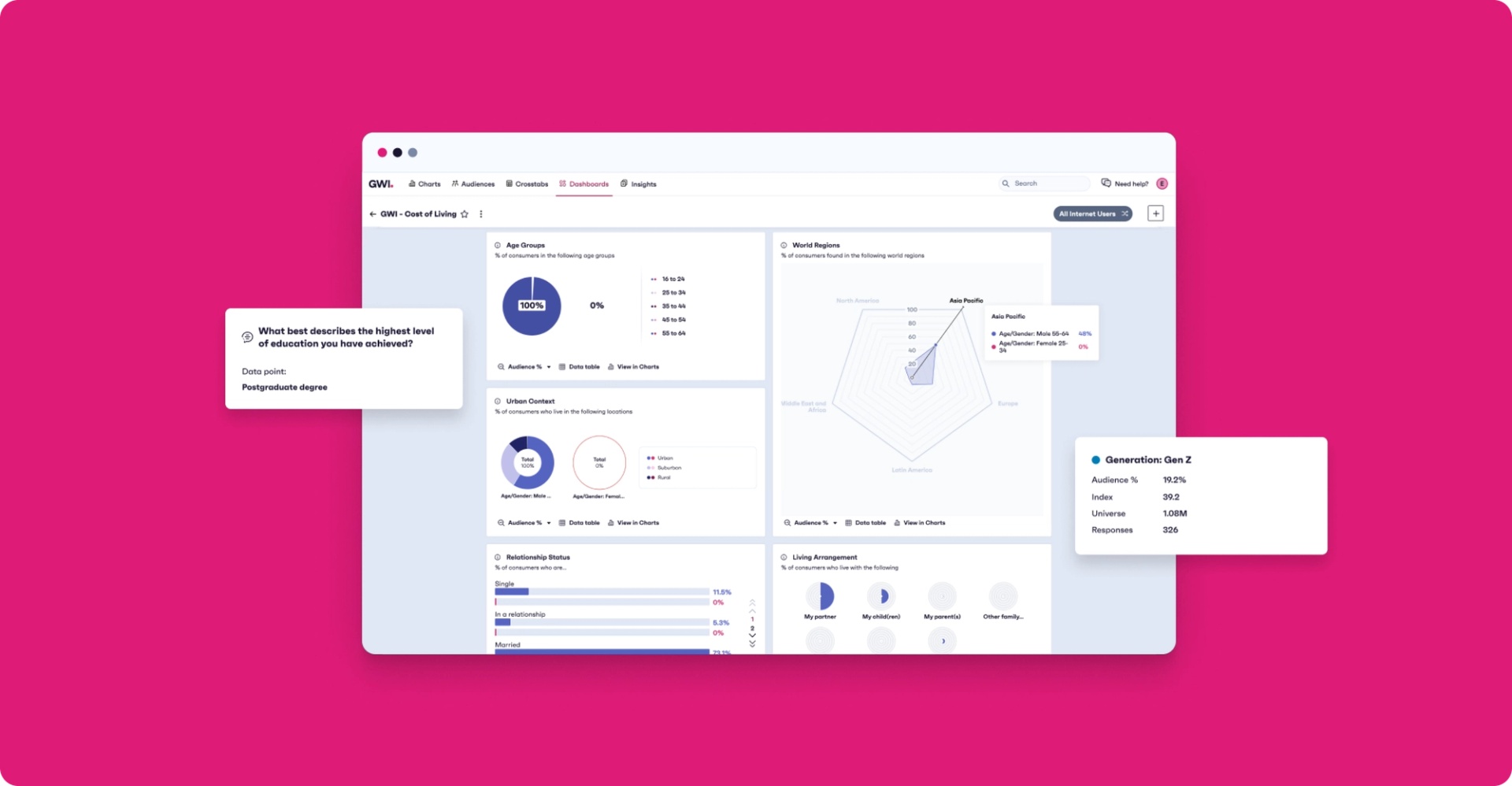
GWI is a consumer intelligence platform that provides detailed data on audiences worldwide. Rather than running your own surveys, you access GWI's continuously updated dataset to answer questions about your target audience, your category, and your competitors' customers. It’s good for marketing teams that need audience data across global markets.
Key features
- Audience profiling: Detailed profiling across demographics, psychographics, interests, brand affinities, and media consumption.
- Data bank: Data covering 50+ markets with surveys of millions of internet users annually
- Audience comparison: Access tools that let you contrast your target segments against broader populations or competitor audiences
Pricing
Custom-quoted based on markets, seats, and features.
Pros
- Pre-built dashboards and custom analysis
- Integration with media planning tools
- Robust media planning
Cons
- Lack of access to personalized research
- Data quality can be inconsistent
- Search functionality lacking
6. SparkToro
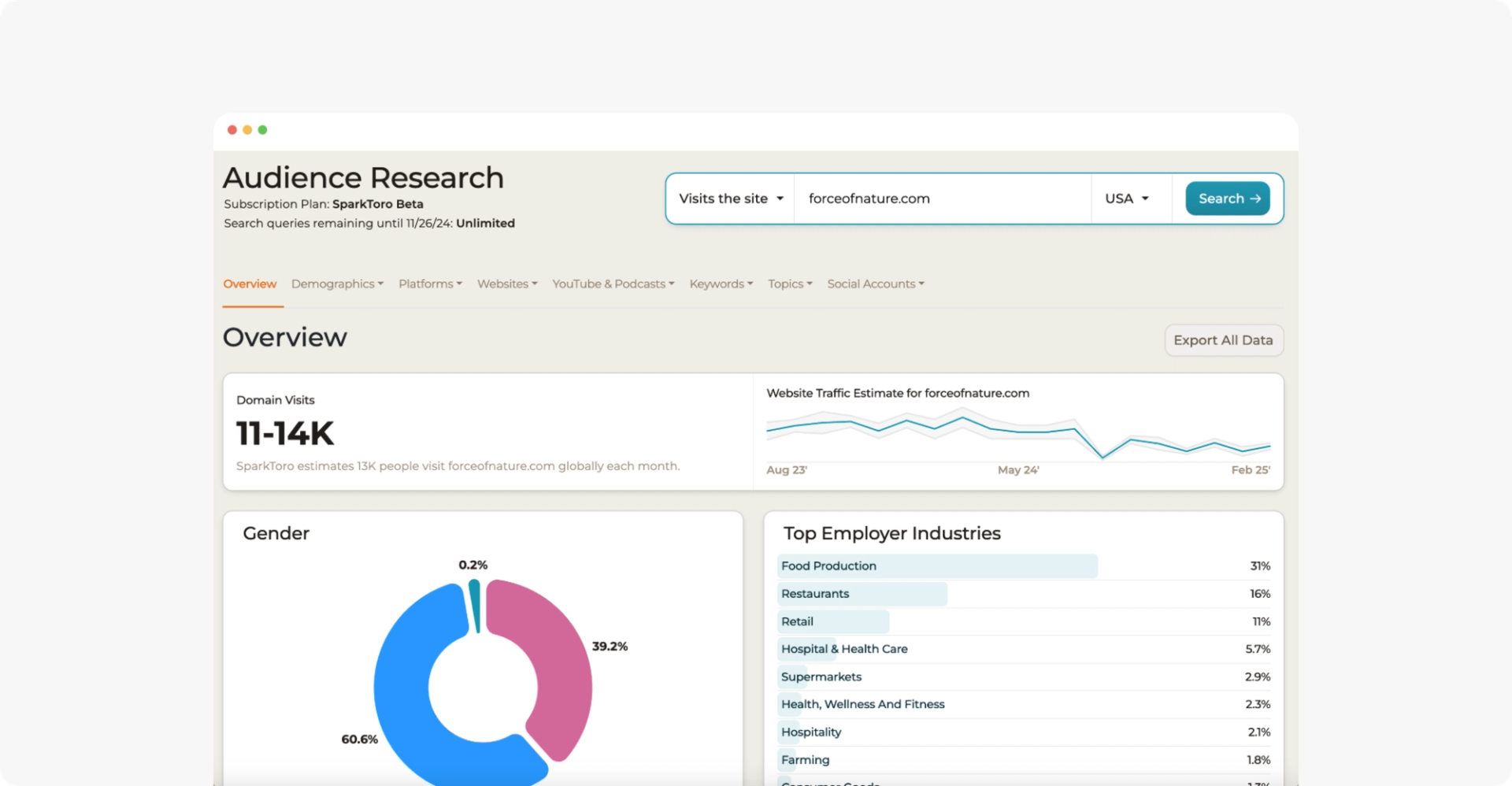
SparkToro is an audience research tool that shows you where your target audience spends time online. It shows which websites they visit, social accounts they follow, podcasts they listen to, and content they engage with. It’s useful for marketing teams that need to understand where their target audience spends the most attention.
Key features
- Audience intelligence: The platform shows where your target market spends attention. That could be websites, social accounts, podcasts, YouTube channels, or publications.
- Custom search: Search by keyword, hashtag, social account, or website to discover who engages with specific topics.
- Demographic and behavioral data: Access demographic data on audience segments, including interests, job titles, and geographic distribution.
Pricing
Free tier with limited searches. Paid plans start at $50/month for individuals, scaling to team and agency tiers.
Pros
- Competitive audience analysis
- Fast, self-serve interface
- Detailed target market information
Cons
- Less comprehensive global data
- Limited social media insights
- Usage limits are not clear
7. Brandwatch
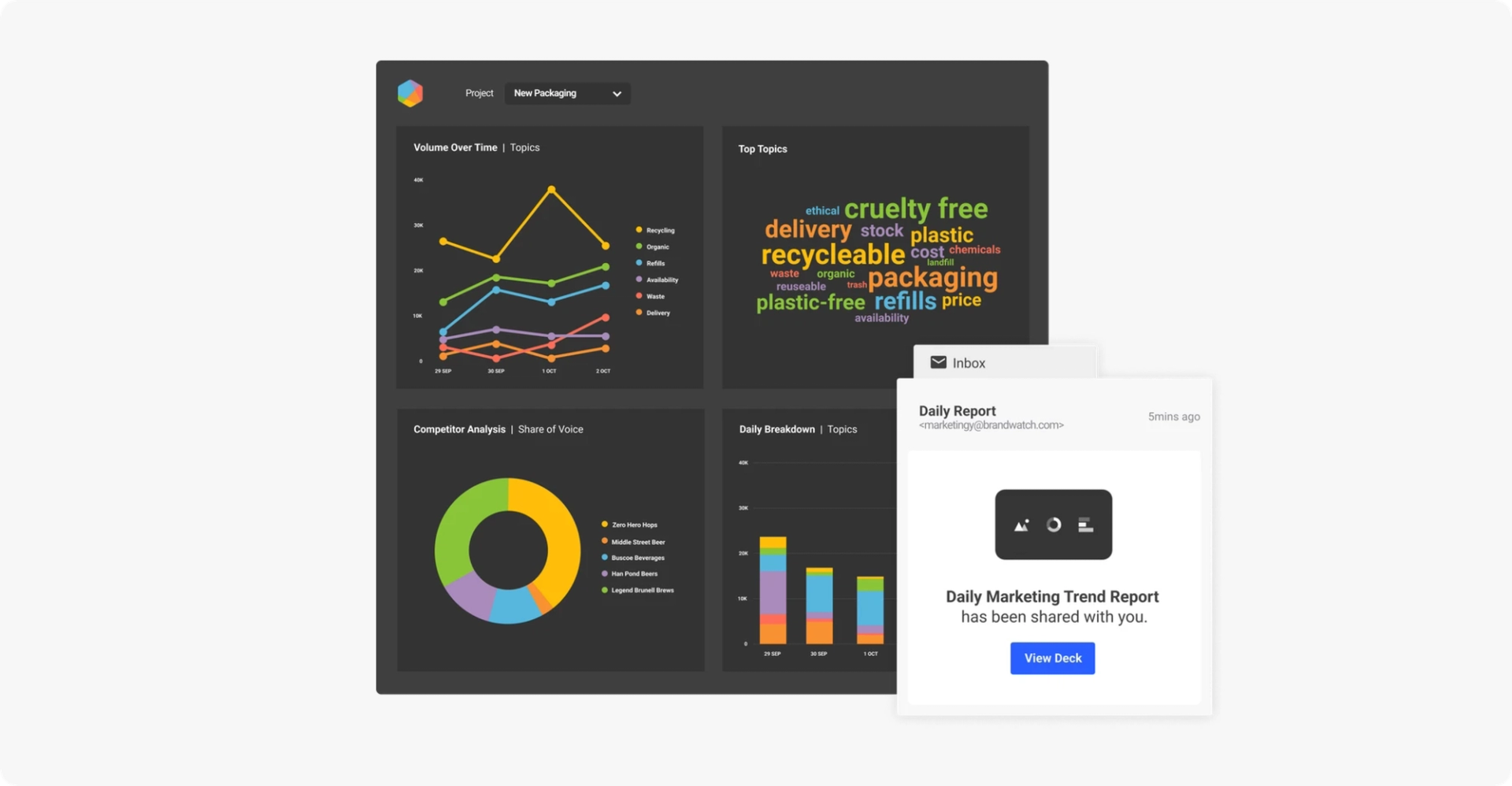
Brandwatch is a social intelligence platform that combines social listening, consumer research, and trend analysis. It monitors conversations about your brand across social media, news, blogs, and forums, using AI to analyze sentiment, identify trends, and surface insights about audience behavior at scale. It’s an option to consider for teams looking for social listening, consumer intelligence, and cultural trend analysis at scale.
Key features
- Social listening: Gain insights across social media, forums, blogs, reviews, and news with advanced Boolean search and filtering.
- AI-powered analysis: Analyze millions of online conversations to identify trends, sentiment shifts, and emerging topics.
- Audience analysis: Access demographics, interests, and behaviors of people discussing your brand or category
Pricing
Custom-quoted based on data volume and features.
Pros
- Image recognition that catches visual brand mentions
- Historical data access
- Comprehensive data integration
Cons
- Steep platform learning curve
- Limited features compared to high-end competitors
- Inconsistent sentiment analysis
8. Statista
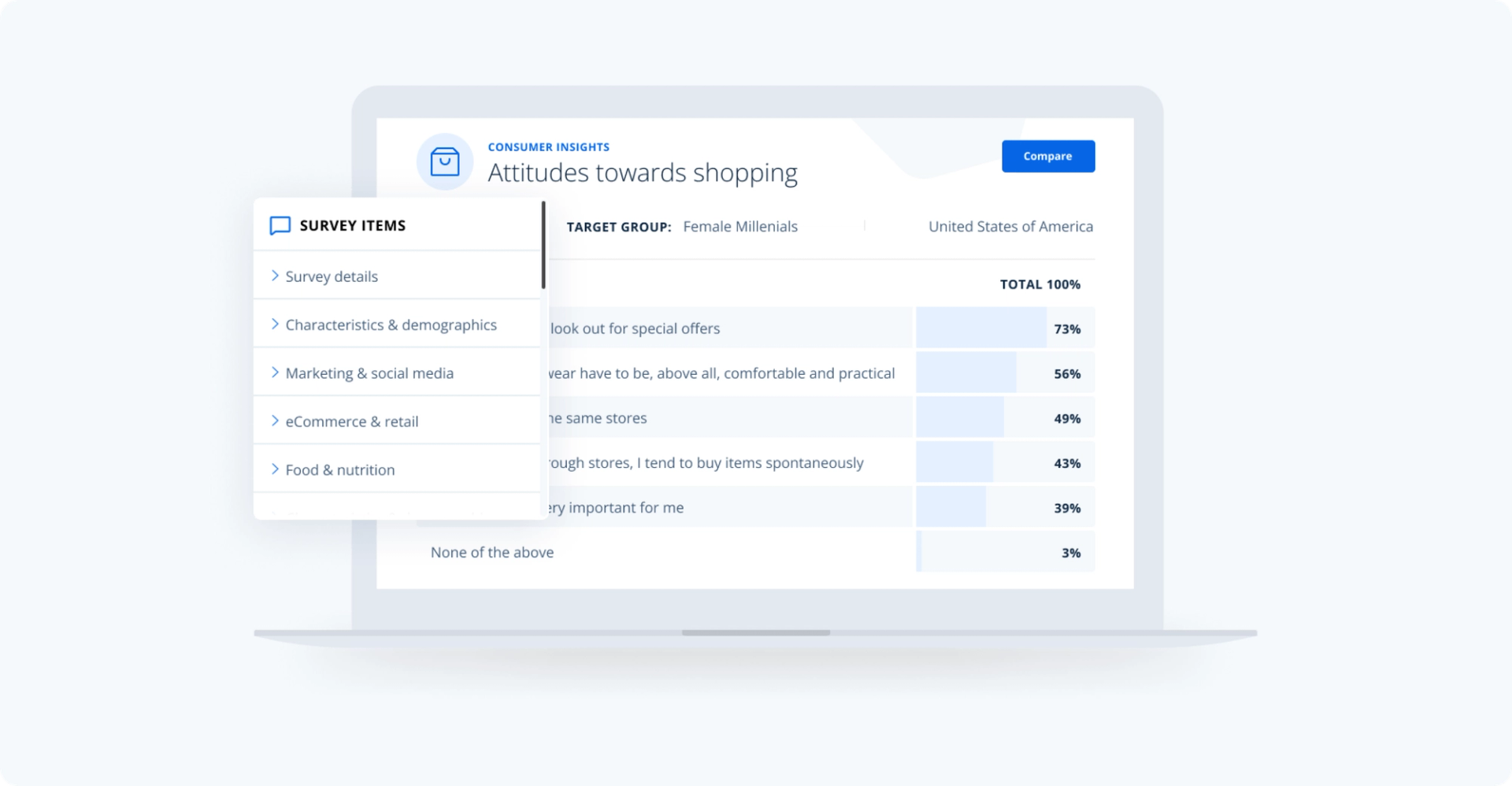
Statista is a data platform that aggregates statistics, industry reports, and market insights across 170+ industries. It's a research resource rather than a research tool, meaning you don't run your own studies, but you get access to a vast library of verified data points from trusted sources worldwide. It’s a good option if you only need verified statistics and industry data to support decision-making and presentations.
Key features
- Verified statistics: Access to millions of statistics and reports covering markets, industries, consumer behavior, and economic data globally.
- Downloadable charts: Professional visualizations and charts ready for presentations and reports.
- Verified data sources: Data sourced from credible institutions, government agencies, and research firms worldwide.
Pricing
Professional plan at $1,299/month. Business Suite and Statista Connect plans are custom-quoted.
Pros
- Market forecasts and industry analysis across sectors
- Available in multiple languages
- Good customer support
Cons
- Limited specific retailer and shopper data
- Lacks AI features
- Pricing can be relatively high
9. Google Trends
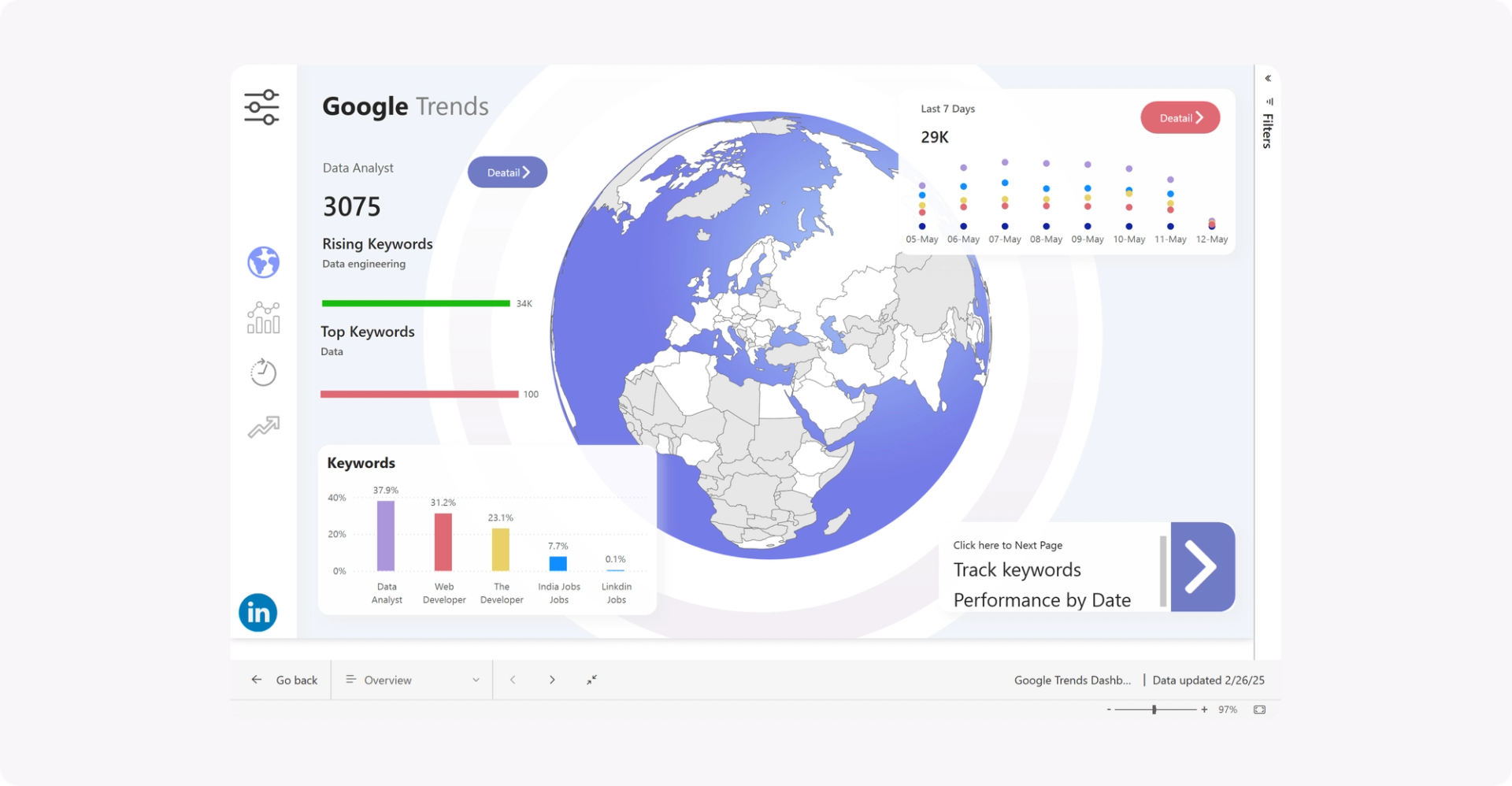
Google Trends is a free tool from Google that shows the relative popularity of search terms over time and across regions. It's one of the simplest and most accessible market survey platforms available, useful for spotting shifts in consumer interest, seasonal patterns, and emerging topics.
Key features
- Trend analysis: Tracks the relative popularity of any search term over time, showing interest trends at a glance.
- Geographic filtering: Discover where search terms are most popular, down to the city level.
- Comparison tools: Plot multiple search terms against each other to see relative interest.
Pricing
Google Trends is free to use.
Pros
- Real-time trending data
- Free to use
- User-friendly interface
Cons
- Limited marketing research features
- Data access is limited
- Data can sometimes be inaccurate
10. Pew Research Center
Pew Research Center is a nonpartisan research organization that produces studies on public opinion, social trends, demographics, and media habits. It's not a market research tool in the traditional sense. It's a free, publicly available research resource that provides rigorous, well-cited data on how people think and behave. It’s a good option for marketing teams that need free data on social trends, public opinion, and demographic shifts.

Key features
- In-depth reporting: Access insights on social trends, public opinion, demographics, technology adoption, and media consumption.
- Comprehensive data pool: Survey data on a wide range of topics with transparent, rigorous methodology.
- Global research: Get data covering attitudes and behaviors across multiple countries.
Pricing
Free. Pew Research Center is a nonprofit funded through grants.
Pros
- Free access to all reports and datasets
- Interactive tools for exploring demographic and opinion data
- Global data access
Cons
- Limited marketing research features
- Lacking AI functionality
- No sentiment analysis
How to choose the right market research tools
The right tool depends on what question you're trying to answer.
1. What do consumers think about our brand?
That's brand tracking. Tracksuit provides always-on, automated tracking of awareness, consideration, and preference among category buyers — including people who've never interacted with your brand. For teams who want to run their own brand studies with more flexibility, Attest and Qualtrics offer broader research capabilities.
2. Who is our audience, and where do we reach them?
That's consumer intelligence and audience research. GWI provides rich, always-on audience data across global markets. SparkToro shows you where your target audience spends attention online — which channels, publications, and influencers they engage with.
3. What are people saying about our brand and category?
That's social listening. Brandwatch monitors conversations at scale across social media, news, blogs, and forums, with AI-powered sentiment and trend analysis.
4. What's happening in our market more broadly?
That's trend and market data. Statista provides verified industry statistics and reports. Google Trends shows shifts in search interest. Pew Research offers rigorous data on social trends and public opinion.
5. We need to ask customers specific questions
That's survey research. SurveyMonkey is accessible and affordable for quick studies. Qualtrics offers enterprise-grade research capabilities. Attest gives you a built-in global panel, so you don't need to source respondents.
Most marketing teams use a combination of these tools. A consumer brand might pair Tracksuit (brand tracking) with SurveyMonkey (ad-hoc surveys) and Statista (market context). The key is knowing which questions matter most and choosing the tools that actually answer them.
Turn consumer habits into actionable insights with Tracksuit
Getting to know your customers really is the key to successful marketing. Using the right market research software allows you to go deeper than just basic numbers and discover what people genuinely feel about your brand, your competitors, and your industry. For many marketing teams, however, the biggest missing piece is ongoing visibility into how people perceive the brand.
That’s where brand tracking becomes helpful. Instead of depending on one-off research projects, tools like Tracksuit provide continuous insights into awareness, consideration, investigation, usage, and preference among genuine category buyers. This way, you can see if your marketing efforts are truly making a difference over time.
Want to understand how your market perceives your brand? Request a demo of Tracksuit today.