- Despite a hyped-up launch, Alex Cooper’s line of hydration drinks failed to really launch, with Awareness remaining stable from February 2025 to July 2026.
- This could be down to the brand’s lack of distinct identity and Category Entry Points – in that beyond Alex Cooper’s celebrity, it’s unclear who the drinks are for and the situations that lead people into choosing it off the crowded shelves.
- Unwell’s brand ranked poorly amongst tracked competitors when it came to key indicators of brand growth like reliability and trust. For example, only 18% of hydration product consumers aware of Unwell associate it with the statement “Is for people like me” (May ‘26 to July ‘26).
“Wait,” someone said to me on a phone call this morning when I told them I was writing this story. “Alex Cooper had a drinks brand?”
Exactly. After only 1 year and 10 or so months, Call Her Daddy podcaster Alex Cooper is sunsetting her short-lived line of electrolyte and energy drinks, a week after her media company, Unwell Network, was valued at $500 million, opens in new tab. That’s despite the fact that, theoretically, Alex Cooper is in a better place than nearly every person on the planet to spearhead a successful CPG brand, considering her weekly reach of listeners is estimated to sit around 10 million people. But the truth of the matter is that despite Cooper being the face of the marketing and the drink being visible in every episode of her podcast, that simply wasn’t enough.
Listeners, fans and the general public were not convinced to pick Unwell up at their local Target or other grocery store.
Or they just didn’t know about it in the first place.
Tracksuit has tracked Unwell’s brand health since it launched.
From February 2025 to July 2026, the brand failed to increase its awareness from its initial baseline of 4%. What that means is, in February 2025, a month after Unwell launched, 4% of consumers in the Hydration Products category claimed they knew the brand. And in 17 months, this never changed.
Unwell’s other funnel metrics followed the same pattern in the same time period, with claimed Usage staying static at 2%, and Consideration decreasing from 3% to 2%.
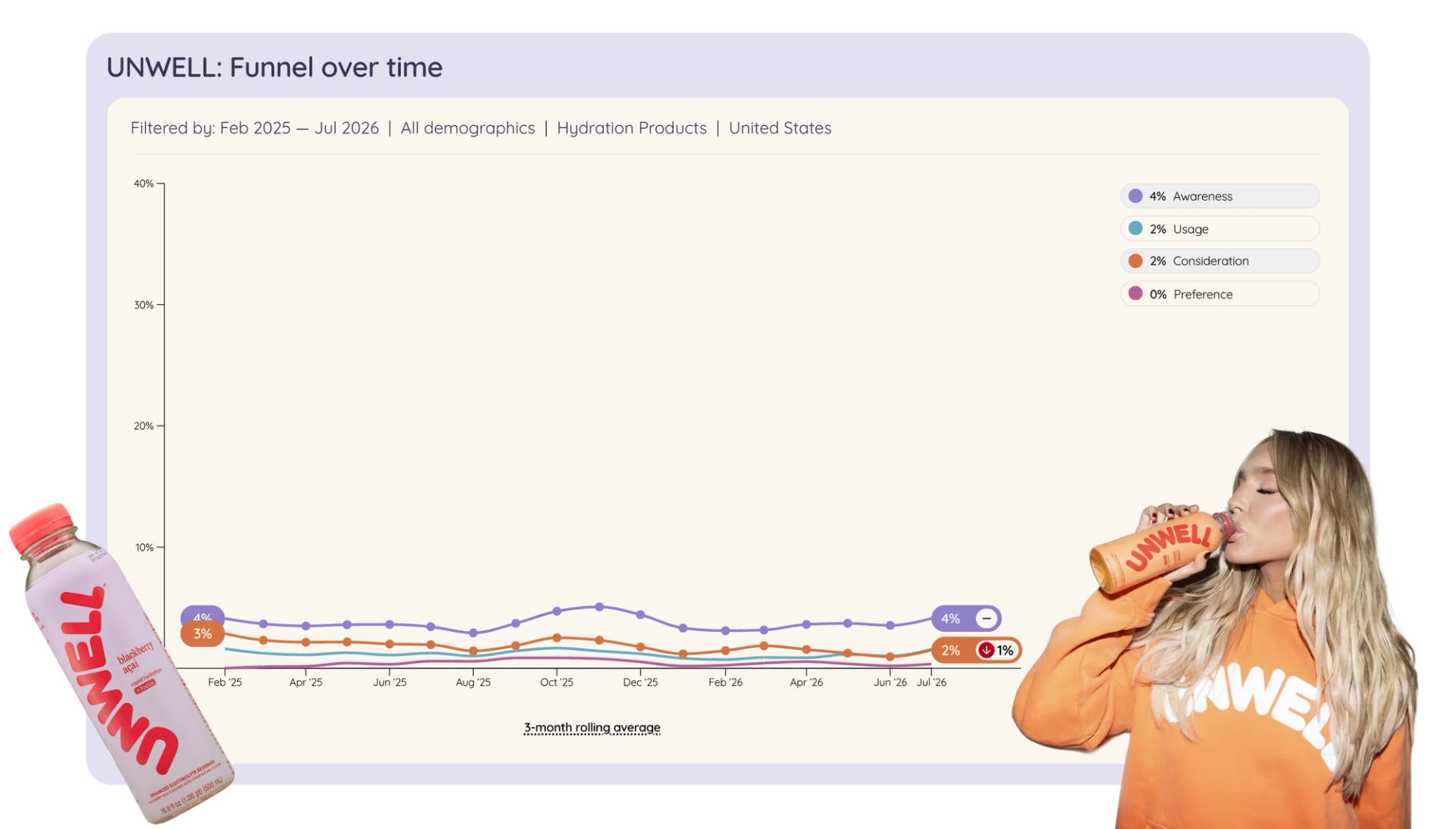
In other words: the brand did not grow.
Fame isn’t enough, duh
I don’t think it’s a hot take to say that celebrity power can only get you so far. Despite having a buzzy launch and a big name to propel it to some attention, everything else still needs to work. And in this case, it didn’t.
Unwell’s first big challenge was always going to be its name: a better-for-you energy drink that is essentially named “Sickness” is a hard sell, even for one of the most successful podcasters of our times. If you’re chronically online, then you might have known that “I’m unwell” is an Alex Cooper™ catchphrase, but if you were just browsing the crowded shelves at your local supermarket, then it’s unlikely you’d make the connection, or think that it was a drink that was meant to be good for you.
And although Unwell was seen in vodcast episodes that would have millions of views, these product placement-y features were largely “passive” instead of “active” – or at least that’s what Karen Nelson Field would probably say. In her research on The Attention Economy, she puts theoretical frameworks to something that we all inherently know already: there is a whole spectrum to “attention”, and a brand can be blasted across every eyeball in the country but this won’t convert to purchase if memory structures are not built.
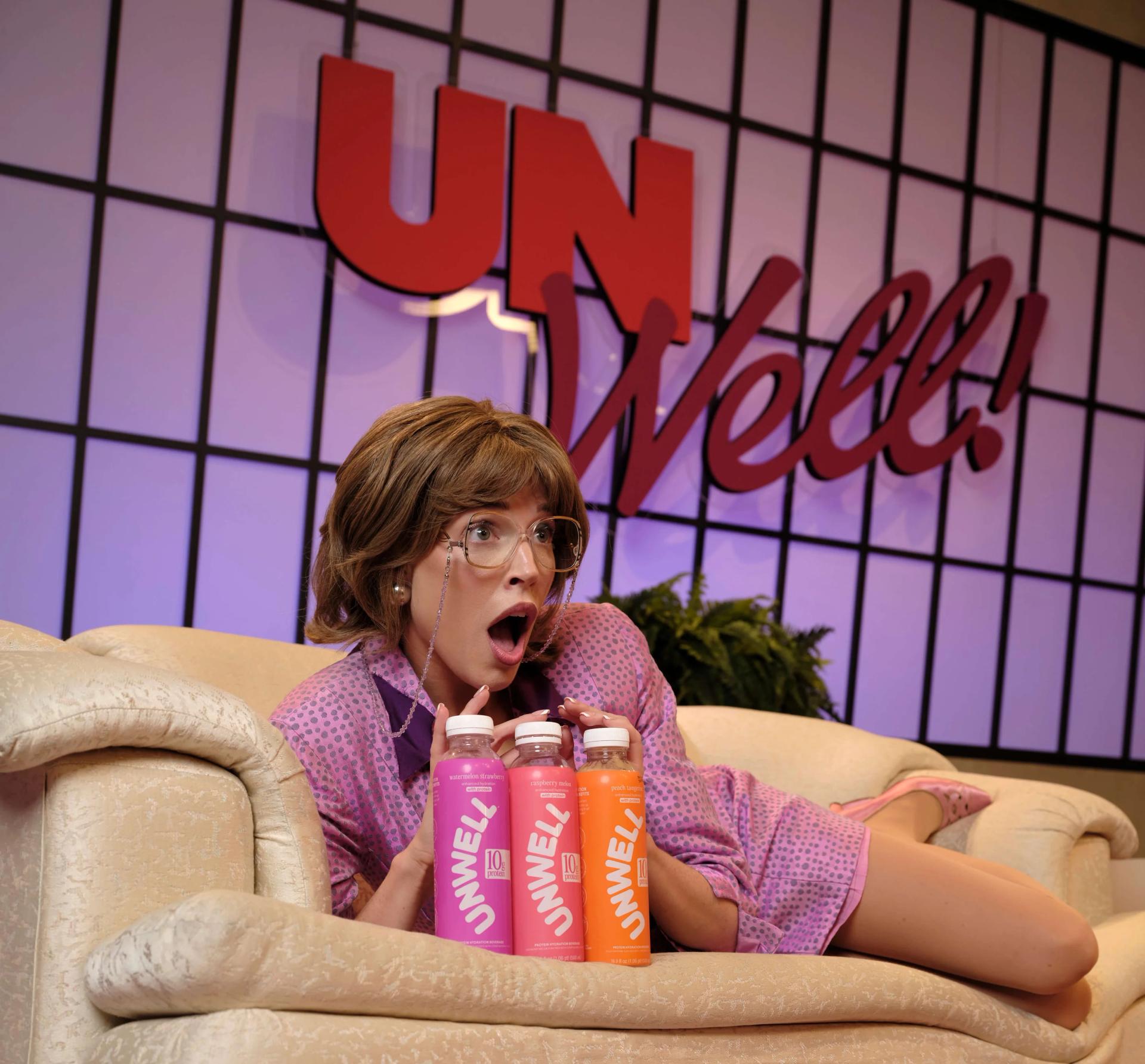
And, apart from Alex Cooper, what is Unwell’s brand? What other touchpoints of the brand have you seen or heard of? It’s hard to say – especially when a visit to their Instagram revealed that their social media marketing leans mostly into this retro “as seen on TV” advertising style, opens in new tab that we’ve all seen a million times, having been already used by other CPG challenger brands of this era (Vacation Inc being a prime example). It doesn’t feel intrinsically aligned with the “Alex Cooper” brand, or particularly authentic to her.
Who was Unwell for?
In my opinion, Unwell also failed to create a distinct enough identity that a) made it stand out from its competitors, and b) made it clear what the product was for.
One of the ways that brands drive growth is to ensure that there’s a strong link between buying situations and the product. You might know this as Category Entry Points, a theory developed by Jenni Romaniuk, which describes owning mental pathways into a category. For example, you might think, “I’m so hungover” and then go and buy a Gatorade. That’s a Category Entry Point.
One of the problems with Unwell was that it was never clear what it was for. Was it for boosting electrolytes after exercise? Was it a non-alcoholic alternative for a Sunday BBQ with friends? Is it a protein drink or an energy drink? Is it for studying or partying?
Unwell’s marketing tended to showcase it more as a general “lifestyle” drink, more of a Poppi than a Liquid IV, and it never quite found its way with communicating to consumers when and where you should buy an Unwell. As a result, the brand was muddled and remained vague in consumers' minds.
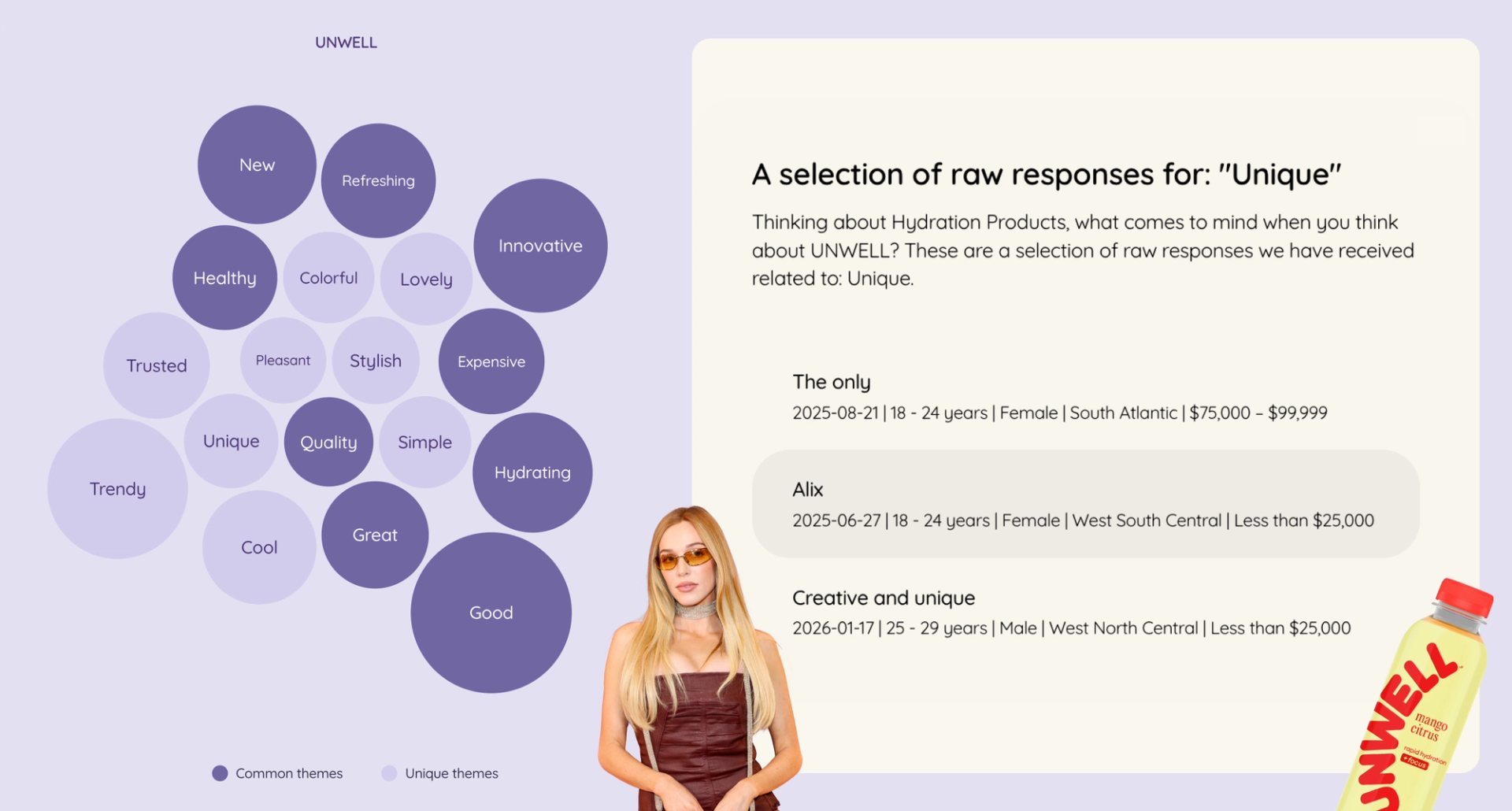
One of the consumer's respondents answered the question, “What comes to mind when you think about Unwell?” with “Alix”, the also-blonde influencer that is an investor in rival drink Poppi.
Looking at the Tracksuit data, we can see that Unwell comes in dead last for association with the statement “Is for people like me”, with only 18% of consumers aware of the brand thinking it’s for them (May ‘26 to July ‘26). That’s compared with 45% for Gatorade and 37% for Liquid IV.
It also hasn’t fared very well when it comes to trust, with only 21% of consumers aware of the brand associating it with “Is a brand I trust” (May ‘26 to July ‘26). Top of the ladder on that perception is Gatorade again (54%). Both “Is for people like me” (relatability) and “Is a brand I trust” (trust) are strong drivers for conversion down the funnel – and, therefore, essential for brand growth.
Plus, despite being billed as a healthy alternative (although an alternative to what I’m not quite sure), only 34% of consumers aware of the brand associate it with “Is healthy” (May ‘26 to July ‘26).
What does this teach us about celebrity-backed brands?
1. You may have a fanbase, but you still need to convince that fanbase to follow you to this new product.
2. Your brand still needs to be coherent and stand for something beyond just the celebrity name.
3. And, also, the product still has to be good.
Sign up to Shorts
A fortnightly newsletter with exclusive brand insights, useful marketing tips, and a round-up of all the stories you should know about.