
If performance marketing metrics are like sugary snacks – a quick-fix to satisfy the need for immediate, measurable marketing results – then brand health metrics could be considered a salad.
A salad probably isn't the first thing you think about when you’re hungry, but it's extremely good for you in the long-term, and it’s certainly something you should be serving upper management when they ask you for marketing results. That is - if you want to look like an absolute weapon of a marketer who can prove what they’re doing’s working (and win more marketing budget, besides).
That's because building a strong, recognizable brand isn’t just the indulgent fantasy of advertising executives, it’s been proven time and time again to drive measurable commercial outcomes.
When Airbnb shifted from a performance-centric marketing strategy to brand-centric one in 2019 and became one of the few public VC backed US firms to make a meaningful profit in the last 15 years. We’re talking about a $1.9 billion profit for FY23 here, it’s no small win!
But to build a strong brand, you need to have a healthy brand and a way to measure it. That’s exactly the case this article makes.

What is brand health?
It’s a mixture of few things between your brand and your target market:
- Emotional connection
- Recognizability
- Accessibility
These factors strongly influence how likely people are to buy from you.
When you think of Coca-Cola, you think happiness. When you think of Nike, you think victory. The emotional connections these brands have built over time is one of the key factors that makes them such strong brands.
Coupled with that, both of these brands are highly visible. You see them around often, whether that be through advertising or physical retailers.
They’re also accessible. Just pop into your local convenience store and you’ll find Coke. Have a mobile phone? You can start shopping Nike in less than 10 taps.

Sign up for Shorts
For fortnightly brand insights, stories and goodness that’ll help you win (we promise).
Why does having good brand health even matter?
Quite simply, healthy brands drive better commercial outcomes.
Kantar, one of the world’s largest market research companies, has tracked and measured brand value for many years. Their initiative BrandZ is the world’s largest ongoing brand equity study.
One of the things BrandZ does is track the stock market performance of companies with powerful brands, comparing them to common indexes like the S&P500.
Between 2007 and 2019, the S&P500 grew 128% in value. BrandZ’s general index of ‘Strong Brands’ grew 196% over that same period. But, get this: The ‘Powerful Brands’ index grew an insane 317%, more than doubling the performance of the S&P500!
Now, if you’ll let us, we’d like to take you on a brief but important detour to help explain how brand is your defensive moat that will help you grow sustainably in the long term.
A strong brand helps you to build future demand
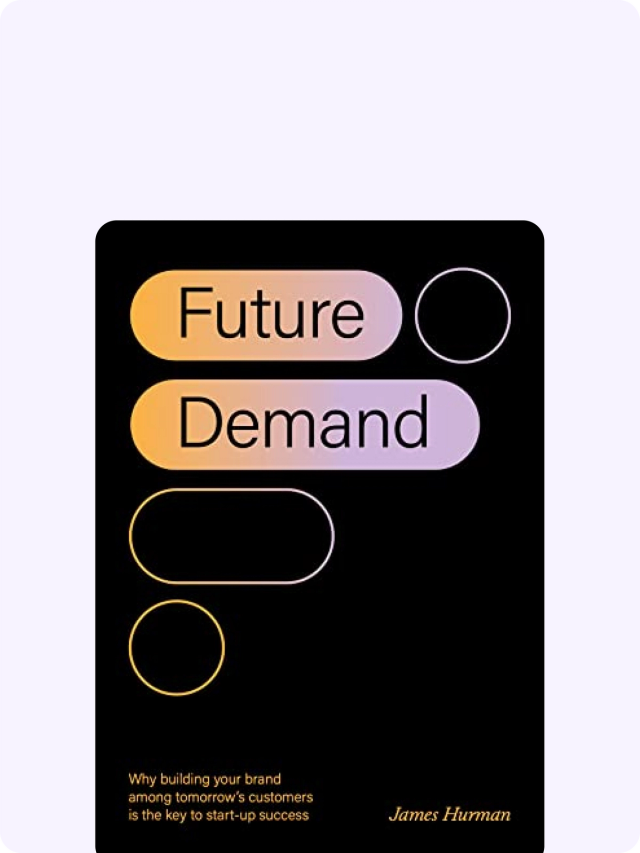
Future demand is a concept developed by James Hurman, Global Marketing Effectiveness expert (and one of our epic co-founders). By it, he means a group of people who are “not ready to buy or switch to your offering now, but will be at some point in the future.”
Future demand opposes existing demand, which is the group of people who are currently willing and able to purchase your solution.
It may surprise you that the group of people that falls into future demand is likely far bigger than you think. It’s commonly held that they might make up to 99% of your market, opens in new tab
To put it in context, Hurman often uses a version of the following example to highlight the difference between the two groups:
Almost all of us have mobile phones, however most of us are only in the market for a new phone every couple of years. This means at any given time there may only be a small percentage of Apple’s market that is ready to purchase a new phone now (existing demand), while the rest are people who don’t need to buy a new phone right now, but will at some point in the next few years (future demand).
We hope this makes you think: if my future demand group is so big, then shouldn’t we be marketing more to them? How can we do this?
By building a strong brand, of course 💪
For Hurman, the way to do this is clear:
“Build your brand among customers who aren’t yet in the market – make them aware of you and build an emotional connection, so that when they enter the market, they’re ready and willing to buy from you.”

Now let’s look at what are some of the metrics you can use to determine whether your brand marketing efforts are effectively building future demand.
What are some metrics to measure brand health?
We’ve outlined the most common metrics below which give you a good gage of how visible your brand is in the market, how likely people are to buy from you, and whether you are their preferred supplier. Measuring these metrics is vital!
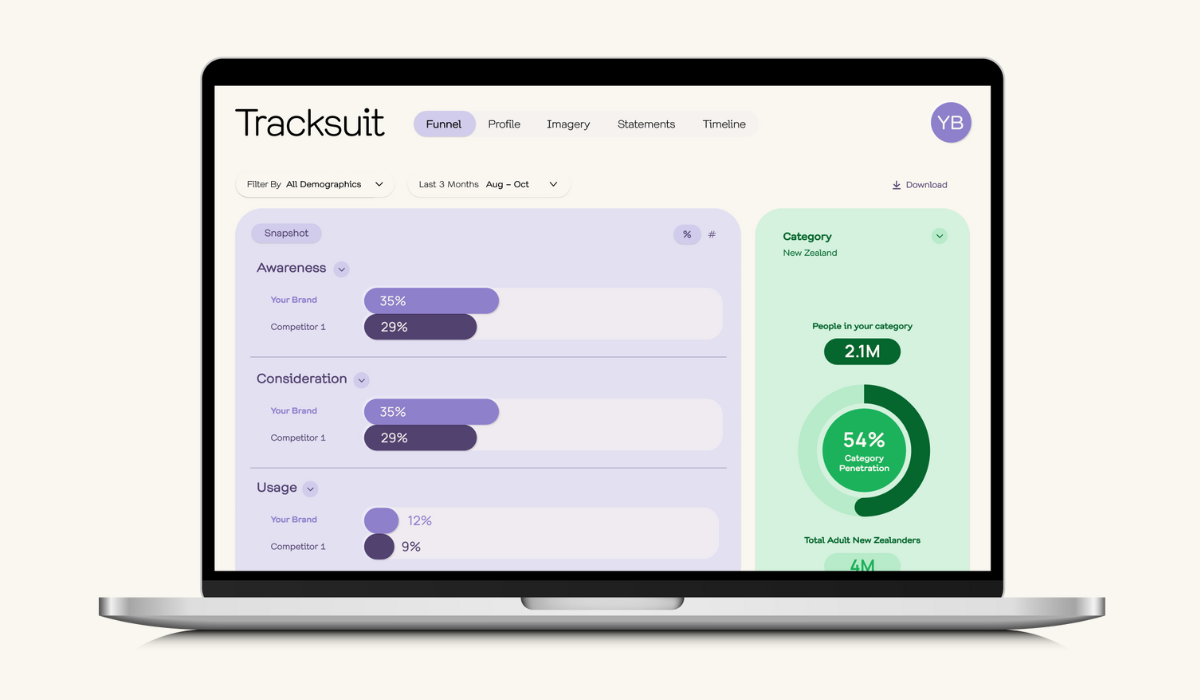
Awareness 👀
This tells you how many people are aware of your brand within your category and help you determine how well you’re building future demand.
Consideration 🤔
The percentage of people who are aware of you who would consider using your brand. The market research firm TRA’ tells us if brands can get into this choice set, they’re 6 - 10 times more likely to be purchased.
Usage 🙌
The percentage of people involved in your category who have used your brand during a certain period. This is ‘claimed usage’ — a good indicator of how many people actually recall deliberately purchasing your brand (do they have a strong enough emotional connection with your brand to intentionally purchase or use it?)
Preference 💖
This is another measure of brand loyalty and love. It’s the percentage of people involved in the category who would prefer to use your brand most when asked to pick one out of a list of you and your competitors.
How do you measure these brand health metrics?
Enter, brand tracking 👋
Brand tracking measures fundamental brand health metrics, such as brand awareness, consideration, usage and preference.
It enables businesses to understand how their brand-building initiatives are performing and prove the value of them. In other words, it’s a measure of how healthy your brand is and a way for marketers to answer the question, “is what we’re doing, working?”
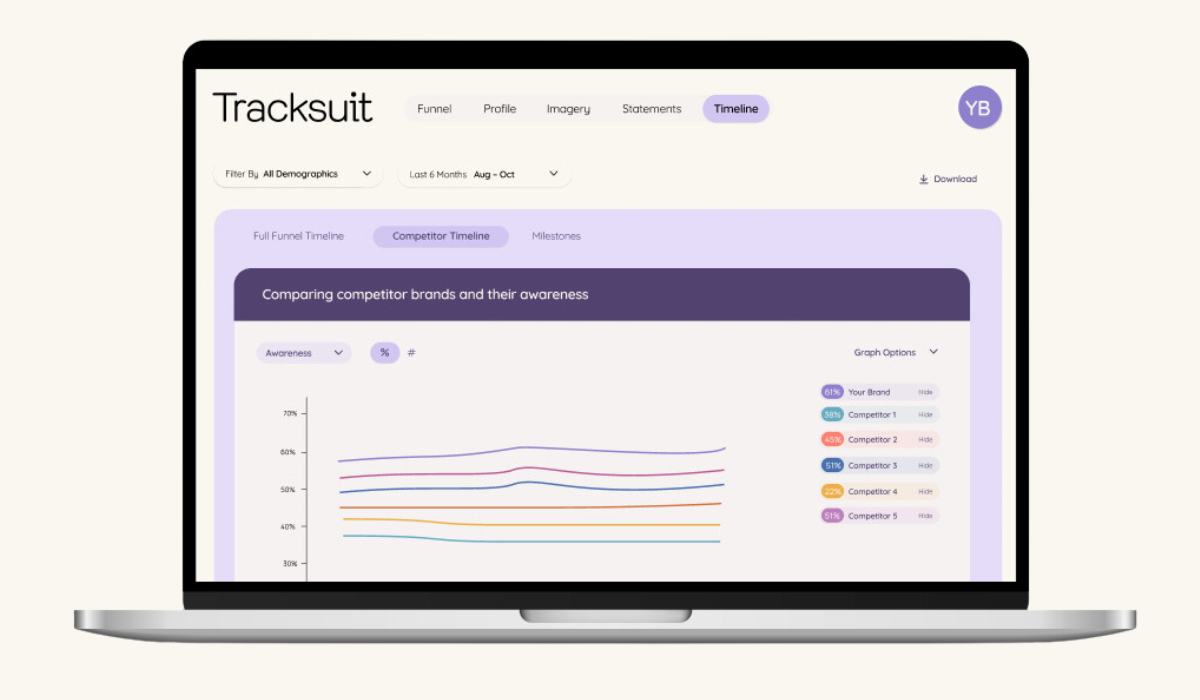
Rather than getting caught up in the sugary performance marketing snacks of conversion rates or customer acquisition cost, brand tracking takes the big picture view and tells you how visible your brand is in your market and how you’re moving people through the funnel from awareness through to preference (loyalty.)
Brand tracking is brand health defined. So, what now?
Tracksuit: Disrupting the status quo with beautiful, affordable, always-on brand health tracking 🏃🏼
Tracksuit is a new approach to brand health tracking: a SaaS solution for intelligent brand tracking delivered through always-on dashboards with stunning data visualization that is easy-to-understand for your entire team. Consider it enterprise level tracking without the hefty price tag.
That means ambitious brands of all sizes (like yours!) can use us to measure, understand and communicate the value of your brand building activities.
In the words of one of our epic customers:
“Yeah, Tracksuit’s the sexiest brand tracking I’ve ever seen. Good God, brand tracking can be boring. Thank you for making brand tracking sexy again.” - Jemma Whiten, CMO, solarZero
With Tracksuit, you can see how your brand is really performing in all the ways that matter across the entire brand funnel (awareness, consideration, usage and preference). You can also see how your competitors are performing across the same metrics.

More than that, it is the evidence you can use to prove to management that what you’re doing as a marketer, is working.