In an era of AI discoverability, earned attention still starts with humans.
Written by


I recently read a piece arguing that earned media is no longer just part of the comms mix, but the whole foundation, especially now that AI discoverability basically runs on what other people say about you. Hard to argue with. What I can't shake, though, is that a lot of what we're now calling "AI-optimised content" isn't actually optimised for anything that matters.
The Whopper test: does your idea have something at stake?
I think about this differently because of where I started. In 2009, I was at Crispin Porter + Bogusky in Boulder, around the time of the Whopper Sacrifice campaign, and it has stayed with me as one of the clearest examples of earned media done properly.
The idea was almost stupidly simple: delete ten Facebook friends, get a free Whopper. But it worked because it put a name to something people were already feeling. “Friend” had started to mean almost nothing. Online connection was beginning to feel absurd. And Burger King asked the brutally simple question, "What is a Facebook friendship actually worth?"That was the genius of it.
Burger King had something tangible and absurdly transactional to offer: Is this person worth more or less than a Whopper? The product made the cultural tension concrete.
That is what earned media really is. Not content engineered to fill a channel or a stunt with a logo attached, but an idea that touches a live cultural nerve strongly enough that people notice it, feel something, and want to pass it on.

Relevance isn't something you manufacture.
Fast forward 17 years to Sickdogwolfman, and every earned idea gets put through two questions before we move forward: Does this matter to the consumer, culturally, right now? And do we, as this brand, have genuine permission and relevance to show up in it?
That second question is usually the harder one. It’s not about whether the moment is big or trending, but whether anyone would believe you belong there. Relevance can feel like something you should be able to manufacture with enough budget, or by tying the brand to the right cultural moment with a clever enough idea.We need to get honest about relevance.
Either the brand has a real reason to be in that conversation, or it doesn't. No amount of polish or AI hacking changes that. The alternative is a brand that shows up somewhere it was never invited, and consumers, who are sharper than we give them credit for, clock it immediately. They might see you more. They'll just think less of you.
The algorithm doesn't care about your brand.
We also need to get honest about the algorithm. It doesn’t care about your brand or your customer. It is a sorting machine, surfacing content based on signals, regardless of whether that content is good, useful, true, or wanted.
And it is hungry: every extra format, platform, and output gets paid for somehow, often by pulling money from budgets that used to build the brand. This is where the "AI for discoverability" conversation gets interesting to me.
Earned media and credible third-party coverage are quickly becoming the thing AI systems trust most, more than anything a brand says about itself. If nobody's writing about you, talking about you, or vouching for you, AI has nothing to go on. And if AI can't find you, neither can the humans behind the device.
Earned media in the age of AI.
But the danger is our instinct to reverse-engineer “earned-style” content. You know the drill: crank out thought leadership, seed commentary everywhere, and game whatever signals AI associates with credibility.
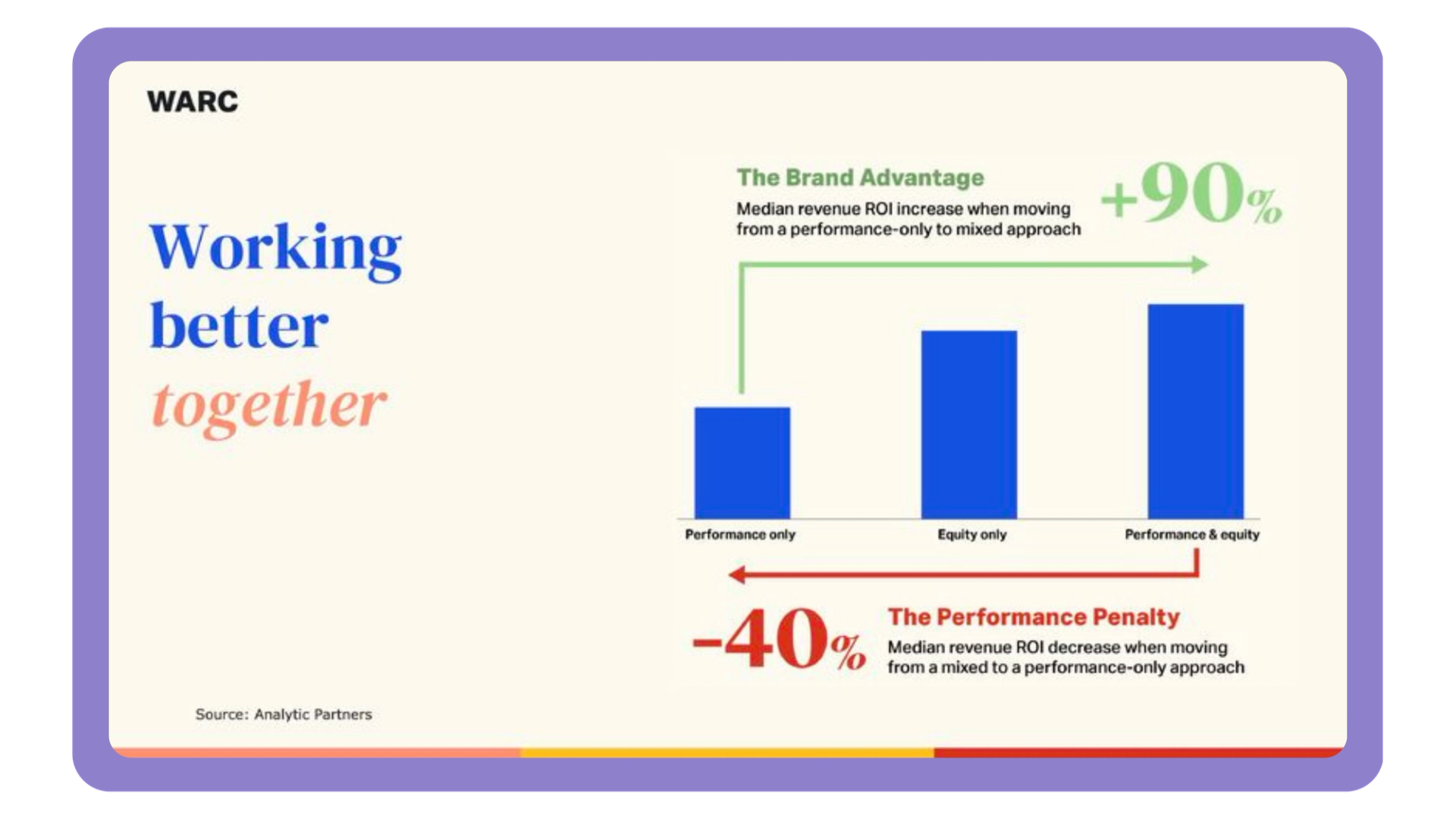
It's the same old performative marketing trap: looking busy, racking up clicks, but doing little for the brand. Analytics Partners and WARC have the receipts: over-prioritising performance at the expense of brand building creates a “performance penalty”: a 20–50% decline in revenue returns over time.
To be clear, I’m not anti-AI, I believe AI discovery is real and reshaping how brands get found. But it can’t be the thing you build for. Louder isn't the same as interesting. And the algorithm, bless it, cannot tell the difference.
The inconvenient truth about relevance.
The fact is, cultural relevance is slow, hard, and deeply inconvenient. It rarely plays nice with sales cycles or fits neatly into a marketing plan. And that is precisely why it works: scarcity and difficulty are part of what makes it feel real, both to humans and, as a side effect, to the algorithms trying to model human behaviour.
So before you brief the content, run this test. Forget the algorithm exists for a second. Would a real person care about this, talk about it, or go looking for it on their own? If yes, AI will help you scale it. If no, AI will just help you waste money faster.