Most CFOs believe in brand, so why does it keep getting cut?


Short-term marketing may deliver immediate results, but brand marketing helps create the future demand that keeps the business growing over time. That’s why any company looking to achieve long-term success must invest in brand building.
And with Q4 around the corner (how did that happen?), the question of how much to invest is becoming especially timely. Marketing and finance teams will soon be making decisions about where to place their bets for the year ahead, including how much room to make for brand.
You might expect finance to be the toughest sell. After all, they’ve got a reputation for slashing brand budgets when money gets tight. But Tracksuit’s latest research paints a different picture: the vast majority of senior finance leaders agree that brand is an important growth driver.
This brings us to an interesting contradiction: if finance leaders agree on the value of investing in brand, why do brand marketing budgets still get cut?
To find out, we surveyed marketing and finance leaders across the United States, United Kingdom, Australia, and New Zealand to understand how each side really views brand investment.
What we found challenges the narrative of marketing and finance being at odds. The two functions agree on far more than you might think, from the value of brand building to the evidence that proves it’s working.
If you’re heading into budget planning, this one’s for you. Here’s what finance actually thinks about brand, what gets in the way of investment, and what marketers can do to make a stronger case for budget.
The relationship between marketing and finance is healthier than you’d think
Marketing and finance agree on a lot when it comes to brand building.
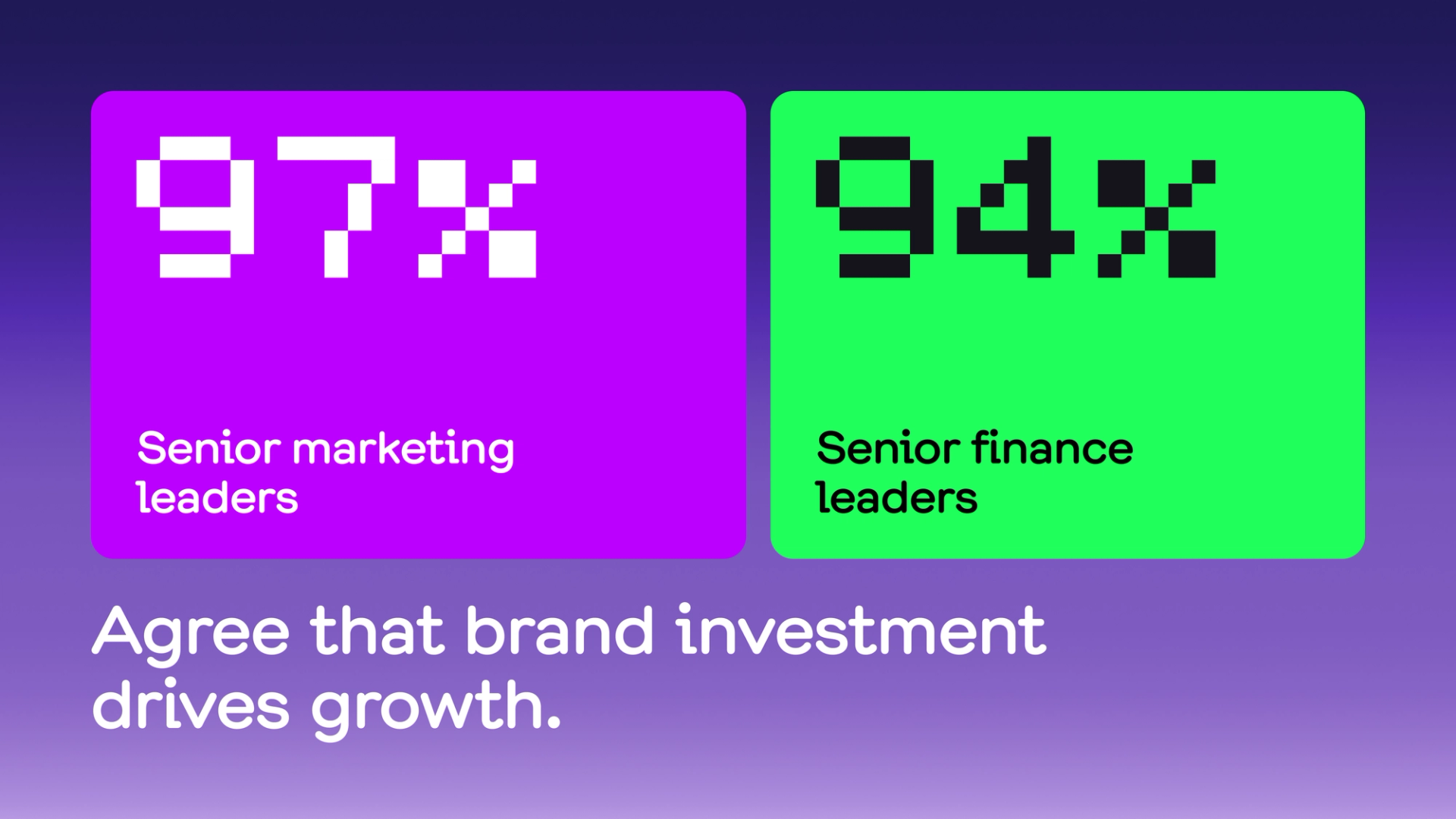
Tracksuit’s research shows that 97% of senior marketing leaders and 94% of senior finance leaders agree that investment in brand building is a meaningful driver of commercial growth for their company.
That belief shows up in the budget, too: 83% of marketing leaders and 80% of finance leaders say their brand investment budget increased over the past 12 months.
Beyond putting more money behind brand, marketing and finance teams are also having solid conversations about its importance, with 63% of marketing leaders and 60% of finance leaders indicating that they have “regular and strategic” conversations with the other function.
So both sides believe in brand, and they talk about it often. That means the underlying tensions around brand investment don’t stem from a lack of trust or a fundamental disagreement about whether brand matters.
Finance believes in brand, yet budgets still get cut
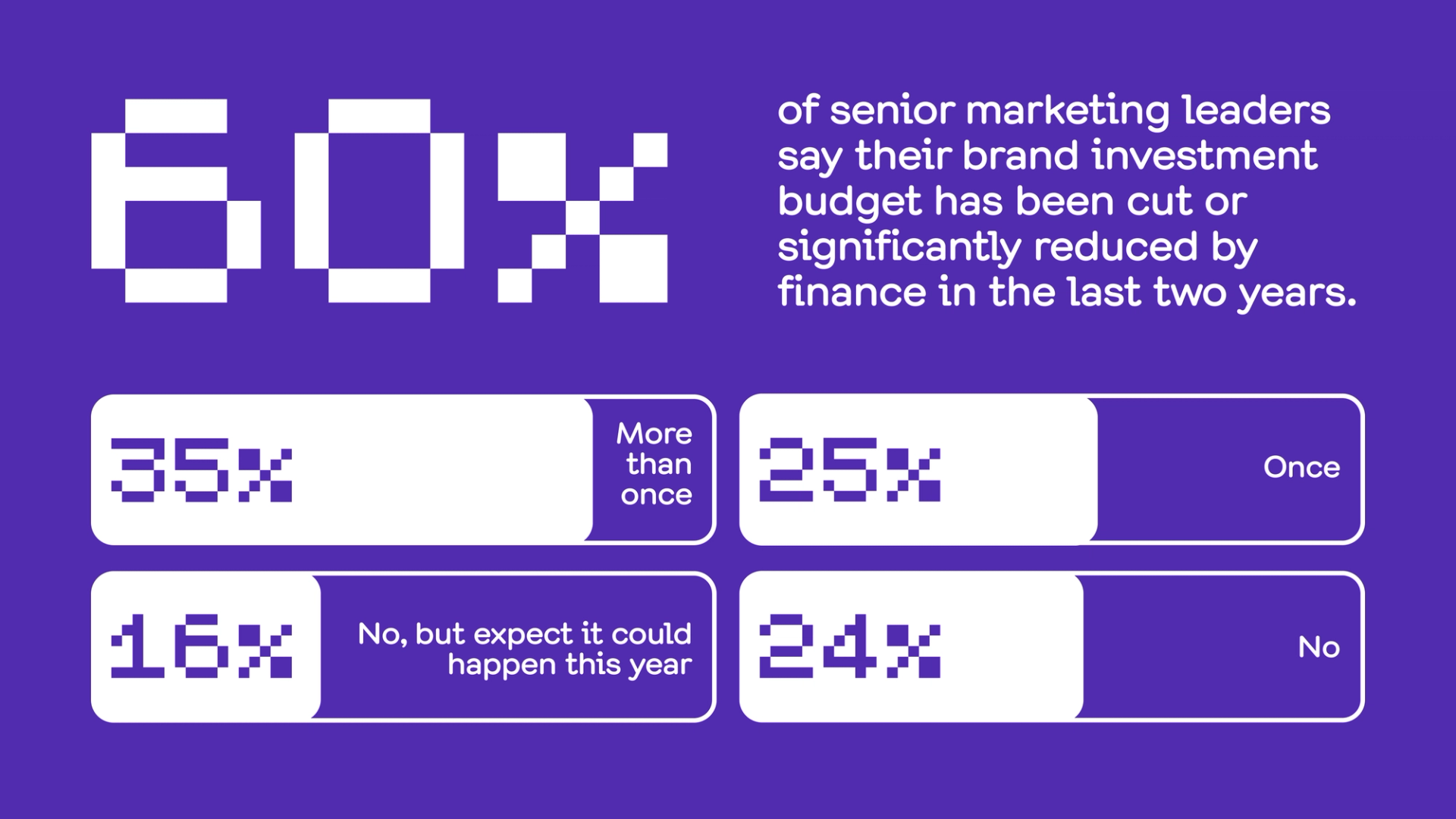
Here’s where things get tricky. Even with brand investment trending up, cuts still happen. The data shows that 60% of senior marketing leaders say their brand investment budget has been cut or significantly reduced by finance in the last two years, with 35% saying more than once.
These numbers can seem hard to reconcile with the earlier finding that brand budgets have grown in the past year. But both can be true. Budgets, after all, don't only move in one direction. They can be cut when priorities shift, then restored or increased as conditions change.
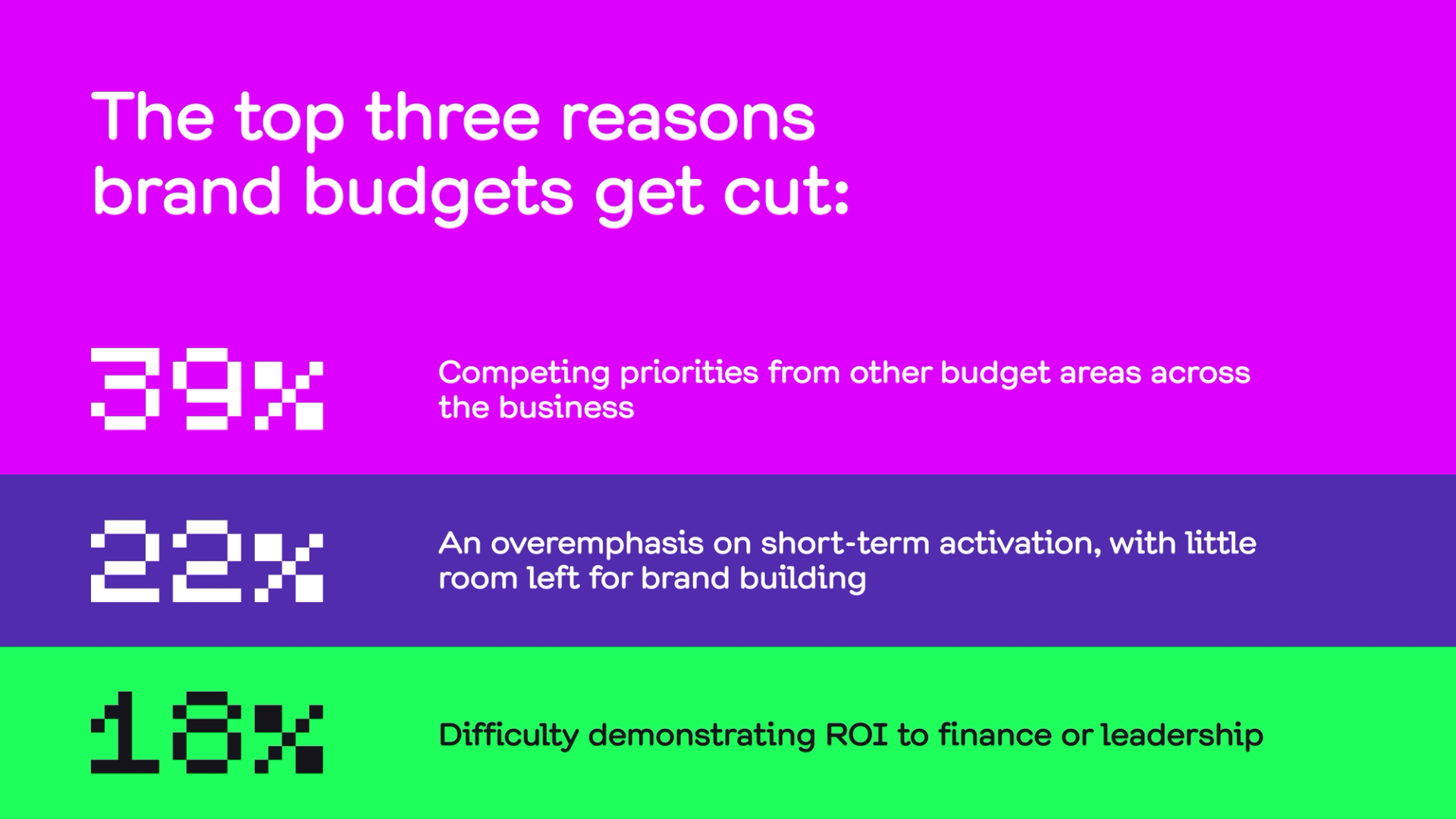
So what’s actually driving the cuts? When we asked marketing leaders to name the single biggest barrier to securing the brand investment they need, they ranked them as follows:
- Competing priorities from other budget areas across the business (39%)
- An overemphasis on short-term activation, leaving little room for brand building in the budget (22%)
- Difficulty demonstrating ROI to finance or leadership (18%)
- Short-term business pressure to reduce spending (10%)
- No shared language between marketing and finance for discussing brand investment (7%)
- Lack of reliable brand health metrics (2%)
The top two barriers are competing priorities and short-termism. That tells you that brand is losing budget because other priorities win out, not because finance stopped or doesn’t believe in it.
It’s a useful reframe heading into Q4 planning. The conversation with finance shouldn’t necessarily be about why brand matters, because they already agree. It should be about why brand deserves to stay on the priority list when other parts of the business are competing for the same dollars.
Marketing and finance measure brand success in similar ways
If you’re going to make that case, it helps to know what finance counts as proof. The good news: it’s mostly what you’d reach for anyways.
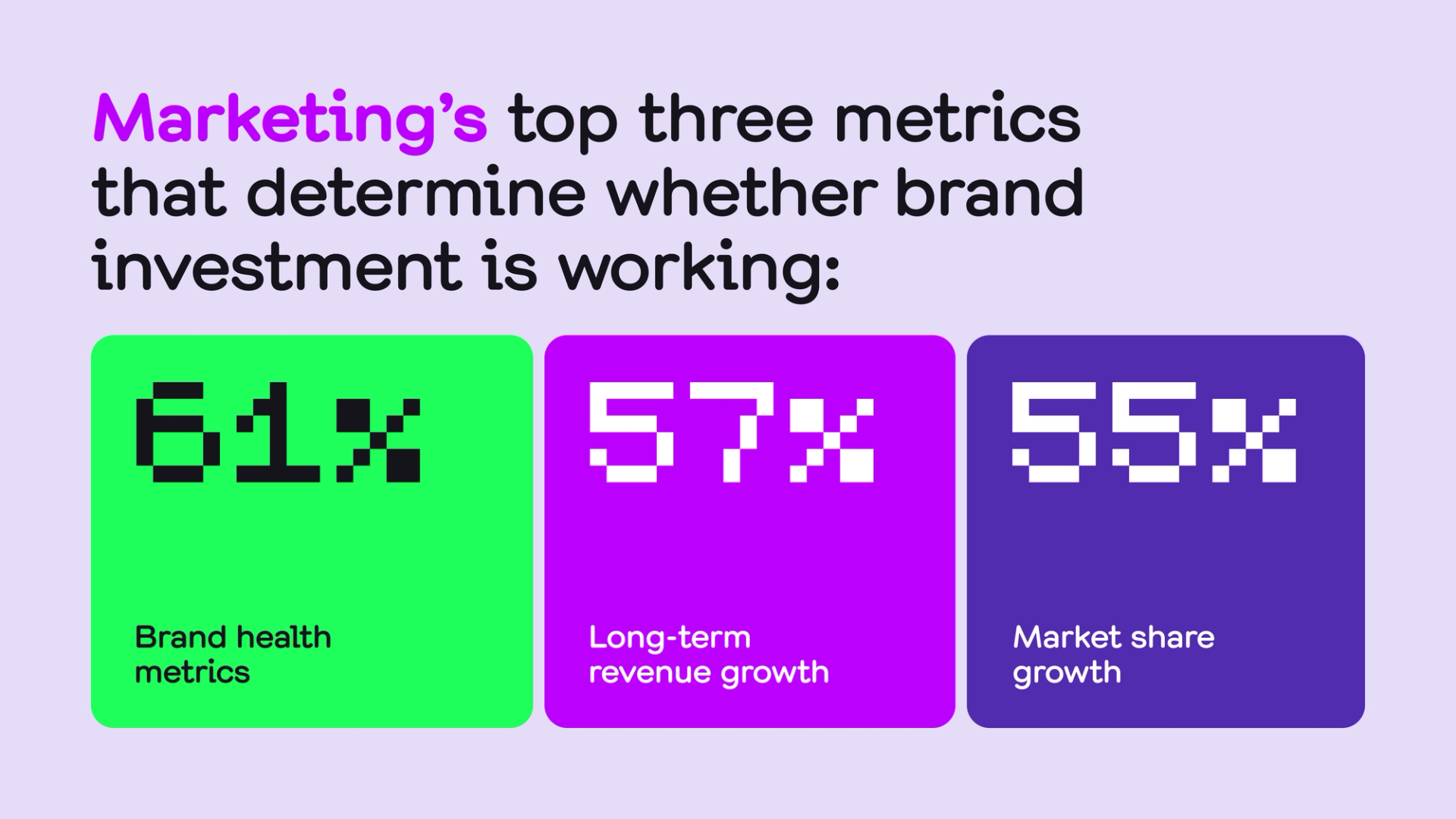
Marketing’s top three metrics that determine whether brand investment is working:
- Brand health metrics (61%)
- Long-term revenue growth (57%)
- Market share growth (55%)
Finance has a slightly different, though not contradictory, view. For finance leaders, the top three measures of success are:
- Long-term revenue growth (67%)
- Brand health metrics (56%)
- Market share growth (46%)
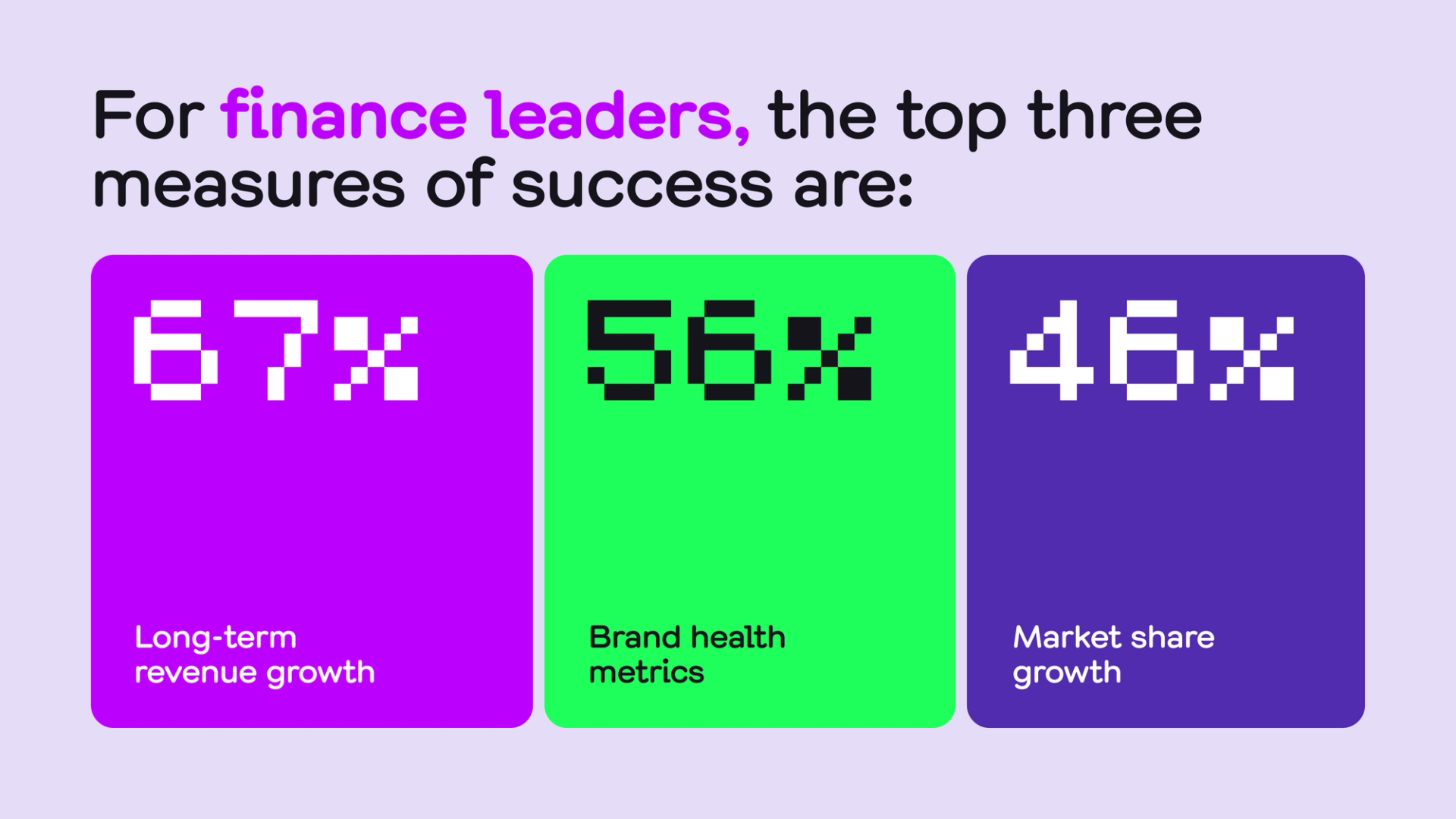
Both sides list the same top three measures of success, just in a different order. Finance ranks long-term revenue growth higher than marketing (67% vs. 57%), but it still lands near the top of both lists. And brand health metrics show even more alignment (61% marketing vs. 56% finance), a difference that isn’t statistically significant.
The takeaway: marketing and finance don’t disagree on what proof looks like. They mostly disagree on how much weight to give each measure. Finance puts more emphasis on revenue, while marketing takes a more balanced view of the top three. Knowing that difference is half the battle. When you bring brand health metrics to finance, connect them to the revenue story finance cares about most.
There’s no standard playbook for making the case for brand investment
The vast majority of senior marketing leaders (96%) say that they’re confident in making a compelling financial case for brand investment to their CFO or Board.
What’s different among respondents is how they approach making that case:
- Try to translate brand health metrics into financial terms, but admit they don't always have the right tools to do it convincingly (37%)
- Lead with financial language, framing brand as an investment with an expected return (35%)
- Use a mix of brand and financial language (23%)
- Present brand health metrics and explain what they mean for the business (5%)
So the confidence is there, but the playbook isn’t. Marketers are taking different routes to make the financial case for brand, and no single approach has emerged as the standard. More importantly, the largest group says they don’t always have the tools to make that case convincingly.
With budget planning season approaching, that’s the gap worth closing first. The marketers who walk into the room with a clear, repeatable way to connect brand performance to the financial outcomes are the ones with a better shot at holding their budget.
Both sides are aligned on the fix
Here’s the best part. Turns out, marketing and finance agree on the solution, too.
When asked what would most improve brand investment decisions at their company, marketing and finance leaders selected the same top three priorities:
- Collaboration: 61% of marketing leaders and 59% of finance leaders select "earlier and more integrated collaboration between marketing and finance on brand strategy".
- Common financial framework: 50% of marketing leaders and 46% of finance leaders indicate "a common framework for evaluating brand investment in financial terms" as a way to improve decision-making.
- Stronger proof of returns: 50% of marketing leaders and 47% of finance leaders want stronger proof that brand investment drives measurable financial returns.
Clearly, marketing and finance both have a good sense of what would improve brand investment decisions. They know what needs to be done. The gap is execution: wanting earlier collaboration, a shared framework and better proof is not the same as having built them.
And with budget planning underway, there’s no better time to start closing that gap. The number one priority for both groups is earlier collaboration, which means marketers shouldn’t wait until budgets are nearly finalized to bring finance into the brand conversation. The best time is now, before Q4 planning locks in.
So where does that leave you?
To recap: marketing and finance teams aren’t fighting about brand. They believe in it, they measure it the same way, and they agree on how to fix what’s not working. What’s missing isn’t belief. It’s a shared, repeatable way to turn that agreement into a case that lands, and the tools to back it up.
This is where brand tracking earns its keep. Traditional brand tracking can be slow, expensive, and difficult to put into action. Teams can spend upwards of £75,000 on annual research, only to end up with dense, static reports that are difficult to share and even more difficult to turn into clear next steps.
Always-on brand tracking flips that. Tools like Tracksuit offer easy-to-understand dashboards that give both sides (or really anyone) a clear view of how their brand is performing over time.
Tracksuit makes brand insights incredibly accessible: marketing teams can self-serve the data they need without relying on an insights team, and charts are easy to copy into presentations, reports, and conversations with finance and leadership.
Marketing and finance have quietly agreed on almost everything: brand works, here's how you measure it, here's what would make it better. The only thing left to build is the shared proof. Do that before Q4 locks in, and you're not defending brand's place in the budget anymore. You're deciding how big it should be.