
Germany is Europe’s biggest economy and, by reputation, one of its most careful consumer markets: a country that likes a bargain but distrusts a gimmick. Black Friday is arguably both, and it has grown here anyway. What’s striking isn’t that Germans shop the sale; it’s how they shop it.
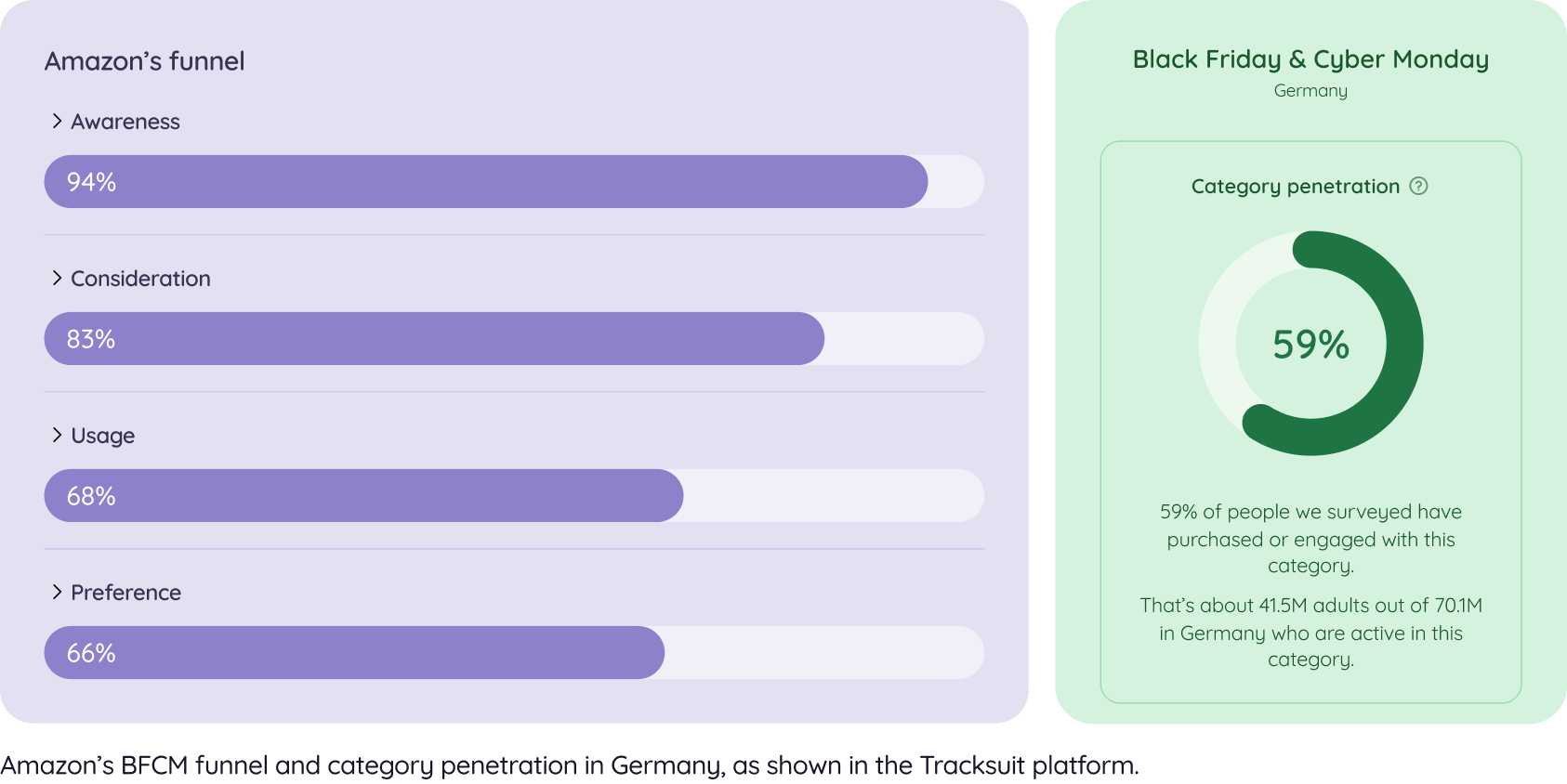
So we asked. In October 2026, Tracksuit surveyed 1,826 German adults about Black Friday and Cyber Monday (BFCM), and 59% said they’d bought in a BFCM sale in the past year or were open to doing so. Scaled up to the adult population, that equates to about 41 million people, the second-largest engaged population in our eight-country study after the US.
The 1,108 who qualified rated 15 major retailers: the global marketplaces (Amazon, eBay, Wayfair, Temu, Shein and AliExpress) and nine German names across electronics, fashion, beauty and grocery (MediaMarkt, Saturn, expert, Otto, Zalando, Douglas, Aldi, Lidl and Kaufland).
One idea runs through this whole series, and it’s the easiest way to read what follows: the shortlist is long, but the basket is short. Shoppers will happily consider a handful of retailers and then buy from one or two. In Germany the basket is the shortest in Europe, and Amazon is almost always in it. The retailers that win are the ones that turn “I’d consider it” into “I bought it”, and then into “I’ll be back next year”. Remember what we’re reading here: this is shoppers’ state of mind going into Black Friday 2026, not what happens during it. We’ll follow up in January with three months of data and the full story. Here’s what we found.
Amazon, then daylight
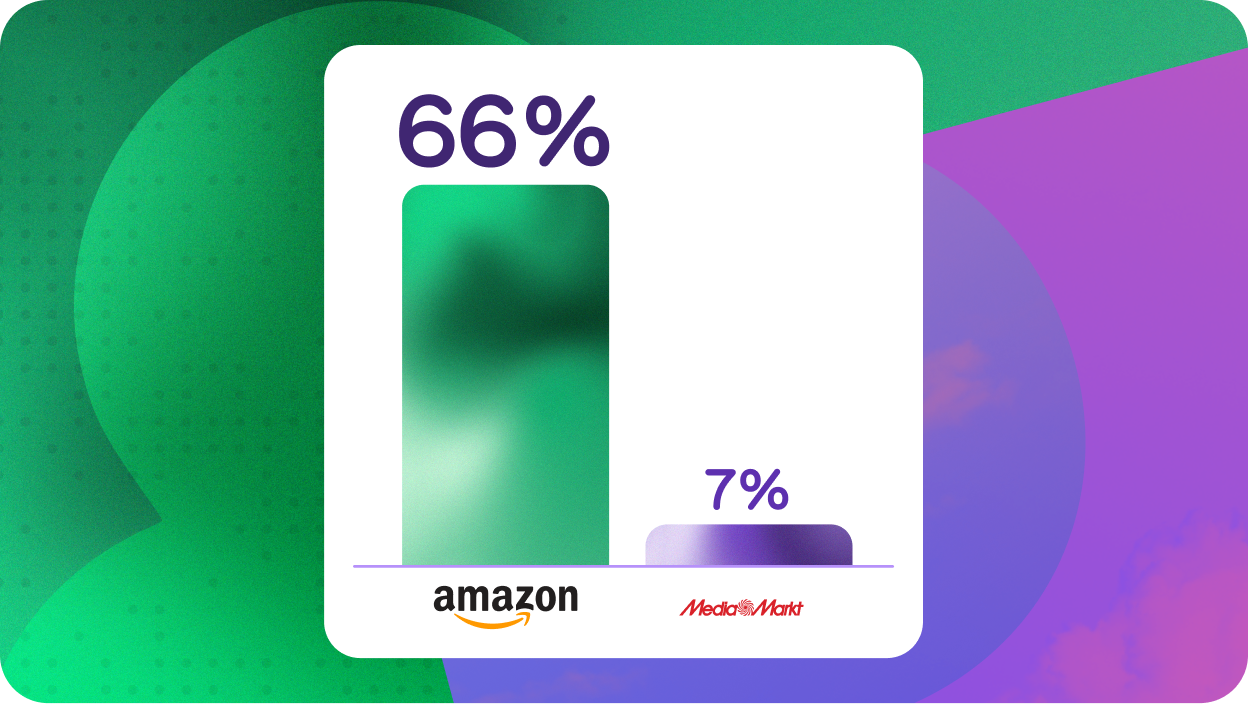
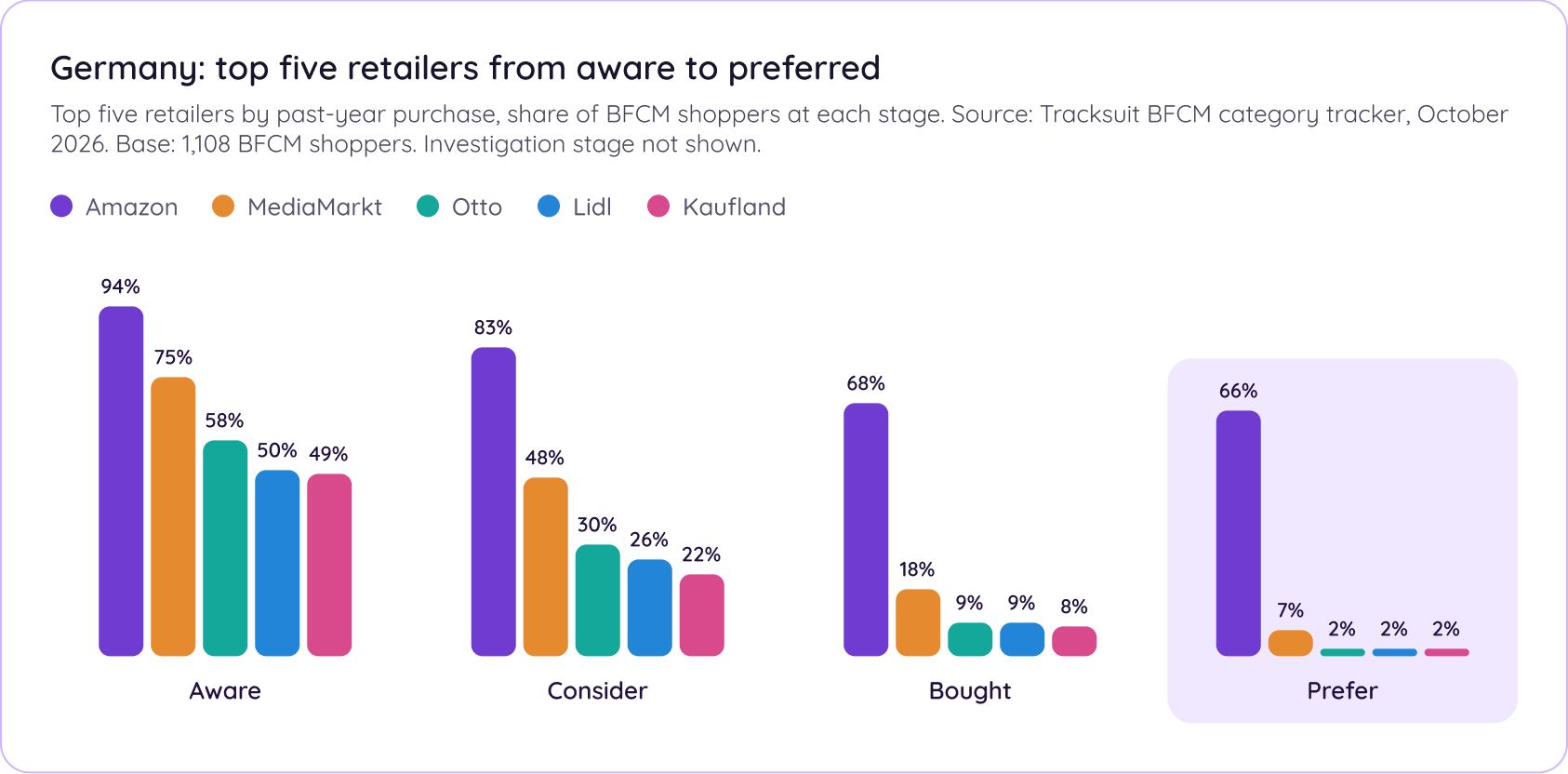
Ask German BFCM shoppers which retailer they’d prefer to buy from, one answer only, and 66% say Amazon. That’s the highest Amazon preference in any country we surveyed. The next brand is MediaMarkt at 7%. Nothing else reaches 3%.
It isn’t just preference. 94% of German shoppers recognise Amazon as a BFCM retailer, 83% would consider it and 68% bought from it last Black Friday or Cyber Monday. We also read shoppers short statements, like “is where I shop every Black Friday” and “is a brand I trust”, and asked which retailers each one describes, counting only people who already know the brand. Among people who know it, 38% say they shop there every Black Friday. In Germany, Black Friday and Amazon are close to being the same thing.
Sign up for Shorts
For fortnightly brand insights, stories and goodness that’ll help you win (we promise).
MediaMarkt is the only local brand in the race
MediaMarkt is the one German retailer with a measurable Black Friday franchise: 75% awareness, 48% consideration, 18% bought last year, 7% preferred. It’s the same story as electronics chains everywhere: considered by half, chosen by few. Its sister chain Saturn (31% consideration, under 2% preferred), Otto (30% and under 2%) and Zalando (22% and 2%) are known but not picked. Purchase and preference are counted differently, which is why the gap between them is so telling: shoppers could name as many retailers as they liked when we asked what they’d bought, so purchase rates can add up to well over 100%, while preference is one pick each and can’t.
Among people who know MediaMarkt, only 15% say they shop there every Black Friday. For a brand whose whole category is built on the sale, that’s the number to work on.
Germany buys from one retailer, and it’s Amazon
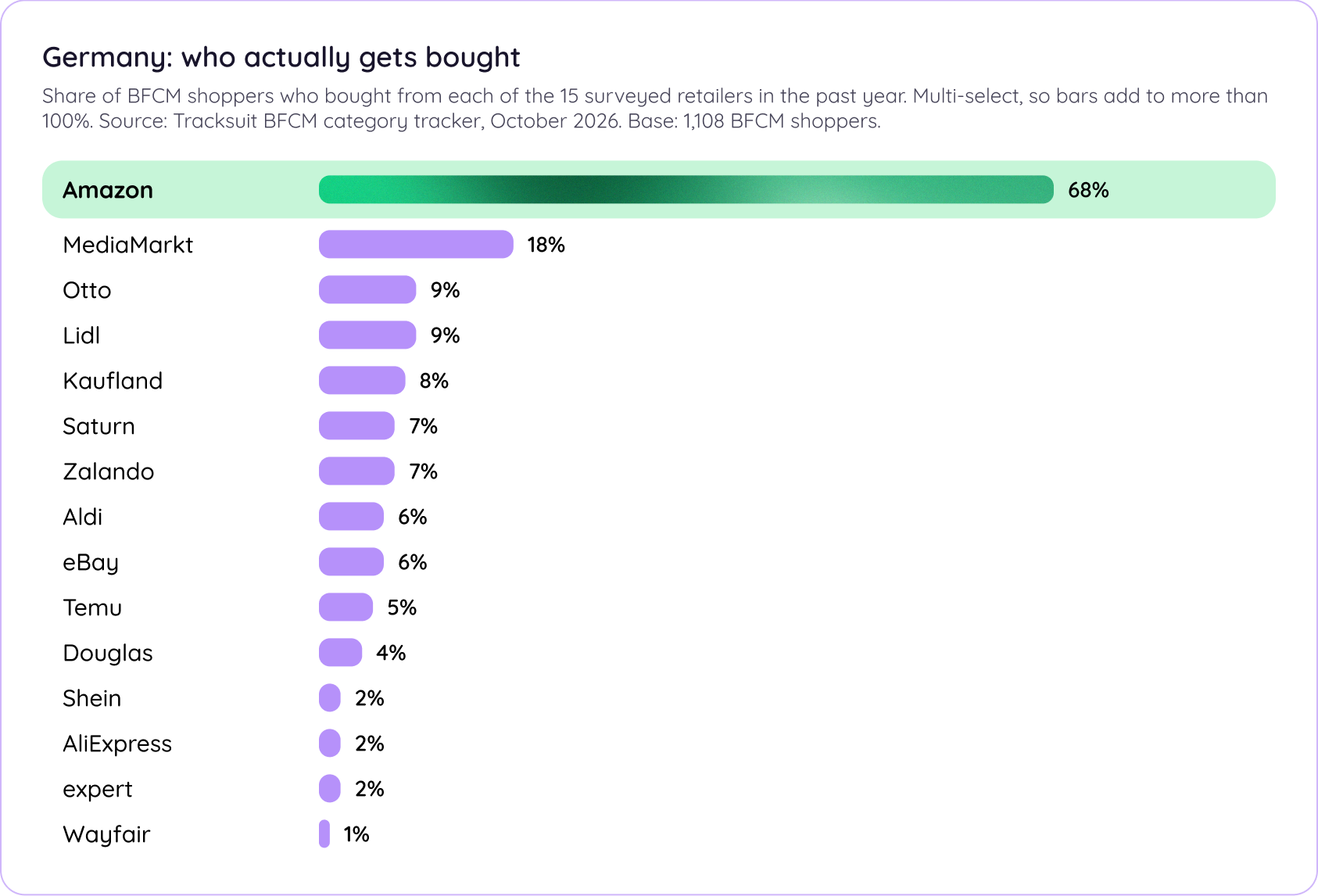
Germany has the narrowest sale in the study after Japan. The average BFCM shopper bought from 1.5 of the 15 major retailers we surveyed, and Amazon accounts for 44% of all the purchases German shoppers reported across them. For everyone else the drop from shortlist to checkout is brutal: MediaMarkt is considered by 48% and bought by 18%, Saturn by 31% and 7%, Otto by 30% and 9%. After MediaMarkt, no German retailer is bought by more than 9% of shoppers.
German shoppers have already decided
59% of German adults are in the sale or open to it, and the shoppers who are have already decided. 66% say Amazon is the retailer they’d prefer to buy from, the highest in our study, and the next best, MediaMarkt, is on 7%. The average German shopper bought from only 1.5 of the 15 major retailers we surveyed.
For the average retailer we tracked, only 10% of people who know it call it an every-year habit, though Amazon’s own score is 38%. This is a sale where one retailer has built a routine and the rest haven’t.
The chart shows how lopsided the baskets are. Amazon is bought by 68%. MediaMarkt (18%) is the only other retailer above 10%, and everything else sits in single digits.
Aldi and Lidl own value. Amazon owns trust
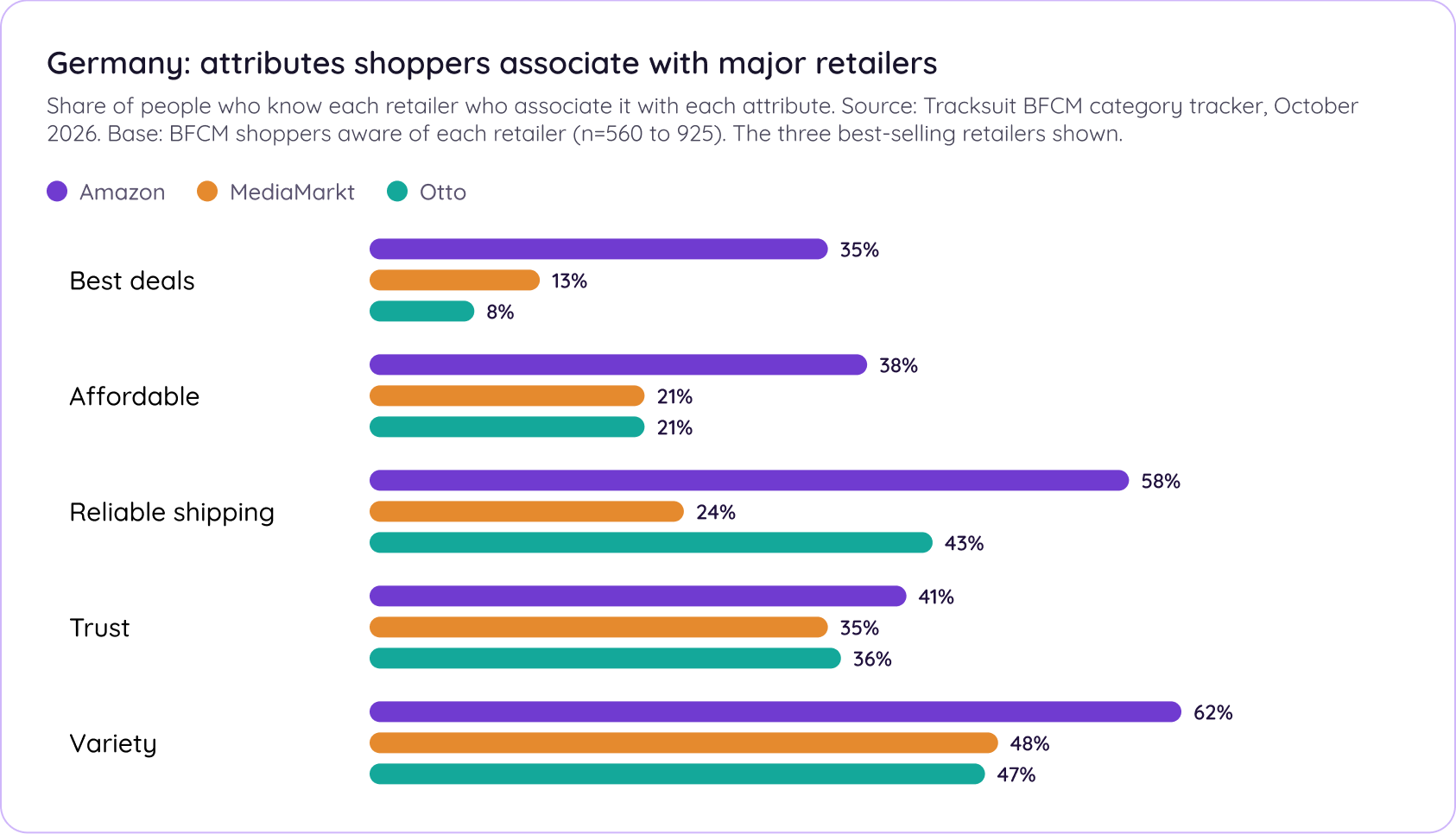
In most markets, the local chains beat Amazon on trust and Amazon wins on convenience. In Germany, Amazon leads on trust too: 41% of people who know it call it a brand they trust, ahead of Aldi and Lidl at 38%.
The discounters’ home turf is the exception. Aldi (49%) and Lidl (48%) lead “affordable”, with Amazon at 38%, and both sit at 56% on “good value for money”, with Amazon at 52%. But like grocers in every market, they’re not sale brands: only 10% of people who know Lidl shop there every Black Friday, and for Aldi it’s 6%.
Otto has one quietly impressive number: 43% of people who know it credit it with reliable shipping, second only to Amazon’s 58%.
The chart shows what Amazon offers that the others don’t. It’s on 68% for fast shipping against MediaMarkt’s 19% and Otto’s 31%, and it leads on trust too (41% against 35% and 36%). Otto’s 43% for reliable shipping is the best of any German challenger, but on its own it isn’t enough.
Temu and Shein’s hardest market in Europe
Germany is where the Asian marketplaces have made the least headway in the West. Temu is recognized by 44% of BFCM shoppers but considered by only 10%, bought from by 5% and preferred by about 1%. Shein is at 32% awareness, 2% bought, under 1% preferred. Together with AliExpress they hold 3% of first preferences.
Their trust scores (5 to 7%) and shipping scores (5 to 13%) are the lowest in Europe. German shoppers, it seems, want cheap and dependable, and so far only the discounters have managed to be both.
Where German shoppers are two weeks out
German shoppers have, for the most part, already decided. 59% of adults are in the sale or open to it, and 66% of those shoppers would pick Amazon first. The next best, MediaMarkt, is on 7%.
They’re also the most focused. The average shopper bought from only 1.5 of the 15 major retailers we surveyed, which for most of them means Amazon (68% bought from it) and perhaps one more.
Repeat BFCM purchasing habit is concentrated, too: 38% of people who know Amazon shop there every Black Friday, against 10% for the average retailer. One retailer has built a routine and the rest haven’t. This is a shopper with a plan, and anyone who wants them to change it needs a clear and specific reason.
What this means if you’re competing with Amazon
Germany is the hardest market in the study for a challenger, which makes the goal realistic: win the one purchase Amazon doesn’t take. Four ways to do it:
- Own one thing, and back it with evidence. MediaMarkt can own electronics, Otto reliable delivery (43% against Amazon’s 58%, the best of any German challenger), and Aldi and Lidl value (49% and 48% “affordable” against Amazon’s 38%). Choose the single claim you can prove and make it the first thing a shopper sees.
- Attach your value to Black Friday. The discounters have the price story but almost no sale habit: only 10% of people who know Lidl shop there every Black Friday (Aldi 6%). Connecting “Aldi prices” to “Black Friday weekend” is pushing on an open door.
- Turn the shortlist into a reason to buy. MediaMarkt is considered by 48% but bought by 18% and preferred by 7%. Give people a reason to buy this weekend, not just to compare.
- Treat every first-time buyer as the start of a repeat BFCM purchasing habit. Shoppers buy from only 1.5 retailers on average, so a second basket is rare and valuable. With only 10% calling the average retailer an every-year destination, the retailers that do will stand out.
Amazon leads on both trust and delivery in Germany, so don’t chase it on its own ground.
Methodology
Part of Tracksuit’s eight-country Black Friday 2026 study. Read the global view here: [Link: global post]. Methodology: 1,826 German adults surveyed in October 2026, of whom 1,108 qualified as BFCM shoppers; brand statements are asked of people aware of each brand; gender differences are quoted only where they pass a 95% significance test and the sample is large enough for Tracksuit to report without an indicative or insufficient flag. Retailers per shopper adds each market’s purchase rates across the 15 major retailers surveyed. Retailer groups: the 15 major retailers are grouped as global marketplaces headquartered in the US (Amazon and eBay); marketplaces headquartered in Asia (Temu, AliExpress and Shein); fashion (Zalando); beauty (Douglas); electronics and appliances (MediaMarkt, Saturn and expert); general merchandise (Otto); grocery (Lidl, Kaufland and Aldi); home and furniture (US-headquartered Wayfair). Unless marked, brands are headquartered in Germany. Population equivalents apply each market’s engagement rate to the UN World Population Prospects 2024 (medium variant) estimate of the population aged 18 and over at 1 July 2026. We’ll publish a follow-up in January, using a full three months of data, on how the sale actually played out. AI was used to support ideation and iteration of this analysis. All data points and observations have been refined and validated by Tracksuit’s Marketing Science team.