Trends: Uses and Abuses (a Funnel Club field guide)
Written by

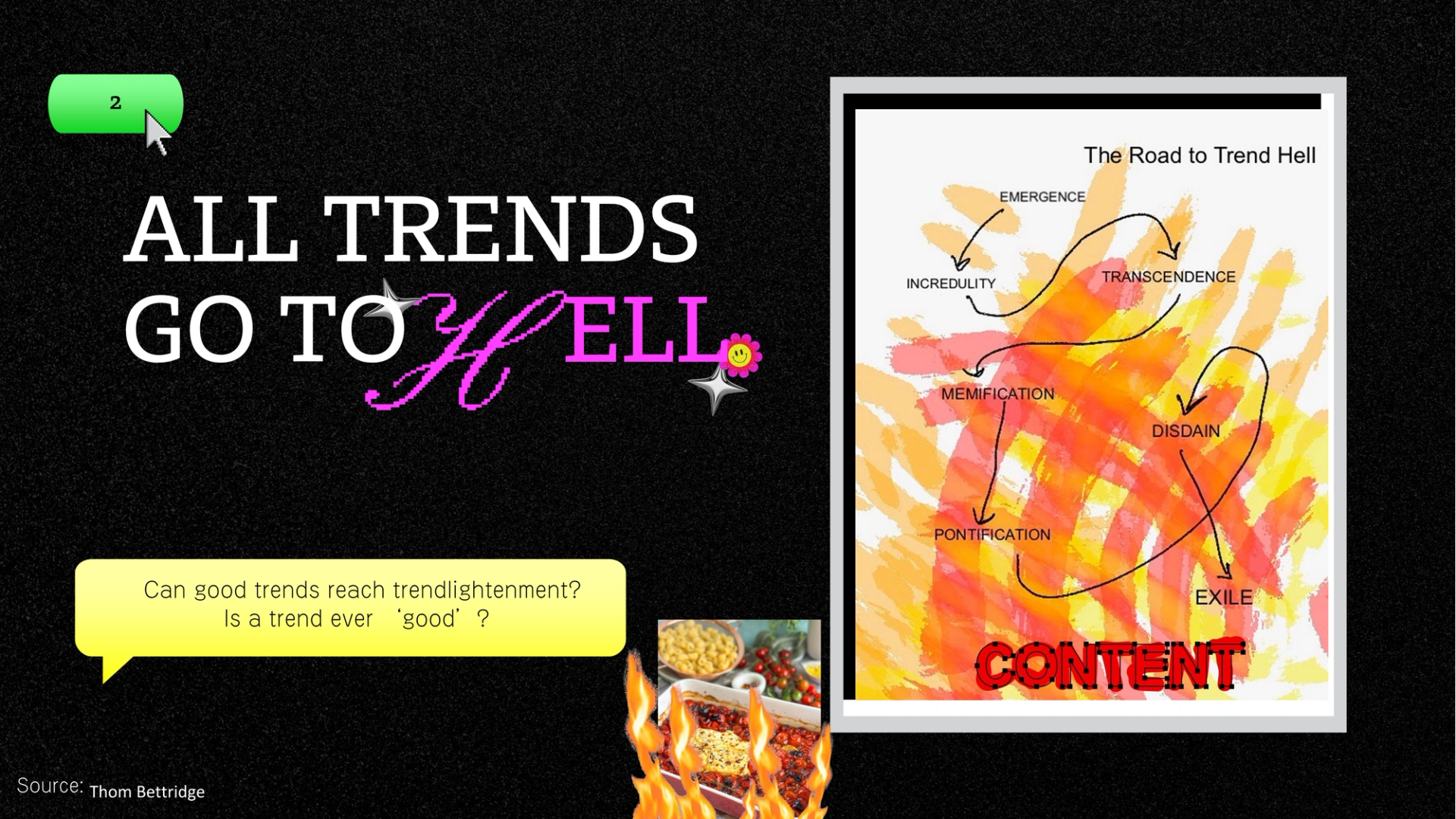
Opinions on trends are like butts: we all think ours are really shapely and well tended until they get revealed in public and we're forced to reckon with the reaction. That's why it's important to do so in a safe space, preferably as a group, all at the same time. So that's what we did.
It was an exercise in splitting the room, but less into "trends good" or "trends bad." We unpacked how trends can be both helpful and harmful. A crutch in the wrong hands, and a pogo stick in the right ones. It was, as you might expect, a victory for things working when they work, and a defeat for blind dogmatism. But what determines the line between the two? How do we use trends for good, and avoid the temptations of evil?
At our latest Funnel Club (hosted by myself and the lovely Kate O'Loughlin) we gathered some of Australia's sharpest strategic thinkers, including a guest appearance from Mark Pollard of Sweathead, returning to his homeland for the week.
Together we pulled the good of trends from the bad and ugly. We’ve combined the main takeouts into this here field guide of seven sins and three golden rules:
The Seven Trendly Sins 💀
1. Gatekeeping.
Don't hoard trend knowledge to look clever. "I know the trends, you don't, so I'm right and you're wrong." It might feed your ego, but it doesn't help the work. Trends are tools, not trophies.
2. Gatecrashing.
Don't let your brand rock up to parties it wouldn't be invited to. Either make the trend fit your vibe, or find a trend with a vibe you fit. If you don't belong, the audience will smell it a mile off.
3. Permission-slipping.
Don't use trends to justify mid ideas. If it wasn't interesting before you revealed the Google search volumes, it won't be interesting after. Trends should inspire, not make excuses.
4. Headcounting.
Don't assume bigger trends are better. It's not a popularity contest. A trend is only as good as the attention it helps you earn — and the bigger it gets, the more played-out the conversation and the more cynical the crowd. Often the smaller trends have the biggest potential.
5. Intellectualising.
Don't just read about trends in reports and Substacks. They're right there on your doorstep. You don't need the tourist guide, get out and experience it. By the time it's a slide in someone else's deck, it's not only second-hand, it might be too late.
6. Demystifying.
Don't strip the magic. We all love a good demystify - yes, every trend connects with an evergreen human truth, and there's nothing new under the sun. But reducing it to "ah, this is really just classic Belonging tropes recycled for Gen Alpha" has won the meeting but lost the plot. The novel twists and perspectives are the good stuff. The mystery is the point.
7. Specialising.
Don't become the 'Trends guy'. I get it, you enjoyed the dopamine hit of circulating the first trend report email of the season, and you're jonesing for another ride on the hot-off-the-press horse. Making yourself a trends guru might seem seductive, but as it says in the marketing bible, ‘brand cannot live on trend alone’ (Newteronomy 8:3). Trends are one arrow in your quiver, to be drawn when the time is right. Don't make them your whole identity.
The Three Golden Trend Rules 🏆
1. Does it make the work better?
That's the whole exam in one question. A trend earns its place by being a useful ingredient, nothing more. A trend is an ingredient. You're the chef. The value is in the flavours you create.
2. Get up and Dance.
The best material is lived, not studied. Spend time with real people in real places and bring back what the reports don't cover. "You've got to dance," as Mark very elegantly put it. Get out into the world, around the people you need to interest, who think nothing like you. "Curiosity killed the Cat" might be a well-worn phrase (and a great band), but if you want to really understand what works, it's a Misfit.
3. Listen to the Brand.
Know your brand first, then bring the trend into its world - not the other way round, or you’ll vanish in the crowd. Chase only the trends your brand would naturally care about anyway, and play with them in ways your brand would naturally play. You don’t want to be the Dad at the disco (unless you are the kind of dad who goes to many a disco and fits right in).
TLDR: The trend is never the point. It's a tool, and a tool is only as good as the work it enables. Avoid these seven ways to drop it on your foot, and follow the three ways to build something better.
These takeaways came out of Funnel Club. If you're an agency Strategist who enjoys high-level thinking and low-level snacking, don't miss the next one. Sign up for the Funnel Club mailing list here, opens in new tab to stay in the loop, or come hang out with the rest of the over-thinkers in the Strategists Anonymous WhatsApp community https://chat.whatsapp.com/Ea15YG4bekG5aJiNianCGk, opens in new tab.